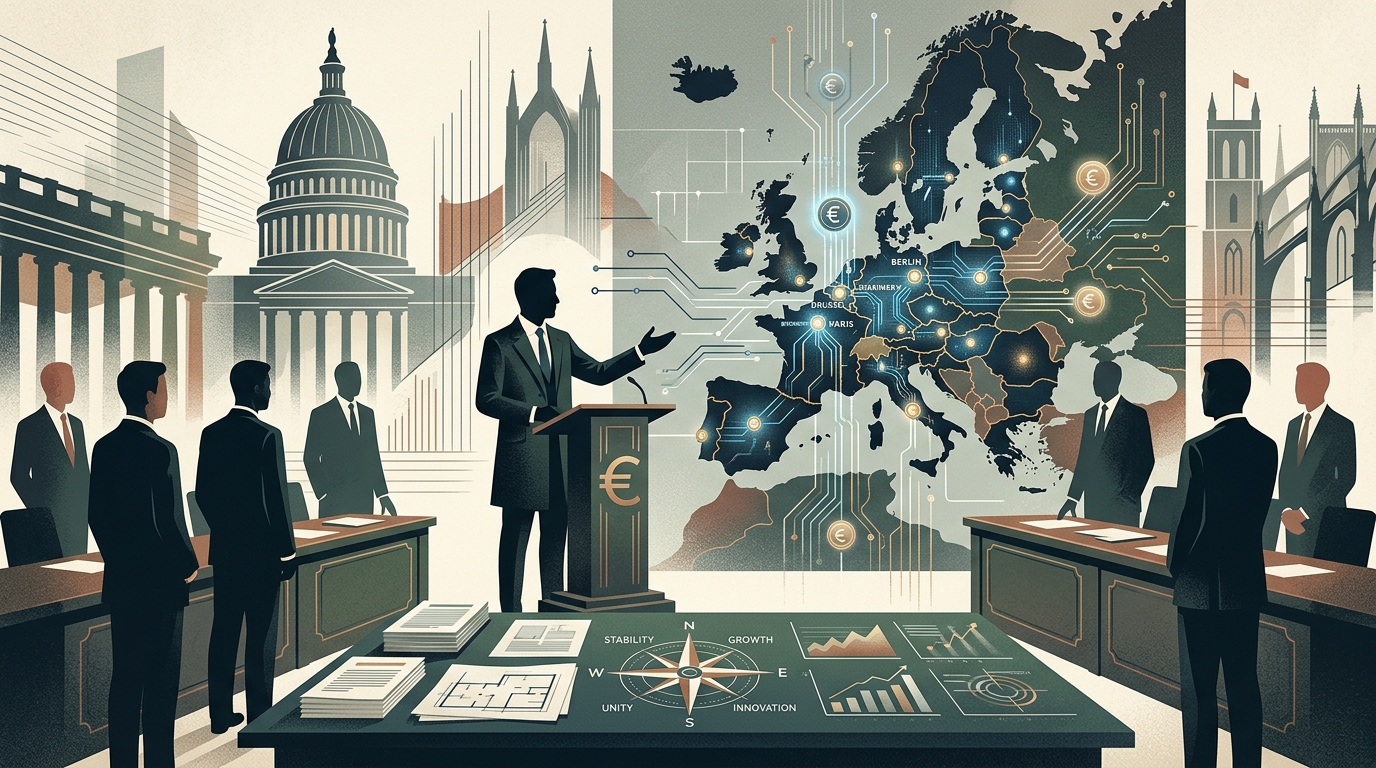
In an era where geopolitical balances are shifting rapidly, Europe finds itself at a critical crossroads. Kyriakos Pierrakakis, in his recent interview with the Italian magazine L’Espresso, points directly to the heart of the matter: the European Union can no longer be content with the role of the "global regulator." It must transform into an investment superpower that supports its own strengths, innovation, and digital sovereignty. The Greek minister's analysis is not merely an economic stance, but a call for a strategic awakening of the Old Continent.
The Transition from Declarations to Action
For decades, Europe excelled at creating frameworks and regulations. From GDPR to the AI Act, Brussels led the way in how technology should operate with respect for human rights. However, as Mr. Pierrakakis points out, regulation without investment leads to stagnation. While the US and China funnel trillions into critical technologies and infrastructure, Europe remains trapped in bureaucratic procedures and a fragmented investment landscape.
The need to "invest in ourselves" means creating a unified ecosystem where capital can move freely and European businesses have the tools to compete globally. The minister emphasizes that competitiveness is not an abstract concept but the result of bold reforms that reduce energy costs, strengthen digital infrastructure, and promote education in new skills. The challenge is to stop the brain drain and capital flight to the other side of the Atlantic, making Europe an attractive destination for innovation.
The Digital Euro as a Pillar of Sovereignty
One of the most interesting points of the intervention concerns the digital euro. In a world where digital payments are largely controlled by non-European giants, the creation of a central bank digital currency (CBDC) is a matter of national and European security. Mr. Pierrakakis places the digital euro at the heart of the EU's strategic autonomy. It is not just a convenience for transactions, but a tool that will ensure Europe retains control over its financial infrastructure.
- Autonomy: Reducing dependence on external payment systems.
- Innovation: Providing a platform for new financial services.
- Inclusion: Ensuring access to digital payments for all citizens.
The adoption of the digital euro will allow the Eurozone to modernize radically, offering speed, security, and lower transaction costs. However, this also requires appropriate public awareness to alleviate privacy concerns, which the minister considers manageable through robust European legislation.
The Greek Example and the European Future
Mr. Pierrakakis often refers to the Greek experience as an example of successful digital transformation in a short period. Greece, once a laggard, managed to become a reference point for state digitalization. This experience can serve as a "compass" for the broader European effort. The success of gov.gr and the simplification of procedures show that when there is political will and a clear investment plan, the results are immediate and tangible.
"Europe has the talent and the values. What it lacks is the speed and the concentration of resources on common goals," he characteristically notes.
In conclusion, the minister's analysis suggests that Europe's competitiveness is inextricably linked to its ability to function as a single entity. The completion of the Banking Union and the Capital Markets Union are no longer options but conditions for survival. If Europe does not invest in itself today, it risks becoming a "museum" destination in a world running at the speed of artificial intelligence.