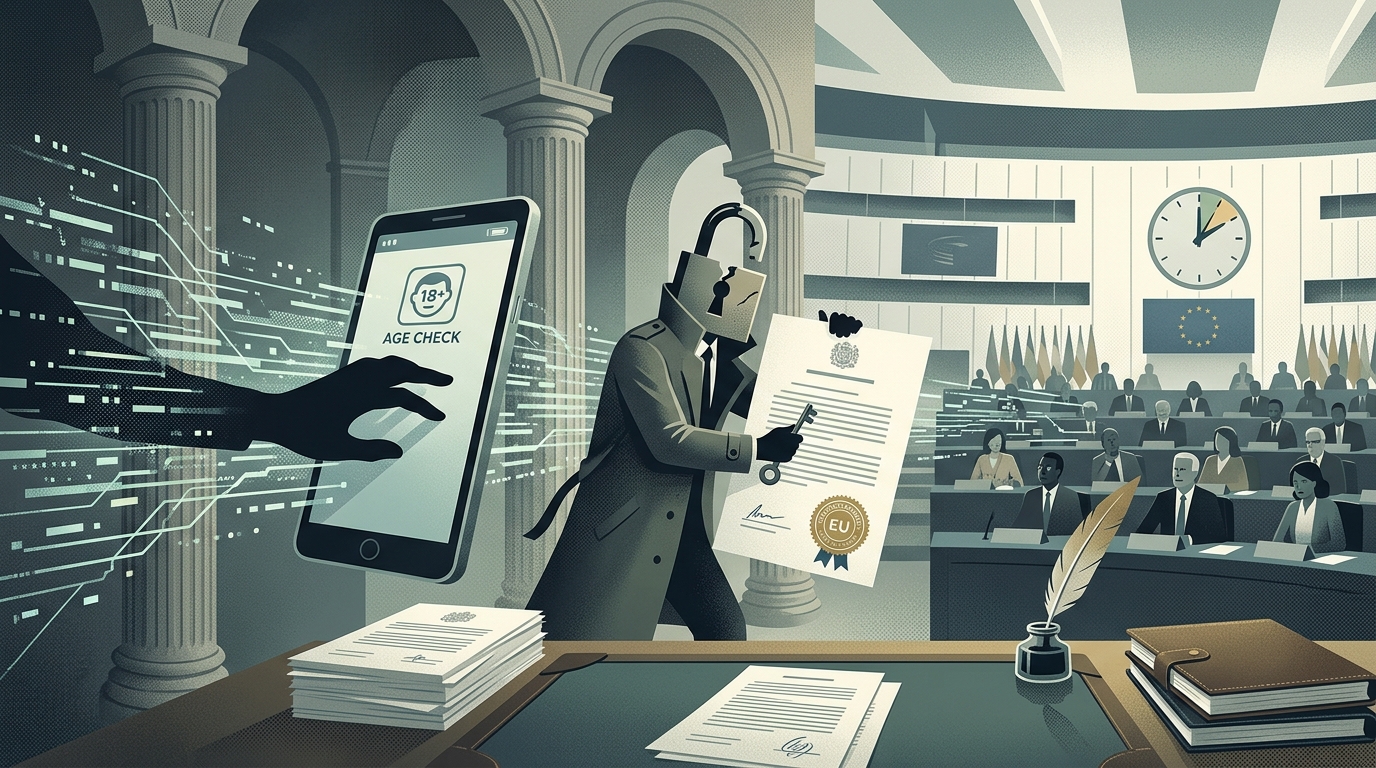
In a direct confrontation with Brussels regulators, Pavel Durov, the controversial yet visionary founder of Telegram, has launched a scathing attack on the European Union's latest initiative for mandatory online age verification. According to Durov, the technical specifications of the apps being promoted are so flawed they can be bypassed in "less than two minutes" by any tech-savvy teenager, while simultaneously opening a backdoor for unprecedented state surveillance.
Technical Failure and 'Security Theater'
Durov, who has turned privacy into a personal crusade—often clashing with governments from Russia to France—argues that the EU's approach is fundamentally broken. His argument centers on the fact that the proposed methods, such as ID scanning or AI-driven facial age estimation, are easily fooled using Deepfake tools or simple VPNs.
"This is a classic case of 'security theater'," Durov stated in a recent post. "Bureaucrats in Brussels believe they can impose physical borders on the digital world. All they achieve is creating an illusion of protection for parents while exposing the personal data of millions of citizens to hacking risks." His critique focuses on the ease with which young users can find workarounds, rendering the measures not only intrusive but entirely ineffective.
The Danger of 'Digital Identity' and Mass Surveillance
Beyond the technical aspects, Durov raises serious ethical and political concerns. The age verification app, in his view, acts as a Trojan horse for the establishment of a universal digital identity in Europe. By linking content access to official state identification, the EU is effectively ending online anonymity, one of the last bastions of free speech.
- Centralized Data Storage: The fear of creating massive databases linking browsing history to real-world identities.
- Cybersecurity Threats: Such databases are a honeypot for hackers and foreign intelligence services.
- Authoritarian Creep: The concern that infrastructure built today for "child protection" will be used tomorrow to suppress political dissent.
The Telegram founder warns that Europe risks sliding into a control model reminiscent of China’s "Great Firewall," where every click is monitored and logged. "Freedom cannot be sacrificed at the altar of a supposed security that doesn't even work," he emphasized.
The European Commission's Stance and the Road Ahead
For its part, the European Commission defends its choices, emphasizing that the Digital Services Act (DSA) mandates platforms to protect minors from harmful content. Brussels officials claim they are utilizing "zero-knowledge proof" technologies, which theoretically allow for age verification without revealing the user's specific identity.
"Our goal is not surveillance, but ensuring the digital space is as safe as the physical one for our children," a Commission source noted.
However, this clash highlights the deep divide between the tech community and lawmakers. While the EU attempts to impose order on a chaotic digital world, cybersecurity experts warn that legislation often fails to keep pace with technological evolution. Durov's critique, though viewed by some as extreme, touches the heart of an existential question for the internet: How much privacy are we willing to surrender for a promise of safety?
The coming months will be critical as major platforms are forced to integrate these systems. If Durov is proven right and these systems are bypassed in minutes, the credibility of the EU's digital policy will suffer a devastating blow, fueling arguments of regulatory overreach and technological illiteracy among European leaders.