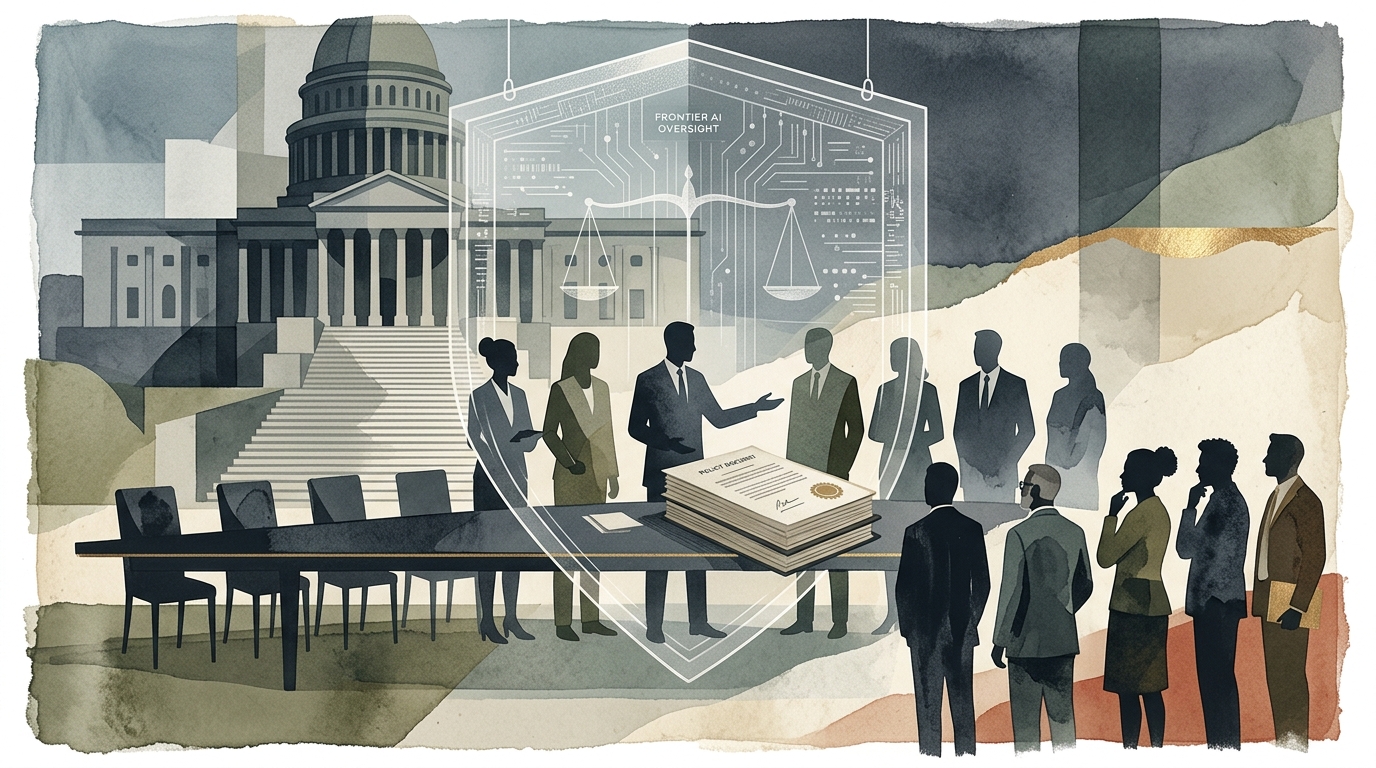
The legal profession, a field traditionally anchored in precedent, leather-bound volumes, and rigorous manual scrutiny, is facing a technological sea change that threatens—or promises—to alter its very foundations. The recent introduction of Part 161 by the New York State Unified Court System (UCS), in close collaboration with the New York State Bar Association (NYSBA), marks the most significant regulatory milestone to date regarding the use of Artificial Intelligence (AI) in the courtroom.
The Urgency of Regulation: Beyond the Ghost of Hallucinations
The impetus for Part 161 did not emerge from a theoretical vacuum. It was precipitated by a series of high-profile failures that exposed the visceral risks of unchecked Generative AI. The now-infamous Mata v. Avianca case, where attorneys submitted briefs riddled with non-existent case citations generated by ChatGPT, served as a clarion call for the judiciary. Part 161 is designed to ensure that technology remains a sophisticated tool rather than a flawed surrogate for human legal reasoning.
Under these new guidelines, attorneys bear ultimate responsibility for the accuracy of every document they file. The excuse of "the AI wrote it" is no longer legally or ethically viable. The rule mandates that practitioners verify every citation, quotation, and legal proposition generated by algorithmic systems. This process, often termed the "human-in-the-loop" requirement, has transitioned from a best practice to a mandatory ethical command.
The Three Pillars of Compliance
The NYSBA’s analysis of the new regulatory landscape focuses on three central pillars that every practitioner must navigate:
- Technological Competence: Rule 1.1 of the Rules of Professional Conduct requires lawyers to provide competent representation. In 2026, this explicitly includes understanding the benefits and risks associated with relevant technology. A lawyer can no longer claim ignorance of how Large Language Models (LLMs) function or the probabilistic nature of their outputs.
- Confidentiality and Privilege: One of the gravest risks involves feeding sensitive client data into public AI models. Part 161 reinforces that attorneys must ensure any AI tool used has robust security protocols that prevent client data from being used to train future models, which would constitute a major breach of attorney-client privilege.
- Supervision: Partners in law firms have a non-delegable duty to supervise not only their human associates but also the technological systems the firm employs. Responsibility for a flawed AI-generated filing rests with the firm's leadership, necessitating the implementation of rigorous internal audit protocols.
The Transparency Challenge
One of the more debated aspects of Part 161 is the obligation of disclosure. While some jurisdictions require attorneys to explicitly state if AI was used in drafting a motion, the New York rule seeks a nuanced middle ground. The underlying philosophy is that if the final product is accurate and has been vetted by a human, the use of AI as a "first draft" tool may not always necessitate disclosure. However, any inaccuracy resulting from AI use will be met with severe sanctions, including potential disbarment in extreme cases.
Furthermore, the issue of access to justice looms large. AI has the potential to drastically lower the cost of legal services, making representation accessible to those previously priced out of the system. Yet, the NYSBA warns of a potential "two-tiered justice system," where the wealthy receive bespoke human counsel while the indigent are relegated to algorithmic defense. Part 161 attempts to bridge this gap by setting a high standard of care that applies regardless of the tools used.
Conclusion: Legal Reasoning in the Digital Age
Part 161 is not a barrier to innovation; it is a roadmap for its safe integration. Law remains an art of persuasion and ethical judgment—qualities that AI, despite its staggering capabilities, cannot fully replicate. New York's legal community is now tasked with being a global pioneer, proving that technology can enhance the delivery of justice as long as it is tethered to human integrity. As other jurisdictions look to New York, the message is clear: the future of law is hybrid, and the burden of truth remains firmly on human shoulders.