In a move described by many analysts as a 'diplomatic checkmate' in the global AI chessboard, OpenAI has announced it is granting the European Commission full access to its new specialized model, GPT-5.5-Cyber. This development, occurring at a critical juncture for the implementation of the EU AI Act, signals a new era in the relationship between Silicon Valley giants and the regulators of the Old Continent. At the same time, however, Anthropic appears to be charting a diametrically opposite course, keeping its highly anticipated 'Mythos' model away from European soil, raising serious questions about the future of transatlantic cooperation in cybersecurity.
OpenAI’s Strategy: Compliance or Influence?
OpenAI’s decision to 'open' GPT-5.5-Cyber to the Commission is not merely an act of goodwill. This specific model, designed specifically for identifying vulnerabilities in critical infrastructure and automated cyber-attack response, constitutes a dual-use 'weapon.' By granting access to its code and safety parameters, Sam Altman’s company seeks to soothe Brussels' concerns regarding the risks inherent in the unchecked use of powerful AI systems.
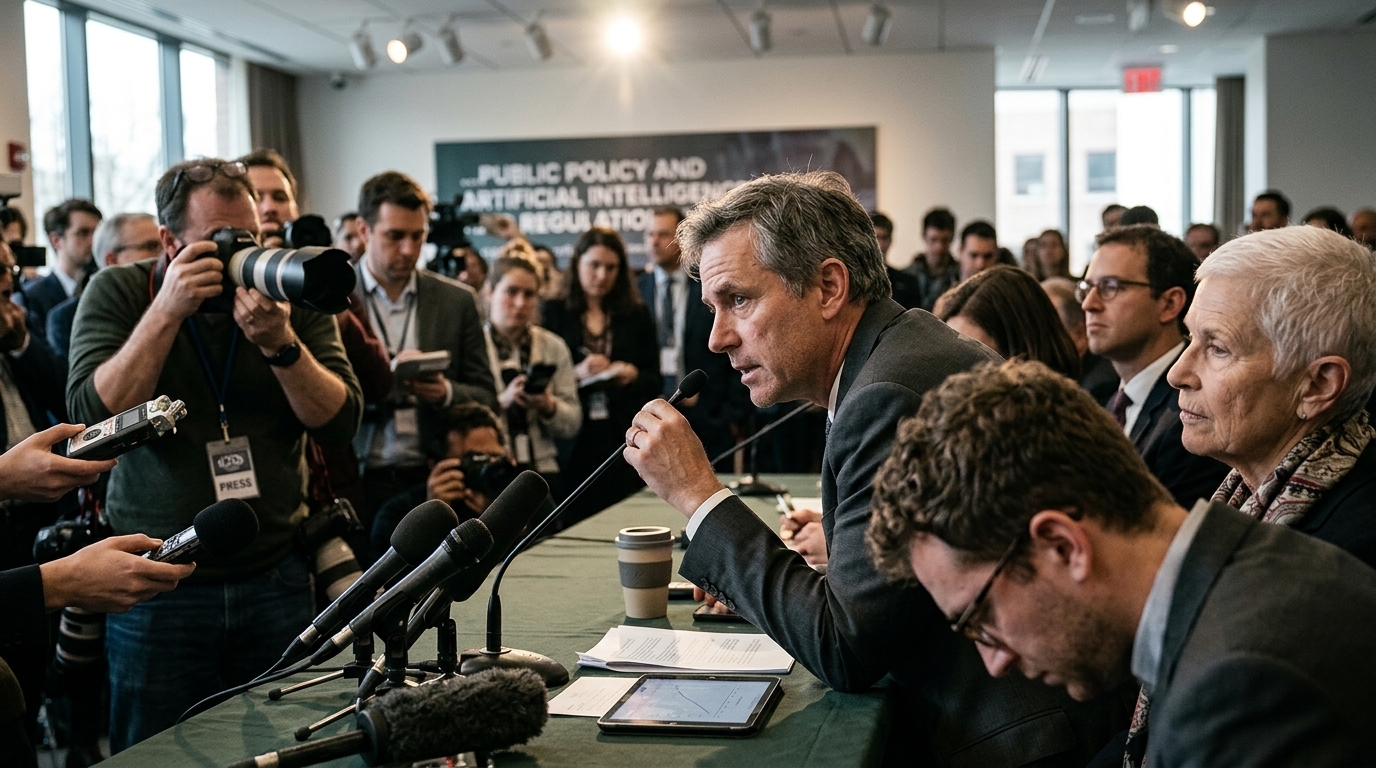
According to sources close to the Commission, this access will allow European experts to conduct real-time 'stress tests.' This move is interpreted as an attempt by OpenAI to set the framework for what is considered 'safe AI,' preempting stricter regulations that could hamper its commercial activity. Is it the epitome of 'regulatory capture'? Perhaps. But it is also a necessary concession in a world where the EU's digital sovereignty is now a non-negotiable priority.
The Anthropic 'Block' and the Enigma of Mythos
In contrast, Anthropic—the company that often positions itself as the 'conscientious' alternative to OpenAI—seems to be building walls. The 'Mythos' model, rumored to possess unprecedented strategic thinking and risk analysis capabilities, remains beyond European oversight. The company’s official justification focuses on the protection of intellectual property and the fear that EU regulatory requirements could expose sensitive information to state actors.
This stance has caused friction in Brussels. 'We cannot have a two-speed market where some companies cooperate and others hide behind secrecy,' said a senior EU official. Anthropic’s refusal to comply with transparency requests for Mythos could lead to the model being blocked from the European market—a development that would deprive European businesses of one of the most sophisticated AI tools of the decade.
Cybersecurity and Geopolitics
This confrontation is not just about code; it is about power. In an era where cyber-attacks are the new front of warfare, who controls the models that can prevent—or facilitate—them is a matter of national security. GPT-5.5-Cyber promises to shield Europe’s energy grids and financial systems. However, reliance on American technology remains the EU's 'Achilles' heel.'
- OpenAI offers transparency to secure market dominance.
- Anthropic chooses model protection, risking a total break with the EU.
- The EU pushes for 'white boxes' instead of 'black boxes' in technology.
- The risk of a new digital 'Iron Curtain' between the US and the EU is becoming visible.
The remaining question is whether OpenAI’s move will become the standard for all market players or if we will see a gradual withdrawal of American companies from Europe as regulations tighten. Anthropic’s Mythos may only be the first in a long line of technological products deemed 'too dangerous' or 'too valuable' to be shared with the Old Continent’s regulators.
The Future of Regulation
As we head into the second half of 2026, the implementation of the AI Act will be tested in practice. The case of GPT-5.5-Cyber shows that cooperation is possible, but at a heavy price for corporate autonomy. Anthropic, on the other hand, reminds everyone that innovation does not always follow the laws of bureaucracy. In the final analysis, the battle over 'Mythos' and 'Cyber' is a battle over who will define the rules of the game in the 21st century.