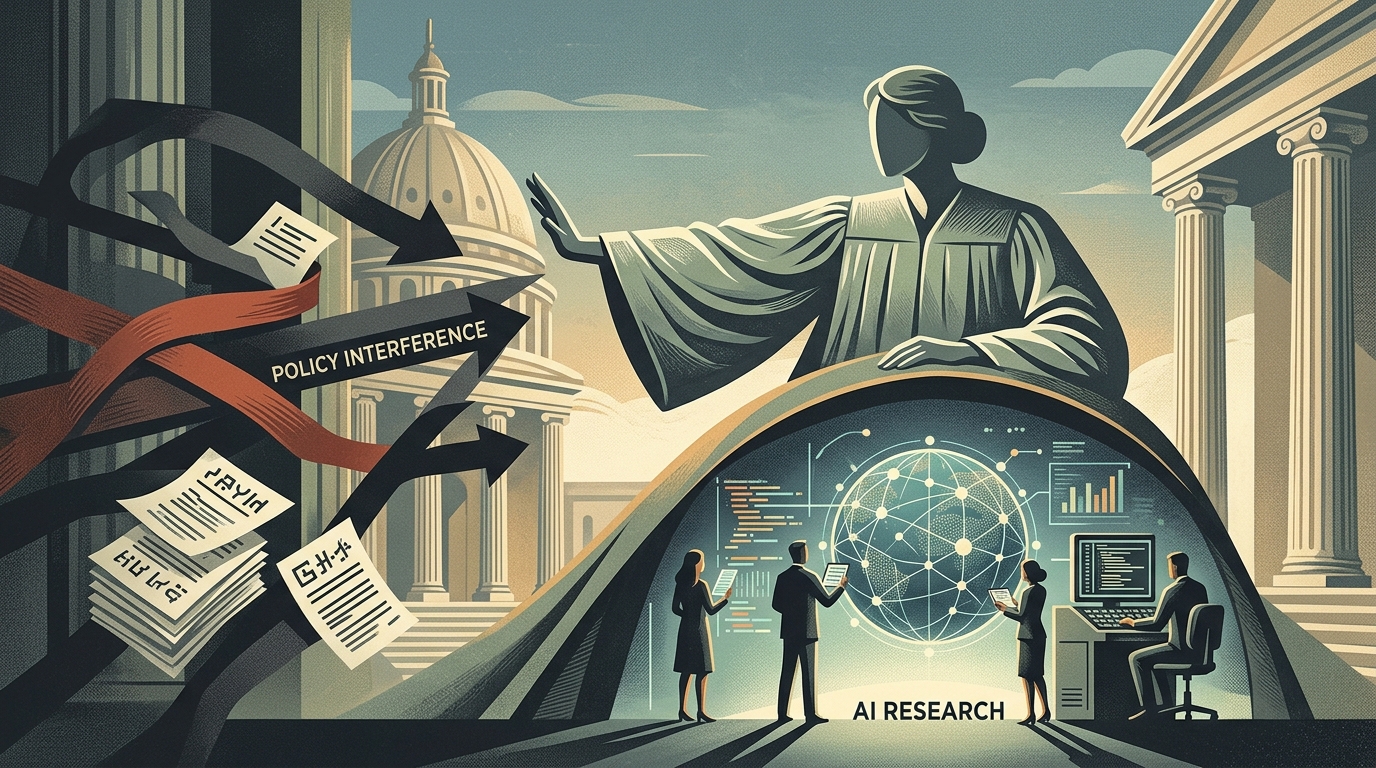
In a move that marks a historic turning point in the relationship between the technology industry and state power, OpenAI has announced the indefinite postponement of the public release of its next major model, GPT-5.6. This decision is not due to technical difficulties or performance shortfalls, but to an unprecedented intervention by the United States government, which requested "early and exclusive access" to the model for national security reasons and risk assessment.
The news, first reported by Reuters, confirms what many analysts had feared: that frontier AI models have moved beyond the stage of commercial products and have become strategic assets. Washington, through the Department of Commerce and the newly established AI Safety Institute, appears to be implementing a protocol reminiscent of the Cold War era, where advanced technology is tightly controlled before reaching the public or international rivals.
The Strategy of "Preemptive Access"
The US government's request for access to GPT-5.6 prior to its public release is based on the 2023 Executive Order, which has now been reinforced by new legislative frameworks in 2025 and 2026. According to sources close to the White House, GPT-5.6 exhibits "emergent capabilities" in the fields of cyber warfare, biological agent design, and autonomous decision-making that could destabilize national defense if used maliciously.
OpenAI, led by Sam Altman, finds itself in a difficult position. On one hand, the company seeks to maintain its market leadership and satisfy its investors, such as Microsoft. On the other hand, close cooperation with the state offers a "shield" against future antitrust prosecutions while securing massive government contracts. However, this postponement is drawing sharp criticism from the scientific community, which warns of the "nationalization" of knowledge.
- GPT-5.6 is reported to have reasoning capabilities approaching the PhD level across multiple scientific fields.
- The US government seeks to test whether the model can "escape" its safety constraints (jailbreaking).
- There is intense fear of the model being used by China or Russia through reverse engineering.
The Geopolitical Chessboard and Competition with China
This move cannot be seen in isolation from the global competition for Artificial General Intelligence (AGI). China, with its own models from Baidu and Alibaba, is following a similar strategy of tight integration of AI into the state apparatus. Washington considers any advantage held by OpenAI to be a de facto advantage for the US, and therefore, the public release of the model is seen as a risk of intellectual property leakage.
"This is no longer about an app that writes poetry or code. This is about the infrastructure of power in the 21st century," said a senior Pentagon official.
This approach, however, sets a dangerous precedent. If the US demands priority, what will stop the European Union or other major powers from demanding the same, citing their own security concerns? The global AI market risks fragmenting into national "walled gardens," nullifying the promise of a global, open technology.
Implications for Users and Developers
For the average user and the businesses that were waiting for GPT-5.6 to upgrade their services, this delay is a blow. Uncertainty about when—and under what terms—the model will be released to the public is freezing investment in third-party applications. Furthermore, the question of censorship arises: If the government has the first word, what "filters" will be imposed on the model before it reaches the end user?
OpenAI has attempted to reassure the public, stating that the delay will be used to strengthen red-teaming efforts and ensure the model is aligned with human values. However, in Silicon Valley, the discontent is palpable. Many see this development as the final nail in the coffin of the "Open" in the company's name, turning it into a de facto arm of the American state.
In conclusion, the case of GPT-5.6 highlights the great dilemma of our time: How can we ensure the progress of technology without sacrificing freedom and transparency on the altar of national security? Washington's answer is clear, but the cost of this choice remains to be seen in the coming months.