The countdown to redefining the European agricultural model has officially begun. At the heart of the ongoing negotiations in Brussels lies the new Common Agricultural Policy (CAP) for the 2028-2034 period—a timeframe expected to determine not only the economic viability of producers but also the geopolitical resilience of the European Union in an increasingly uncertain world. For Greece, the stakes are immense: securing a budget of approximately €20 billion, which serves as the backbone of the Greek countryside.
Athens' Strategy and the New Geopolitical Landscape
The Greek government, through the Ministry of Rural Development, is approaching the negotiating table with an agenda that prioritizes "strategic autonomy." Following the crises of the pandemic and the war in Ukraine, the concept of food security has moved from the periphery to the center of European policy. Athens argues that the new CAP should not merely be a tool for environmental compliance, but a mechanism that guarantees food sufficiency at competitive prices.
According to diplomatic sources, Greece seeks to maintain the level of direct payments (Pillar I), which act as a safety net for thousands of small and medium-sized holdings. However, pressure to redistribute funds toward Eastern European member states and the need to finance the EU's defense industry are creating a restrictive environment. The Greek side is banking on highlighting the unique characteristics of Mediterranean agriculture—small landholdings, high production costs, and a vulnerable ecosystem—to justify the continuation of robust funding.
The Green Deal and the "Simplification" Revolution
One of the greatest challenges for the 2028-2034 period is reconciling the European Green Deal with productive reality. The intense farmer protests of 2024 and 2025 served as a wake-up call for Brussels. The new CAP is expected to incorporate a more flexible approach to "eco-schemes," reducing the bureaucracy that has historically hindered farmers.
"We cannot have green agriculture with red balance sheets," noted a European Commission official, echoing the growing sentiment for a more realistic transition.
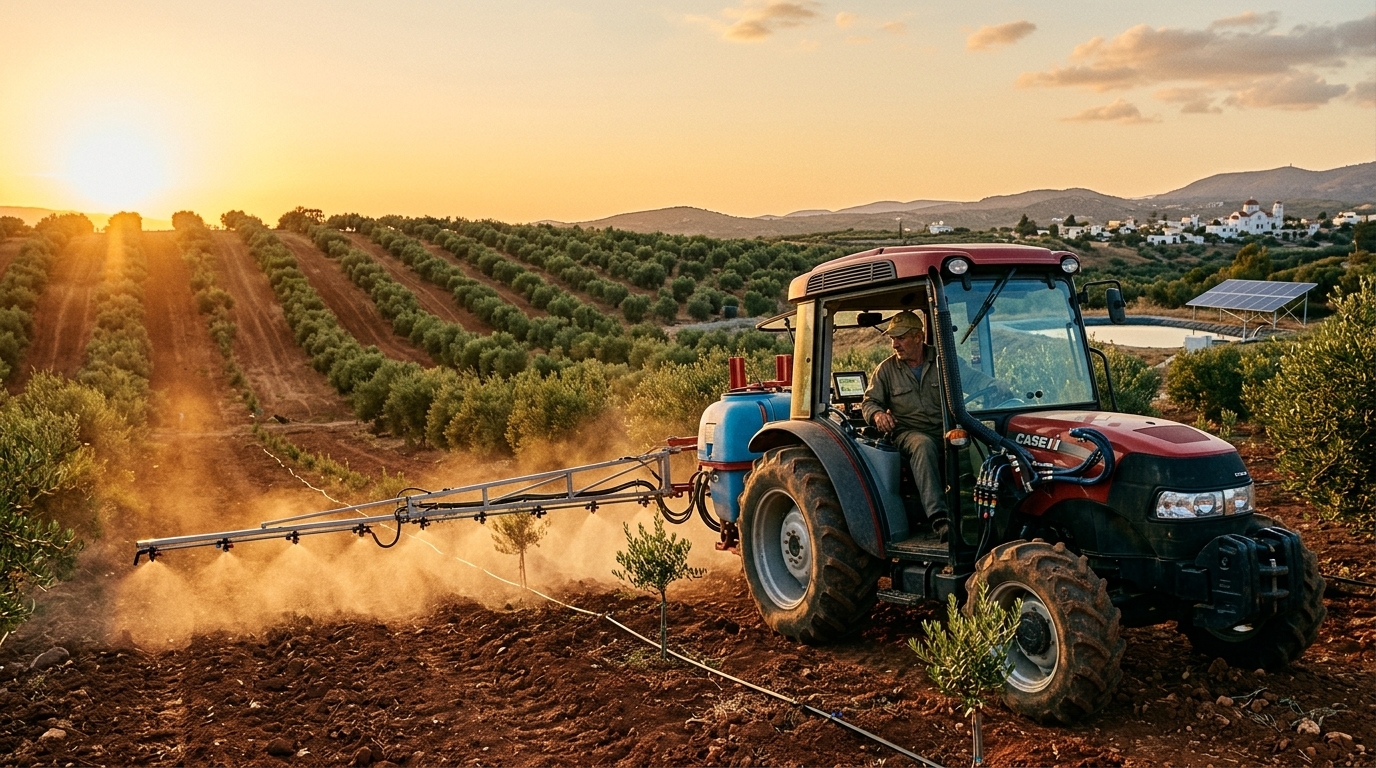
For Greece, simplifying procedures is vital. The digitization of controls via the Copernicus system and the use of Artificial Intelligence to monitor crops promise to reduce payment delays and lower the administrative burden on producers. "Smart farming" is no longer an option but a prerequisite for accessing new funds.
Demographics and Young Farmers: The Renewal Bet
Perhaps the most critical issue for Greek agriculture is the aging population. With 30% of Greek farmers nearing retirement age, the new CAP 2028-2034 must offer strong incentives for farm succession. Athens is proposing an increase in resources for "First Installation" and the creation of financial tools to facilitate access to land and working capital.
Furthermore, the new period will emphasize education and advisory services. The modern farmer must simultaneously be an entrepreneur, a technologist, and an environmentalist. Linking research with production through European Innovation Partnerships will be the key to increasing the added value of Greek products, such as olive oil, feta cheese, and fruits and vegetables.
Climate Crisis: From Theory to Survival
Climate change is no longer a future scenario but a daily threat, particularly for regions like Thessaly and Central Greece. The new CAP will include enhanced funds for risk management and climate adaptation. Greece is advocating for the creation of a permanent European compensation mechanism for natural disasters, which would complement national insurance schemes like ELGA.
In conclusion, the negotiation for the €20 billion of the 2028-2034 period is a battle for the country's identity. Athens' success will be judged by its ability to convince its partners that supporting the Greek producer is not a mere subsidy, but an investment in social cohesion, environmental protection, and the national security of Europe.