The news of Suresh Krishnan’s departure from his role as a key AI policy adviser at the White House is more than just a routine personnel change; it is a seismic shift in the landscape of technological governance. At a time when Washington is struggling to find the equilibrium between fostering unbridled innovation and establishing necessary guardrails, the loss of one of the chief architects of the 2023 Executive Order on AI raises profound questions about the future of American strategy.
The Architect of 'Safe' Innovation
Krishnan has been a pivotal figure within the Office of Science and Technology Policy (OSTP). His role transcended mere advising; he was instrumental in bridging the gap between the raw technical capabilities of Large Language Models (LLMs) and the foundational values of democratic societies. Under his stewardship, the White House championed the philosophy that safety is not an impediment to progress, but a prerequisite for the broad societal adoption of AI.
His tenure was defined by the push for 'red-teaming'—rigorous safety testing for the most powerful AI models before they reach the public domain. This approach drew fire from both sides: tech giants feared product delays, while civil society advocates argued the measures lacked sufficient legal teeth. His exit comes exactly as these policies transition from theoretical frameworks into the challenging phase of practical enforcement.
The Power Vacuum and Global Competition
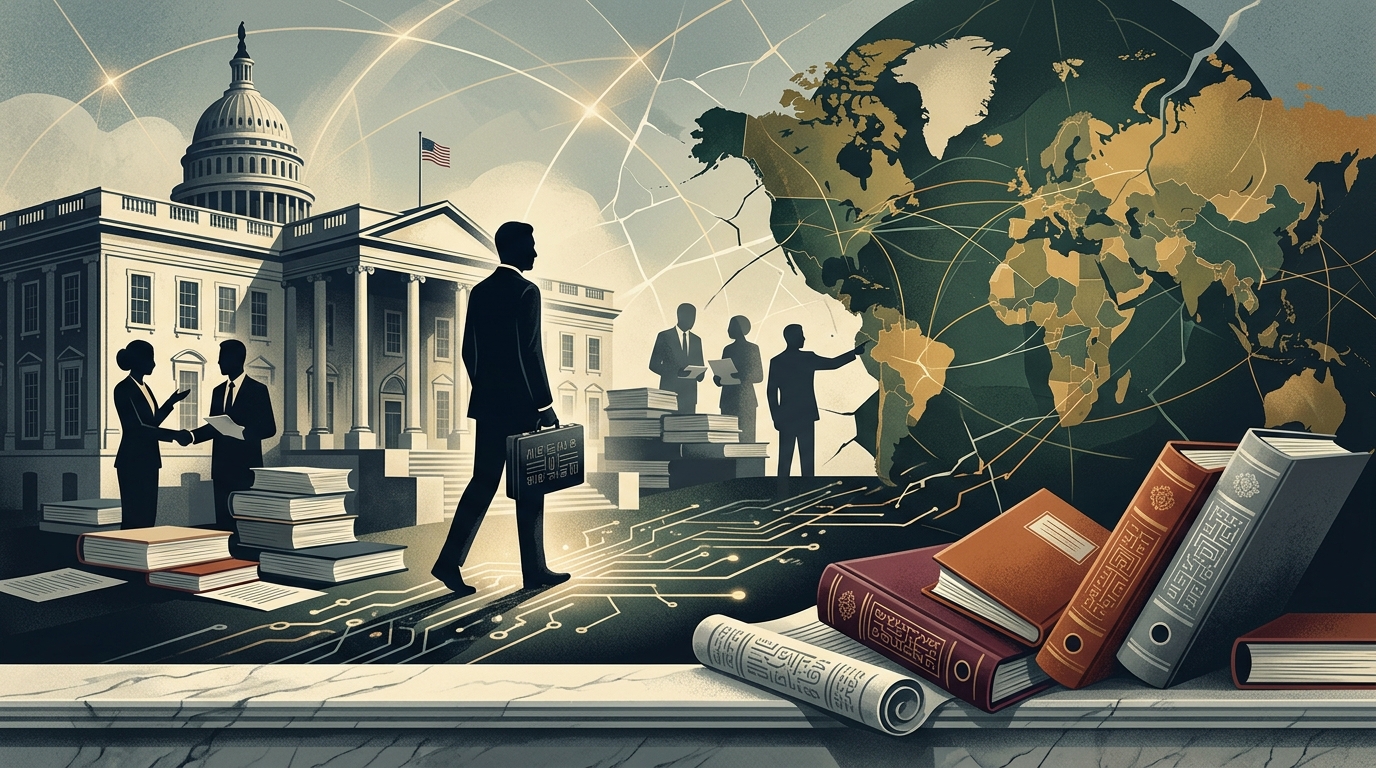
High-level departures are often interpreted as the natural conclusion of a policy cycle, but in the realm of AI, the cycle has only just begun. With the European Union’s AI Act entering full implementation and China refining its own state-controlled regulatory model, the U.S. risks a leadership vacuum. Krishnan was the primary liaison with international counterparts, working to ensure that global safety standards did not diverge into a fragmented, chaotic mess.
- Who will now lead the complex negotiations with Congress for permanent AI legislation?
- How will this affect the operational momentum of the U.S. AI Safety Institute (US AISI)?
- Will his departure signal a pivot toward a more 'market-friendly,' laissez-faire approach?
These questions are reverberating through Washington. The prevailing concern is that without a scientifically literate and politically savvy voice in the White House, AI policy could devolve into superficial regulations that either stifle startups or grant a free pass to dominant monopolies.
The Succession Challenge
The choice of Krishnan’s successor will serve as a definitive signal of the administration's priorities. A candidate hailing from the tech industry would be viewed as a victory for Silicon Valley lobbyists. Conversely, a successor from the legal or academic sectors would signal an intensification of the regulatory scrutiny facing Big Tech. History teaches us that during technological revolutions, the continuity of the people shaping the rules is as vital as the rules themselves.
"Artificial Intelligence is not merely a tool; it is a new form of power. Governing that power requires individuals who are not afraid to ask uncomfortable questions of the most powerful entities on Earth."
In conclusion, Krishnan’s departure leaves a significant void at the center of American tech diplomacy. Whether this void is filled by an equally formidable figure or marks a retreat from the White House's regulatory ambitions will define the trajectory of AI development for the next decade.