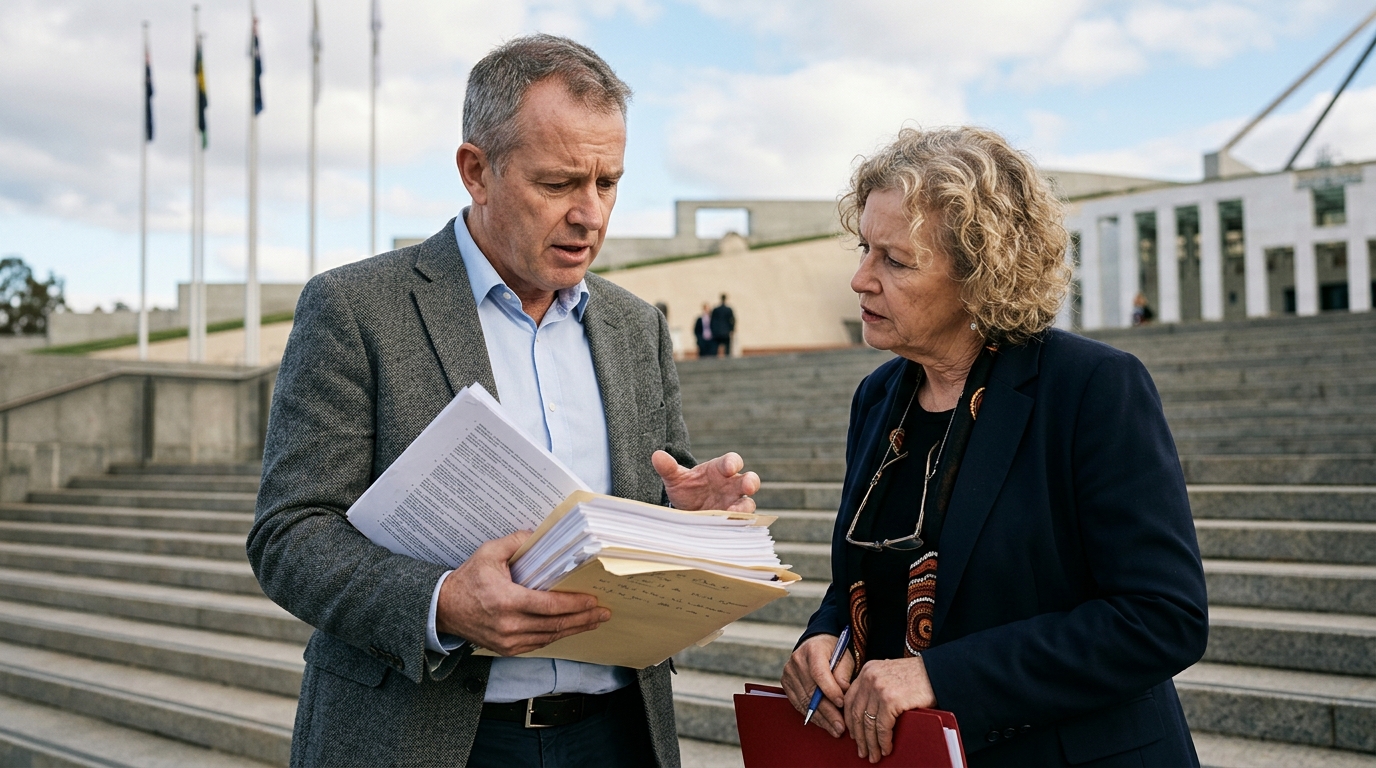
In a period of structural shifts for the Greek labor market, Minister of Labor and Social Security Niki Kerameos has outlined the government's priorities, focusing on eliminating gender inequalities and the digital transformation of labor relations. During a recent intervention, the Minister expressed her profound astonishment at the reservations raised regarding the bill for equal pay between men and women, labeling such objections as 'unthinkable' for a modern European democracy.
Transparency as a Tool for Equality
The bill, which transposes the relevant European Directive (2023/970), is not merely a declaration of intent. It introduces strict pay transparency rules, requiring companies to disclose their criteria for determining salaries and provide data on the gender pay gap. Ms. Kerameos emphasized that labor equality is not just a matter of social justice but also of economic rationality, as the full utilization of the female workforce could significantly boost the country's GDP.
According to the Minister, objections focusing on the administrative burden for businesses ignore the fact that pay opacity serves as a 'refuge' for discrimination. 'We cannot speak of growth if a large segment of the population is paid less for the exact same work,' she stated, underlining that Greece must bridge a gap that has existed for decades.
The Digital Work Card and the Fight Against Arbitrariness
One of the most critical tools on the Ministry's agenda is the expansion of the Digital Work Card. Following its implementation in banks, supermarkets, and industry, the measure is now being dynamically extended to retail and tourism. Ms. Kerameos presented the card not as a means of surveillance, but as a 'digital guarantee' for the employee that every minute of work will be recorded and paid.
- Real-time recording of overtime.
- Reduction of under-declared labor.
- Automated checks by the Labor Inspectorate via the ERGANI II system.
The Minister acknowledged technical challenges, particularly in sectors with high seasonality like tourism; however, she insisted that digitalization is the only way to exit the gray zone of the informal economy.
Four-Day Work Week: Choice, Not Imposition
The issue of the four-day work week was also at the heart of the discussion. Ms. Kerameos clarified that the framework remains optional and is based on an agreement between employer and employee, without any reduction in earnings. The Minister argued that this flexibility could improve work-life balance, provided that the legal 40-hour limit is strictly observed.
'The labor market is changing globally. Greece cannot remain attached to models from the last century, but it must ensure that flexibility does not turn into deregulation,' the Minister declared.
Unemployment and Professional Insurance
Finally, Ms. Kerameos referred to the trend of unemployment, which continues its downward trajectory toward the 9% milestone, and the reform of Professional Insurance Funds (TEA). The goal is to create a strong second pillar of insurance that will provide supplementary income to retirees while strengthening the culture of saving in Greece. The Minister concluded that the overall strategy aims for labor that is 'legal, safe, and fairly compensated.'