Environmental education in Greece is entering a new, dynamic phase. A recent decision by the Ministry of Education, Religious Affairs, and Sports has initiated the procurement of modern technological and laboratory equipment for the Centers for Education for the Environment and Sustainability (KEPEA). This move is not merely an administrative update but a strategic investment in the "ecological intelligence" of future generations, at a time when the climate crisis is no longer a future scenario but a daily reality.
The KEPEA centers, which succeeded the older Environmental Education Centers (KPE), serve as the primary pillar of non-formal environmental education in the country. For decades, these centers have offered invaluable knowledge through educational visits and field programs. However, the equipment in many of them had become obsolete or outdated, limiting the potential for modern scientific analysis and the use of digital tools.
The Digital Transformation of the Field
The new equipment procurement focuses on three central axes: the digitization of observation, the enhancement of laboratory research, and the use of cutting-edge technologies to understand ecosystems. According to the plan, the centers will be equipped with:
- Modern meteorological stations with real-time data transmission capabilities.
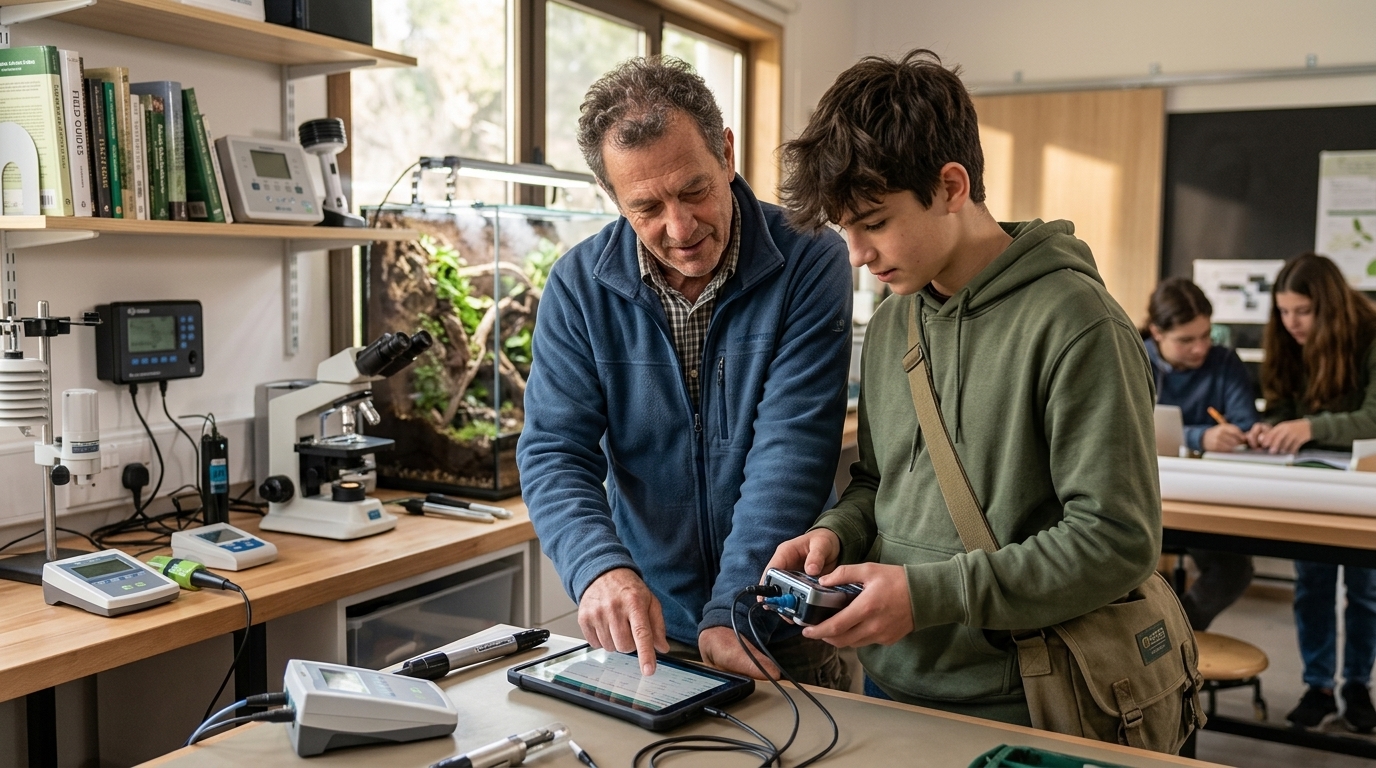
- Digital microscopes and portable water and soil quality analysis laboratories.
- Drones (Unmanned Aircraft Systems) for monitoring forest cover and coastal erosion.
- Virtual Reality (VR) and Augmented Reality (AR) systems allowing students to "tour" ecosystems that are inaccessible or have been damaged.
- High-performance computing units for data visualization and environmental modeling.
The use of these tools transforms the student from a passive recipient of information into an active researcher. When a child can use a sensor to measure a carbon footprint or analyze microplastic pollution on a local beach, knowledge ceases to be abstract and becomes experiential.
From Theory to Climate Action
The upgrade of KEPEA is part of a broader framework of reforms aimed at aligning Greek education with the UN Sustainable Development Goals (SDGs). The ministerial decision recognizes that environmental consciousness is not cultivated solely through textbooks but requires contact with the technology used by modern science.
"Investing in KEPEA is an investment in the resilience of our society. Our children must learn to read the signs of nature using the language of technology," ministry sources state.
However, the challenge does not end with the purchase of equipment. The success of the project directly depends on the training of the educators who staff the centers. Without the appropriate pedagogical framing, drones and sensors risk remaining "expensive toys." For this reason, special seminars are planned for pedagogical leads to integrate the new tools into existing curricula.
Geographical Dimension and Social Equity
One of the most significant benefits of the upgrade is the strengthening of KEPEA centers in rural and island regions. Often, these centers are the only hubs of scientific research and technological innovation for local communities. By equipping a center in Soufli, Konitsa, or Karpathos with modern means, the state offers equal opportunities for access to quality education for all students, regardless of their place of residence.
Furthermore, the data collected by the new KEPEA stations will be able to feed into a national environmental database, providing the scientific community with valuable information on local microclimatic conditions. Thus, educational centers also take on an "observatory" role, linking education with civil protection and environmental planning.
Conclusion
The procurement of new equipment for KEPEA is a necessary step for the modernization of public education. In a rapidly changing world, the ability of young people to understand and protect their natural environment with the help of science is the most important skill we can offer them. The challenge now shifts to implementation: the speed of procurement, the maintenance of the machinery, and, above all, maintaining the enthusiasm of the teachers called upon to lead students down this new digital path of sustainability.