In a period of intense political polarization and heightened security measures, the heart of the American capital was shaken by a new incident of armed violence. In the early hours of Sunday, May 24, 2026, a young man who opened fire on police forces near the White House was shot dead by authorities. The incident, although handled immediately by the Secret Service and the District of Columbia Police, brings the fragile security situation in Washington back to the forefront.
The Timeline of the Conflict
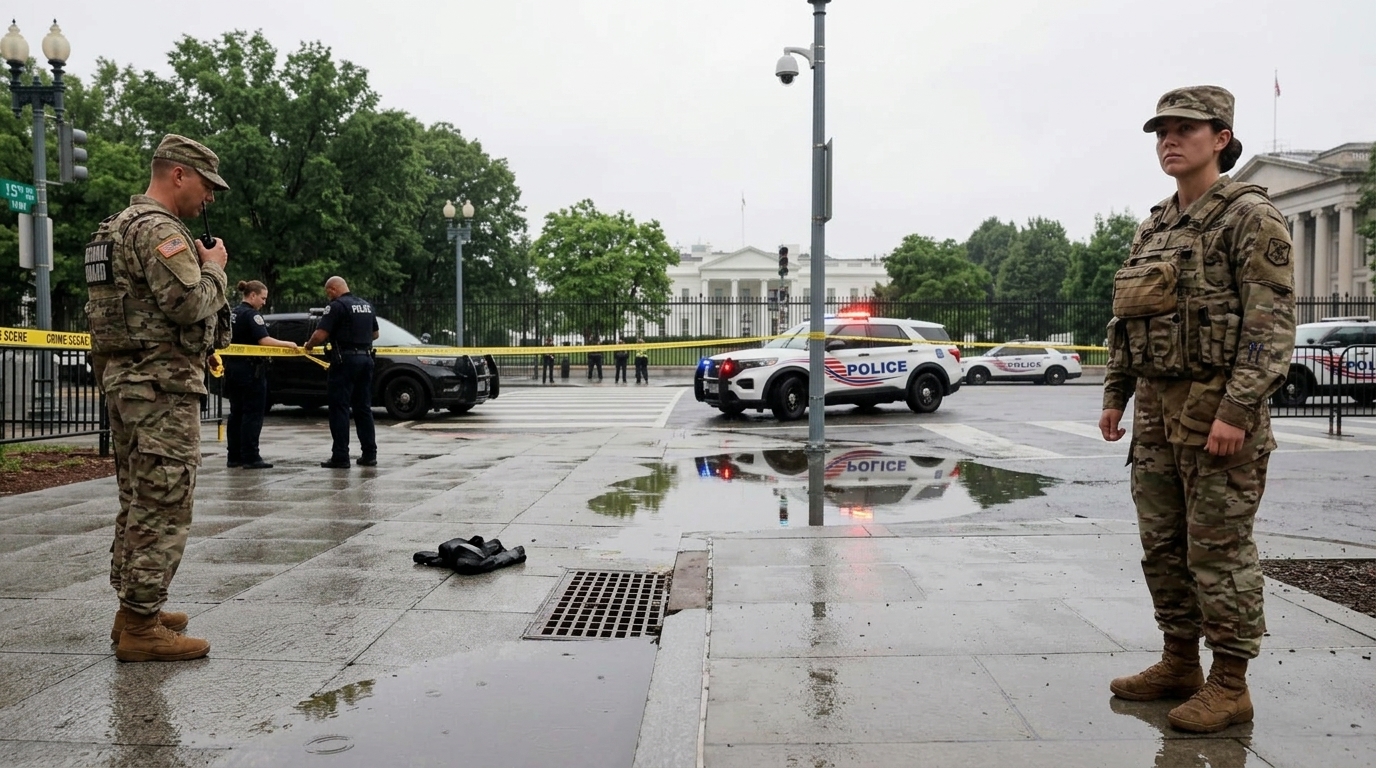
According to official reports, the episode began shortly after midnight between Saturday and Sunday. The suspect, whose identity has not yet been fully released beyond being described as a young adult, approached a checkpoint near the White House perimeter. Under circumstances that remain unclear, the gunman drew a weapon and began firing toward uniformed police officers patrolling the area.
The response was instantaneous. Secret Service agents and MPD (Metropolitan Police Department) officers returned fire, neutralizing the perpetrator almost immediately. Despite receiving first aid at the scene, the young man succumbed to his injuries. A significant element of the case is that Donald Trump was inside the White House at the time of the skirmish, leading to the immediate activation of security protocols and the temporary lockdown of all surrounding streets.
Security and Political Context
This incident cannot be viewed in isolation from the broader atmosphere prevailing in the United States in 2026. With political rhetoric reaching breaking points, the White House remains the central target of both symbolic and physical violence. Trump's presence in the building adds a layer of complexity to the investigation, as authorities examine whether the perpetrator had a specific political motive or if it was an act of desperation by a 'lone wolf.'
Critics of the current administration point out that increased societal tension fuels such violent outbursts, while security advocates emphasize the need for even stricter protection of government buildings. The Secret Service, which has faced intense criticism in recent years for security lapses, appears in this case to have acted with exemplary speed, preventing the perpetrator from entering the inner perimeter.
Investigation and Implications
Currently, the FBI is working closely with local police to trace the perpetrator's background. Social media, communications, and potential links to extremist organizations are being investigated. Washington remains on high alert as the city prepares for a series of political rallies scheduled for the coming weeks.
- Examination of the weaponry used by the perpetrator.
- Analysis of CCTV footage from Lafayette Square and surrounding streets.
- Assessment of the response speed of rapid intervention units.
The debate over gun control in the US is expected to reignite, as the incident occurred in one of the most heavily guarded areas in the world. If a gunman can get so close to the seat of executive power, what does this mean for the safety of ordinary citizens in less protected spaces? This question remains unanswered, while political leadership is called upon to balance freedom and security in an extremely volatile era.
"The safety of the President and the integrity of our institutions are non-negotiable," a Secret Service spokesperson stated hours after the incident.
In conclusion, the death of the young gunman is a reminder of the dangers lurking at the heart of American democracy. As 2026 unfolds as a year of great challenges, the ability of authorities to prevent such incidents will determine not only the safety of individuals but also the social cohesion of a deeply divided nation.