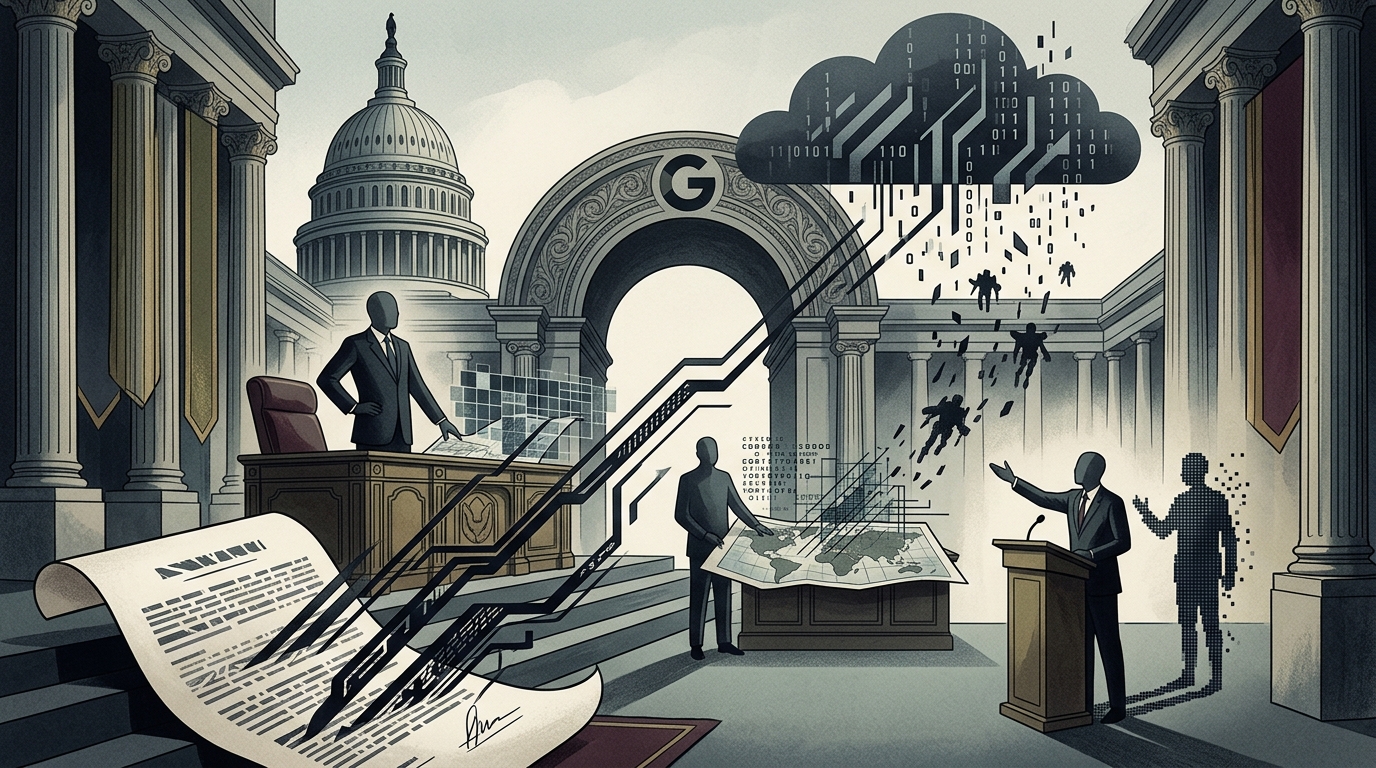
Google's announcement regarding the detection of the first "major cyberattack" powered by advanced Artificial Intelligence models is not merely a technical update; it is a clarion call for the future of global stability. As we move through 2026, the theoretical threat of "weaponized AI" has materialized into a concrete, well-orchestrated operation that has put the defensive infrastructures of tech giants on high alert. The attack, targeting critical infrastructure and government entities, utilized Large Language Models (LLMs) to create hyper-realistic phishing campaigns and self-evolving malware.
Anatomy of an Automated Threat
According to reports from Google Cloud and its subsidiary Mandiant, the attackers did not stop at using tools like ChatGPT for mere text generation. Instead, they employed specialized, uncensored AI models to analyze code in real-time, identifying zero-day vulnerabilities that would typically take human analysts weeks to discover. The speed at which AI can generate polymorphic malware variants renders traditional signature-based security systems effectively obsolete.
The most alarming aspect of the attack was the AI's ability to conduct social engineering at scale. Messages sent to victims were tailored to the specific writing style of their colleagues, having been trained on publicly available data and previous email leaks. This level of personalization makes it nearly impossible for the average user—and even trained professionals—to distinguish a fraudulent message from legitimate communication.
Geopolitical Implications and State Actors
While Google refrained from naming a specific nation-state behind the attack, analysts point toward established groups linked to state intelligence agencies. The integration of AI into cyber warfare fundamentally shifts the balance of power. Nations with limited human capital but access to significant computational power can now launch offensives that previously required armies of elite hackers.
"We are facing an asymmetric threat where the cost of attack is plummeting thanks to AI, while the cost of defense is rising exponentially," the report highlights.
The European Union and the United States are already in high-level discussions to tighten frameworks around dual-use AI models. However, the challenge remains: how do you regulate an algorithm that can simultaneously write poetry and discover vulnerabilities in banking systems? This incident proves that the safety guardrails implemented by AI developers are easily bypassed by determined actors using local, offline versions of open-source models.
The Response: AI vs. AI
The only effective defense against an AI-driven attack appears to be AI itself. Google has announced the reinforcement of its systems with the "Cybersecurity AI Framework," a network of neural models that monitor network activity and predict attacker movements before they are completed. The battlefield has shifted to a plane where algorithms clash in milliseconds, far beyond the scope of human intervention.
In conclusion, the first major AI-powered cyberattack is not the end of the road, but the beginning of a new, more perilous phase of the digital age. Businesses and governments must invest not only in technology but in a new culture of digital resilience. Trust, the very foundation of the internet, is facing its most significant challenge from a technology that can mimic human identity with terrifying precision.