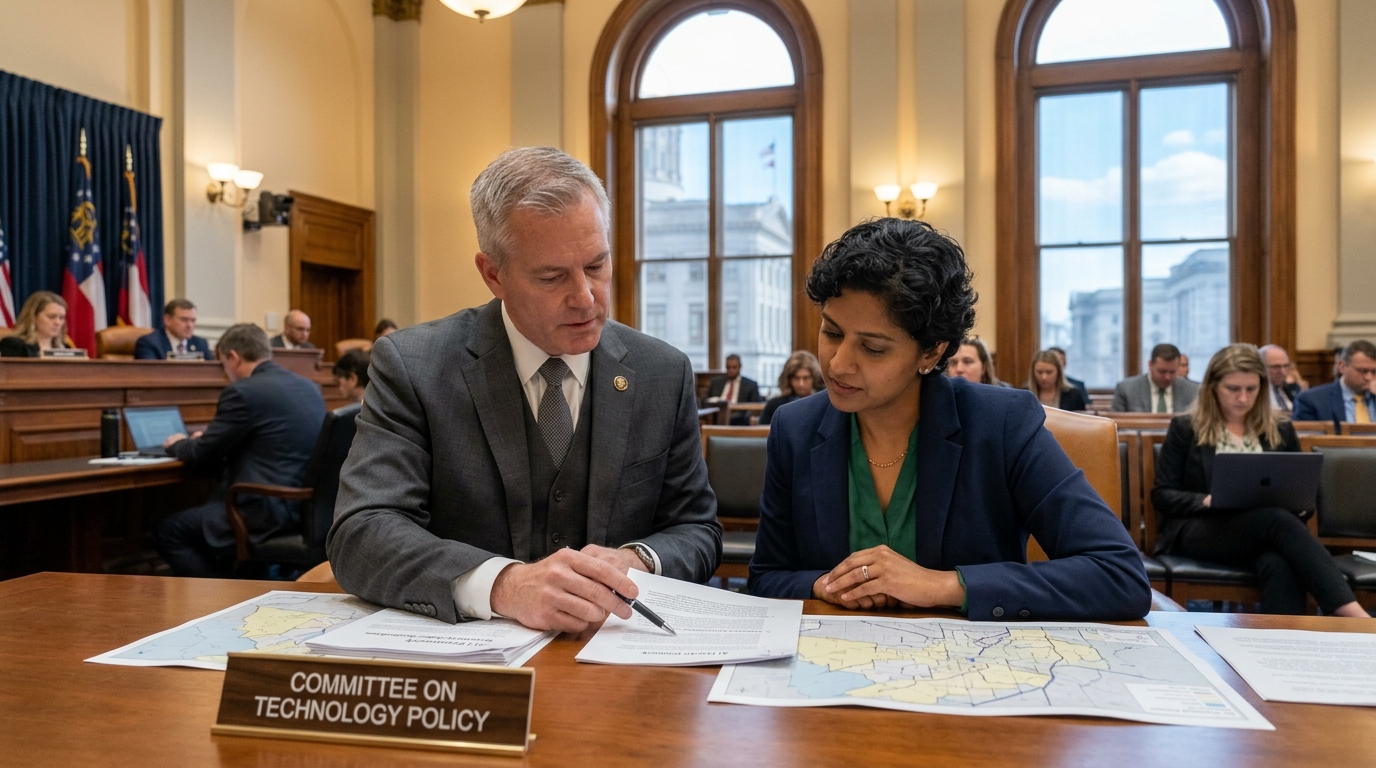
In an era where Artificial Intelligence (AI) is fundamentally reshaping public administration, the State of Georgia has decided not to remain a mere spectator. In a strategic move expected to serve as a blueprint for other states, the Georgia Technology Authority (GTA) has announced the implementation of a comprehensive framework of "guardrails" through the Darwin platform. This initiative aims to balance technological innovation with ethical responsibility, ensuring that the use of AI by state agencies remains transparent, fair, and secure.
The Darwin Platform as an Oversight Tool
The choice of the Darwin platform is no coincidence. It is a sophisticated governance system that allows decision-makers to monitor in real-time how AI algorithms are being deployed across various sectors, from social services to public safety. Darwin provides the tools for risk assessment, compliance management, and the detection of potential biases in data models.
According to Shawnzia Thomas, the State’s Chief Information Officer (CIO), the goal is to create an environment where state employees can experiment with AI without compromising public trust. "We don't want to stop progress, but we want to guide it correctly," she noted. The platform will serve as a centralized repository for all state AI projects, allowing for horizontal oversight and avoiding the fragmented approaches that often lead to security vulnerabilities.
Ethics and Transparency in Digital Governance
One of the most significant issues the Georgia initiative seeks to address is algorithmic transparency. Often, AI systems operate as "black boxes," where the decision-making process is opaque even to their creators. With the new guardrails, every agency using AI will be required to document the logic behind algorithmic decisions, especially when those decisions directly impact citizens' lives.
Furthermore, the framework places a heavy emphasis on combating discrimination. It is well-documented that algorithms can replicate or even amplify existing social biases. The Darwin platform will conduct automated audits to determine if AI models are operating with bias against specific demographic groups. This proactive approach is critical for maintaining social cohesion in a digital age.
"AI governance is not just a technical challenge; it is an ethical imperative for our democracy," stated GTA officials.
The National Context and Future Challenges
Georgia's move comes at a time when the U.S. federal government is struggling to establish uniform rules for AI. While there are executive orders and guidelines from NIST (National Institute of Standards and Technology), the lack of binding national legislation has forced states to take matters into their own hands. California, New York, and now Georgia are creating a patchwork of regulations that tech companies will have to navigate.
However, challenges remain. The speed at which AI evolves often outpaces the ability of regulators to respond. The State of Georgia must ensure its guardrails are flexible enough to adapt to new forms of AI, such as Generative AI, without becoming bureaucratic hurdles. The success of the venture will be judged by the state's ability to maintain a balance between strict oversight and supporting an innovation ecosystem that attracts investment and talent.
Conclusion
Georgia's adoption of the Darwin platform represents a bold step toward responsible digital governance. By enforcing strict rules and utilizing advanced oversight tools, the State is demonstrating that technology can and must serve humanity under terms of equality and justice. The Georgia experiment will be closely watched worldwide, as the need for "smart" AI regulation becomes increasingly urgent.