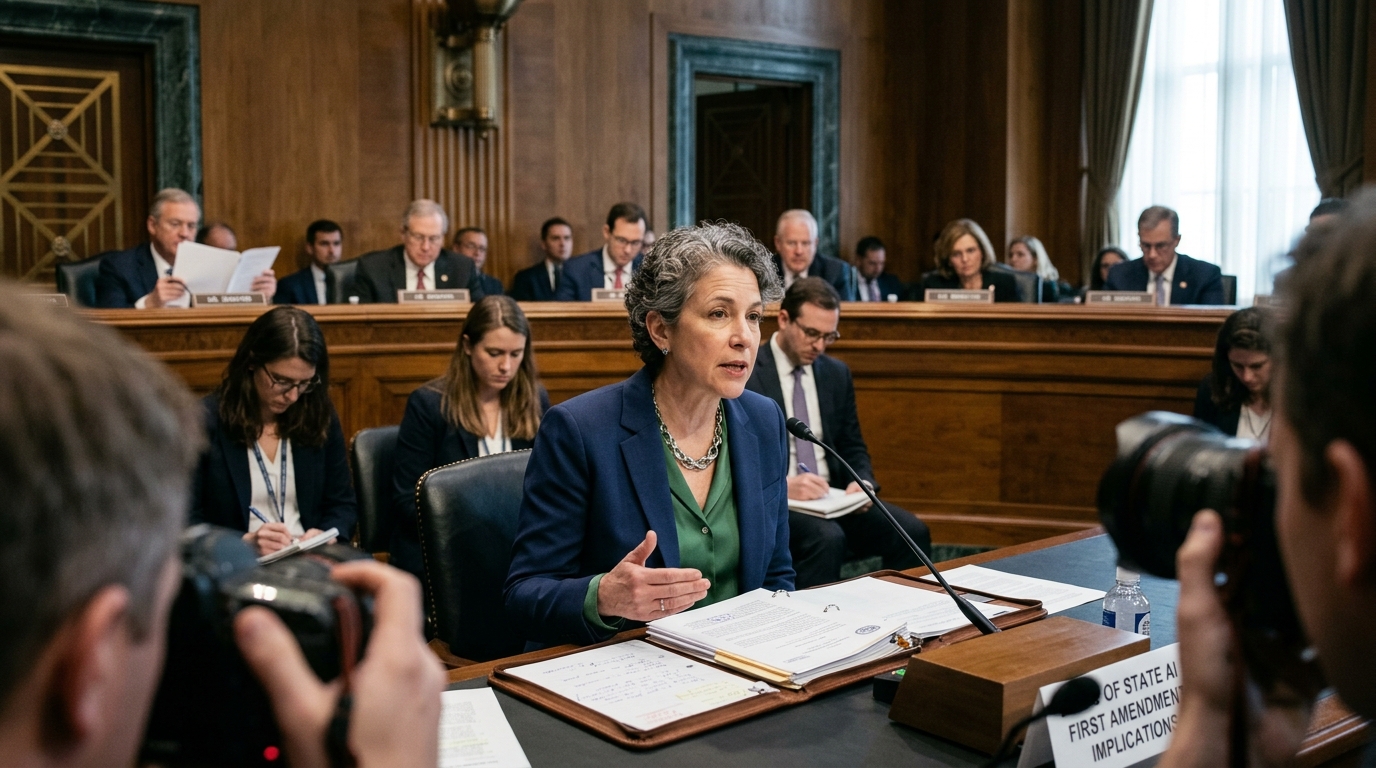
In a move poised to redefine the legal landscape of technology in the United States, the Federal Trade Commission (FTC) is advancing a proposal that could override individual state laws governing Artificial Intelligence (AI). This initiative, aimed at establishing a unified federal framework, has sparked a firestorm of criticism from legal scholars, civil liberties advocates, and state governments, centering on potential violations of the First Amendment of the U.S. Constitution.
The Dilemma of the Regulatory Patchwork
As AI becomes embedded in every facet of economic and social activity, states such as California, Colorado, and Utah have moved swiftly to enact their own statutes. These laws aim to protect consumers, prevent algorithmic discrimination, and ensure data transparency. For major technology firms, this "patchwork" of disparate regulations represents a compliance nightmare, driving up operational costs and potentially stifling innovation.
The FTC, under the leadership of Chair Lina Khan, argues that federal preemption is necessary to ensure fair competition and protect citizens nationwide. However, this push clashes with the traditional balance of power between states and the federal government. Critics argue that states serve as "laboratories of democracy," testing new approaches to a technology that evolves far faster than the bureaucracy in Washington, D.C.
The First Amendment on Trial
The most thorny issue raised by the FTC’s proposal is the intersection of AI regulation and free speech. In American jurisprudence, software code and algorithmic outputs are increasingly treated as forms of protected expression. If the FTC imposes rules dictating how an AI should "think" or "speak," many argue this amounts to government-mandated censorship.
- Restriction of Expression: AI developers contend that their models are editorial expressions of their creators' viewpoints.
- Infringement on State Autonomy: States claim they have the sovereign right to protect their citizens from AI-generated harms.
- Legal Uncertainty: The lack of clear precedent on whether AI entities possess constitutional rights complicates the judicial outlook.
"Attempting to enforce a single rule on a technology based on information processing risks turning the FTC into an arbiter of truth, something the First Amendment explicitly forbids,"notes a recent MLex analysis that has become a focal point of the debate.
Economic and Political Implications
The FTC’s maneuver is not merely legal; it is deeply political. It reflects a broader trend toward reining in the power of Big Tech. However, the strategy of preemption could backfire. Should a future Supreme Court find that FTC regulations infringe upon free speech, the entire federal framework could collapse, leaving a power vacuum in its wake.
On the other hand, consumers are caught in the middle. While a single federal law could provide clarity, weakening state authorities might result in less stringent oversight on issues like biometric privacy or AI usage in hiring processes. The battle for AI sovereignty has only just begun, and the courtrooms will be the primary theater of operations for years to come.