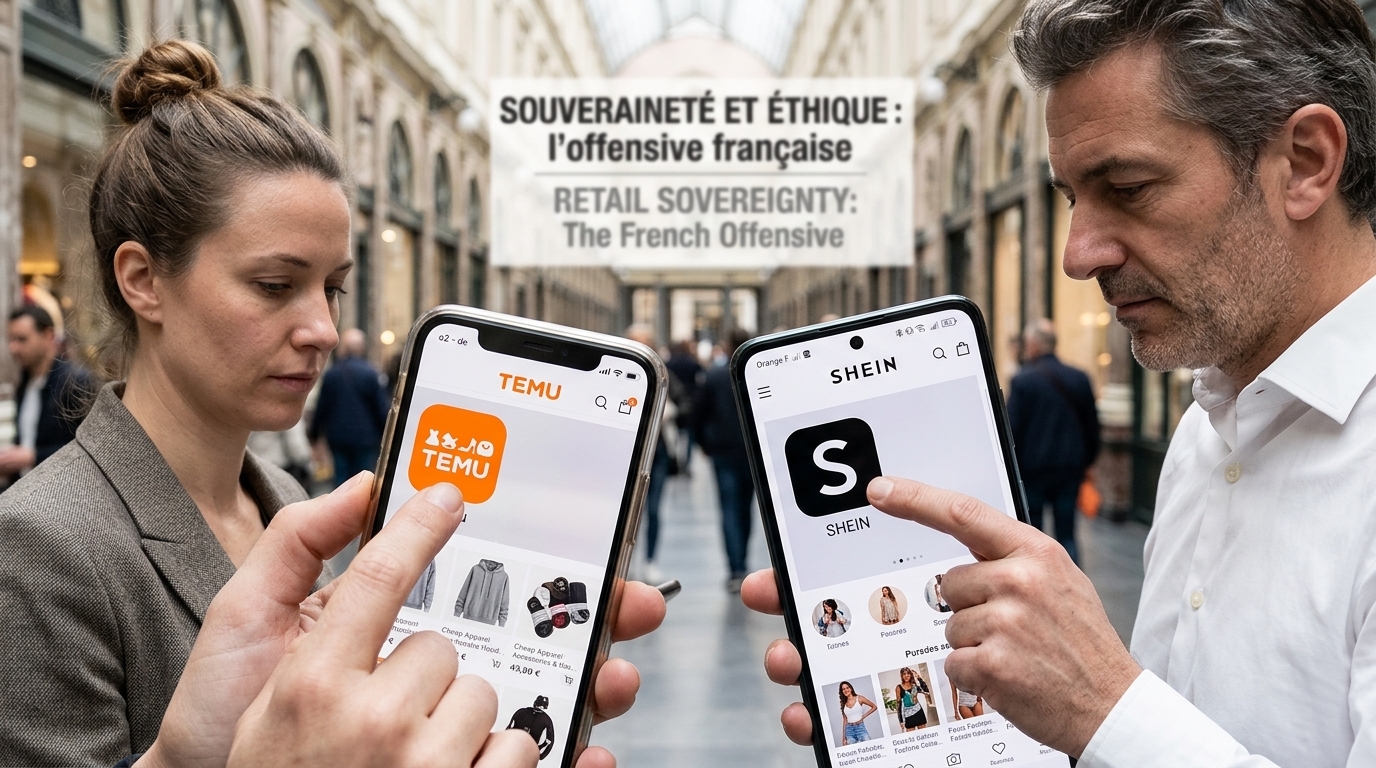
The meteoric rise of Shein and Temu is not merely a business phenomenon; it represents a tectonic shift in global trade that has placed Europe on high alert. France, the traditional guardian of haute couture and rigorous regulatory frameworks, has taken the lead in a campaign to impose stricter rules on these e-commerce giants. Paris is no longer calling just for local restrictions, but for a coordinated European intervention that could fundamentally alter how European consumers access ultra-cheap products from Asia.
The Ultra-Fast Fashion Model and the French Reaction
The operational model of Shein and Temu is built on an aggressive "ultra-fast fashion" strategy, where thousands of new designs are added to their platforms daily, often mimicking trends that have just surfaced on social media. Production occurs at speeds that make even traditional "fast fashion" players like Zara or H&M appear sluggish. France argues that this model encourages overconsumption and waste production on a scale that the planet simply cannot sustain.
The French National Assembly has already approved a bill that provides for penalties on ultra-fast fashion products, which could reach up to 50% of the selling price by 2030. Furthermore, a ban on advertising for such companies has been proposed. However, the French government recognizes that national action is limited in scope within a single market. Therefore, it is lobbying the European Commission to adopt similar measures at the EU level, ensuring that Chinese platforms cannot bypass rules through other member states.
The €150 Loophole and Customs Reform
One of the primary points of contention is the current EU legislation that exempts parcels with a value of less than €150 from customs duties. This exemption, originally designed to facilitate micro-trade, has become the "key" to the success of Shein and Temu. By shipping millions of small packages directly to consumers, these companies avoid the duties that European retailers must pay when importing goods in bulk.
France, along with other countries like Germany, is calling for the abolition of this threshold. The argument is straightforward: the current situation creates unfair competition. While European businesses must comply with strict rules regarding product safety, labor rights, and environmental protection, Asian platforms operate in what many describe as a "regulatory vacuum." Eliminating the €150 de minimis rule would force these companies to raise their prices, thereby reducing their competitive advantage.
Social Implications and the Sustainability Challenge
Beyond numbers and tariffs, the French intervention carries a strong moral and environmental weight. The textile industry is one of the most polluting sectors globally, and ultra-fast fashion is considered the main culprit for massive water consumption and carbon emissions. France seeks to apply the "polluter pays" principle, imposing environmental levies that reflect the true cost of these products to the ecosystem.
- Environmental Burden: The production of cheap synthetic fibers releases microplastics into the oceans.
- Labor Conditions: There are persistent allegations regarding the working conditions in the factories supplying these platforms.
- Cultural Sovereignty: France fears the weakening of its domestic fashion industry, a pillar of its national identity and economy.
In conclusion, the French "blockade" is not merely an act of protectionism. It is a test for the European Union itself: can it protect its values and its market against a consumption model that seems to blatantly ignore them? The response from Brussels will determine the future of retail on the continent for decades to come.