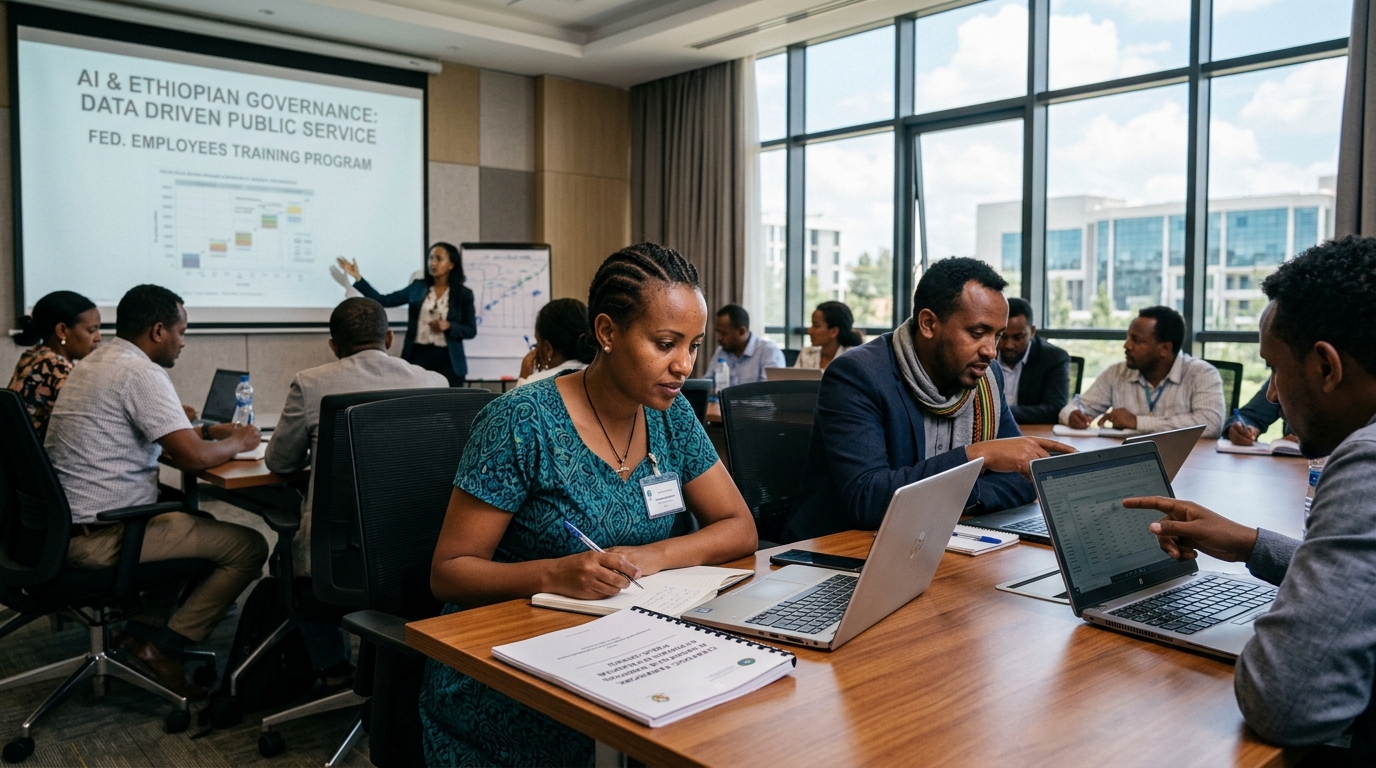
In a move that signals a new era for public administration in East Africa, Ethiopia has launched an extensive training program for its federal employees in Artificial Intelligence (AI) technologies. This initiative, spearheaded by the Ethiopian Artificial Intelligence Institute (EAII), is not merely a technical upgrade but a strategic choice to redefine the state-citizen relationship through digital innovation.
The Strategic Goal of Digital Ethiopia 2025
This training is part of the broader framework of the "Digital Ethiopia 2025" strategy, a roadmap aimed at transforming the country into a digital economy. The government in Addis Ababa recognizes that traditional bureaucracy acts as a brake on development. By introducing AI tools into the daily operations of ministries, the goal is to automate repetitive tasks, improve data accuracy, and facilitate faster decision-making.
Priority sectors include healthcare, agriculture, and public safety. For instance, in agriculture—the backbone of the Ethiopian economy—AI can assist in predicting crop yields and managing resources, while in healthcare, it can accelerate diagnosis in remote areas through algorithm-supported telemedicine.
Training and Human Capital
The training program focuses on understanding the core principles of machine learning, big data analytics, and the ethical implications of AI. According to EAII officials, the objective is not for all civil servants to become programmers, but to acquire the "digital intuition" required to use new tools effectively.
- Introduction to Machine Learning for administrative executives.
- Data management and cybersecurity.
- AI Ethics and privacy protection.
- Robotic Process Automation (RPA) to reduce red tape.
Challenges and Geopolitical Context
Despite the enthusiasm, significant challenges remain. Ethiopia faces frequent power outages and limited internet access in many regions outside the capital. Furthermore, reliance on foreign technology, primarily of Chinese origin (through companies like Huawei), raises questions about the country's digital sovereignty. Investing in domestic training is Ethiopia's response to these concerns, seeking to create a critical mass of local experts who can adapt technology to local needs and languages, such as Amharic.
"Artificial Intelligence is not a luxury for Ethiopia; it is a necessity to bridge decades of development gaps in a few years," institute officials state.
Ethics and Governance
Another critical aspect is transparency. In a country with a complex political landscape, the use of AI for surveillance or decision-making that affects citizens' lives must be governed by strict rules. Employee training includes modules on avoiding algorithmic biases, ensuring that services are provided equitably across all ethnic groups and regions of the country. The success of this venture could make Ethiopia a blueprint for other developing nations wishing to "leapfrog" stages of development through technology.