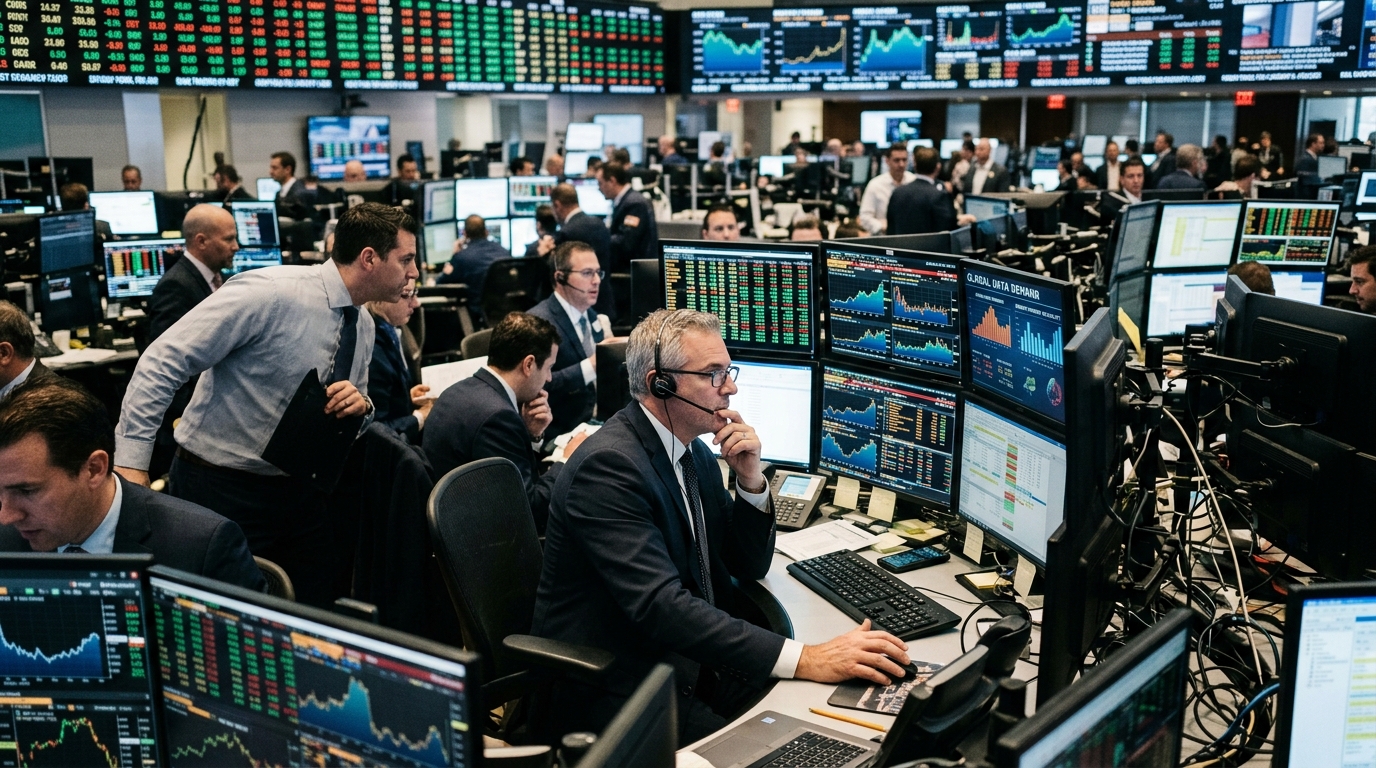
In the high-stakes world of technology, the term "supercycle" is invoked sparingly, reserved for moments when a fundamental shift in market dynamics promises sustained growth for years, if not decades. Today, in July 2026, we find ourselves in the thick of such a phenomenon: the Artificial Intelligence Memory Supercycle. While the spotlight often shines on chipmakers like Nvidia, the real battlefield—and the source of massive potential gains—is shifting to the bedrock of computing: Random Access Memory (DRAM) and storage (NAND).
The Anatomy of a Digital Explosion
Artificial Intelligence, in its current iteration of Large Language Models (LLMs) and multimodal systems, is incredibly data-hungry. Processing power (compute) alone is insufficient; data must move to and from the processor at speeds that traditional memory architectures simply cannot support. Enter High Bandwidth Memory (HBM). HBM3E and its successors have become the most coveted products in the semiconductor supply chain.
According to recent market analyses, demand for HBM is projected to grow at an annual rate exceeding 50% through 2030. Industry titans like Micron Technology, SK Hynix, and Samsung have already pre-sold their production capacity for the coming year. This creates a rare condition in the commodities market: supply is structurally unable to meet demand, leading to price hikes and expanding profit margins.
Investing with Less Than $100
For the average investor, entering this sector might seem daunting, given that the stocks of major tech giants often trade at high valuations. However, the "under $100" strategy is made possible through two primary avenues: Exchange-Traded Funds (ETFs) and fractional shares.
- Semiconductor ETFs: Funds like the iShares Semiconductor ETF (SOXX) or the VanEck Semiconductor ETF (SMH) allow investors to gain exposure to the entire memory and chip ecosystem with a single investment. While the share price of the ETF itself might exceed $100, many modern brokerages allow for the purchase of fractional shares.
- The Storage Focus: Companies like Western Digital (WDC) or Seagate (STX), which are critical for NAND flash and high-capacity hard drives for data centers, often trade at price points more accessible to the general public, offering an alternative gateway into the supercycle.
- Fractional Shares: The ability to buy shares of Micron or Nvidia with as little as $10 or $20 has democratized access to technological growth, allowing for the creation of a diversified AI portfolio with minimal capital.
Risks and Geopolitical Challenges
Despite the prevailing optimism, the supercycle is not without its perils. The semiconductor industry is traditionally cyclical. The specter of oversupply—when companies build too many fabrication plants (fabs) simultaneously—is a constant concern. Furthermore, geopolitical tensions between the US and China directly impact the supply chain. South Korea, which controls the lion's share of global memory production, finds itself in a delicate balancing act between the two superpowers.
"Memory is no longer a mere commodity; it is the fuel of digital transformation. Whoever controls the flow of data controls the future of AI."
In conclusion, the AI memory supercycle represents a structural shift that transcends a simple stock market opportunity. It reflects humanity's need to store and process information at a scale never before imagined. For the astute investor, understanding the distinction between "processing" and "memory" is the key to navigating the next phase of the technological revolution.