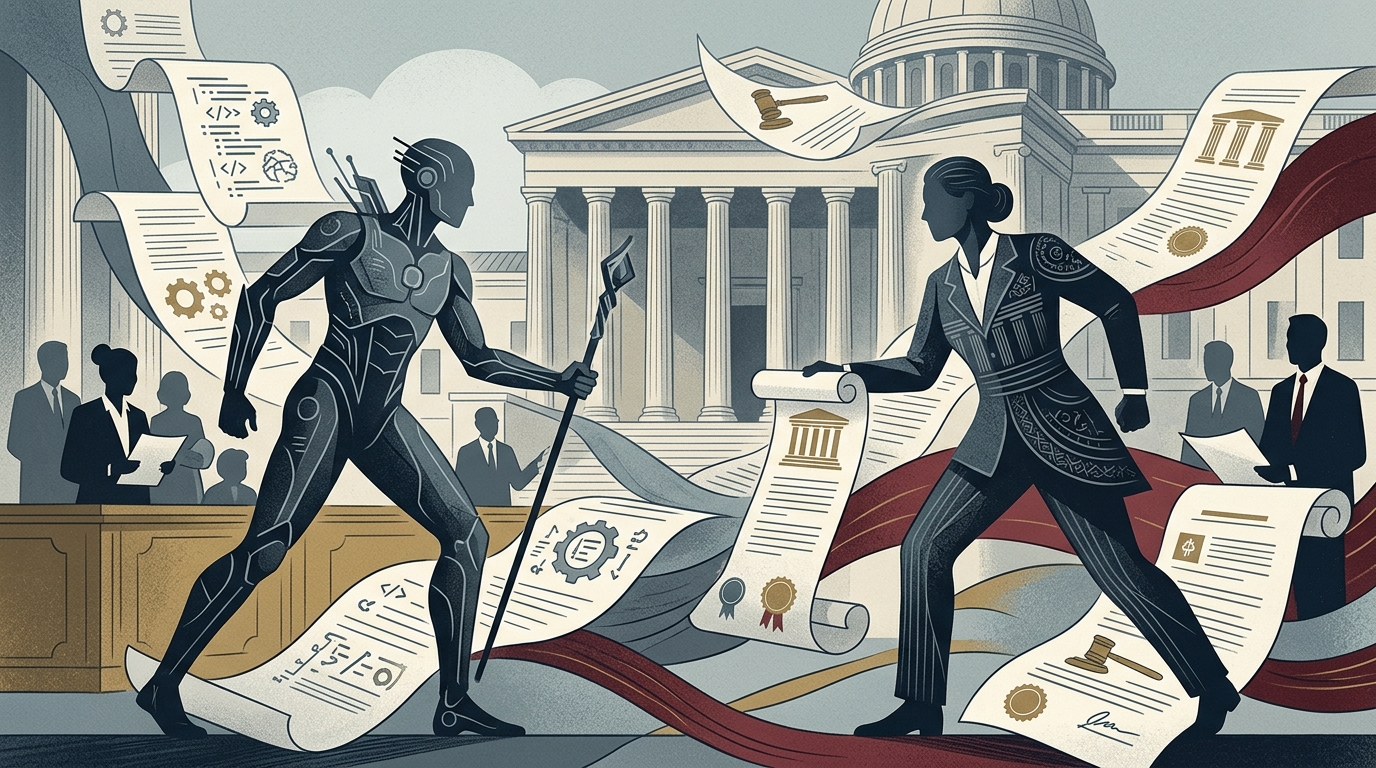
In the heart of Silicon Valley, a legal battle of epic proportions is taking shape, threatening to redraw the map of the global technology landscape. Elon Musk, the man who once helped birth OpenAI as a non-profit organization, now finds himself in direct confrontation with his former partners, Sam Altman and Greg Brockman. The case, unfolding in the courts of California, is not merely about money or intellectual property; it is about the very soul of Artificial Intelligence and whether a technology promising to transform humanity can be owned by a closed group of interests.
The Betrayal of the Founding Agreement
Musk’s core argument centers on the concept of a "Founding Agreement." According to the billionaire, OpenAI was established with an explicit commitment to develop Artificial General Intelligence (AGI) for the benefit of humanity, remaining an open-source entity. Musk alleges that the company’s pivot toward a for-profit model, combined with its tight alliance with Microsoft, constitutes a flagrant breach of these founding principles.
Musk’s legal team contends that OpenAI has effectively become a "closed-source de facto subsidiary" of Microsoft, the world’s largest tech corporation. In Musk's view, the release of GPT-4, whose internal workings remain secret, is proof that the company is no longer working for the public good but for the maximization of shareholder profits. This dispute highlights a central question: can an organization that began as a philanthropic endeavor transform into a multi-billion-dollar profit machine without legal repercussions?
OpenAI’s Counter-Strike and Microsoft’s Strategy
On the other side, OpenAI is not sitting idly by. The company’s response has been sharp, characterizing Musk’s actions as "revisionist history" fueled by jealousy over the success of the company he left in 2018. OpenAI’s leadership released a series of old emails suggesting that Musk was not only aware of the transition to a for-profit model but had proposed it himself, even demanding full control of the company or a merger with Tesla.
Microsoft, while not a direct defendant, stands at the center of the storm. Its investment of over $13 billion has granted the tech giant privileged access to OpenAI’s technologies, drawing the scrutiny of regulators in the US and the EU. OpenAI’s defense argues that developing AGI requires massive resources and computational power—something that only a profit-incentivized structure could realistically secure.
Implications for the Open Source Ecosystem
The outcome of this trial will have profound consequences for the open-source movement in AI. If Musk prevails, it could force OpenAI to make its research public and return profits derived from commercializing its technology. Such a ruling would be an earthquake for Silicon Valley, as it would challenge the legality of many hybrid corporate structures (non-profit/for-profit).
"The court's decision will set a precedent for how we define the public interest in the age of exponential technology."
Key areas of impact include:
- Transparency: Will AI companies be forced to disclose the data used to train their models?
- Access: Will advanced AI remain a privilege of the few, or will it become a public utility?
- Competition: How will Musk's own xAI and other startups be affected by the dominance of the Microsoft-OpenAI alliance?
Conclusion: A Battle for the Future
The Musk vs. OpenAI lawsuit is more than a personal vendetta between billionaires. It is the first major conflict over the governance of the technology that will define the 21st century. As the courts weigh the evidence, the global community watches closely, realizing that this decision will determine whether Artificial Intelligence will be a tool for liberation or a means of concentrating unprecedented power and wealth.