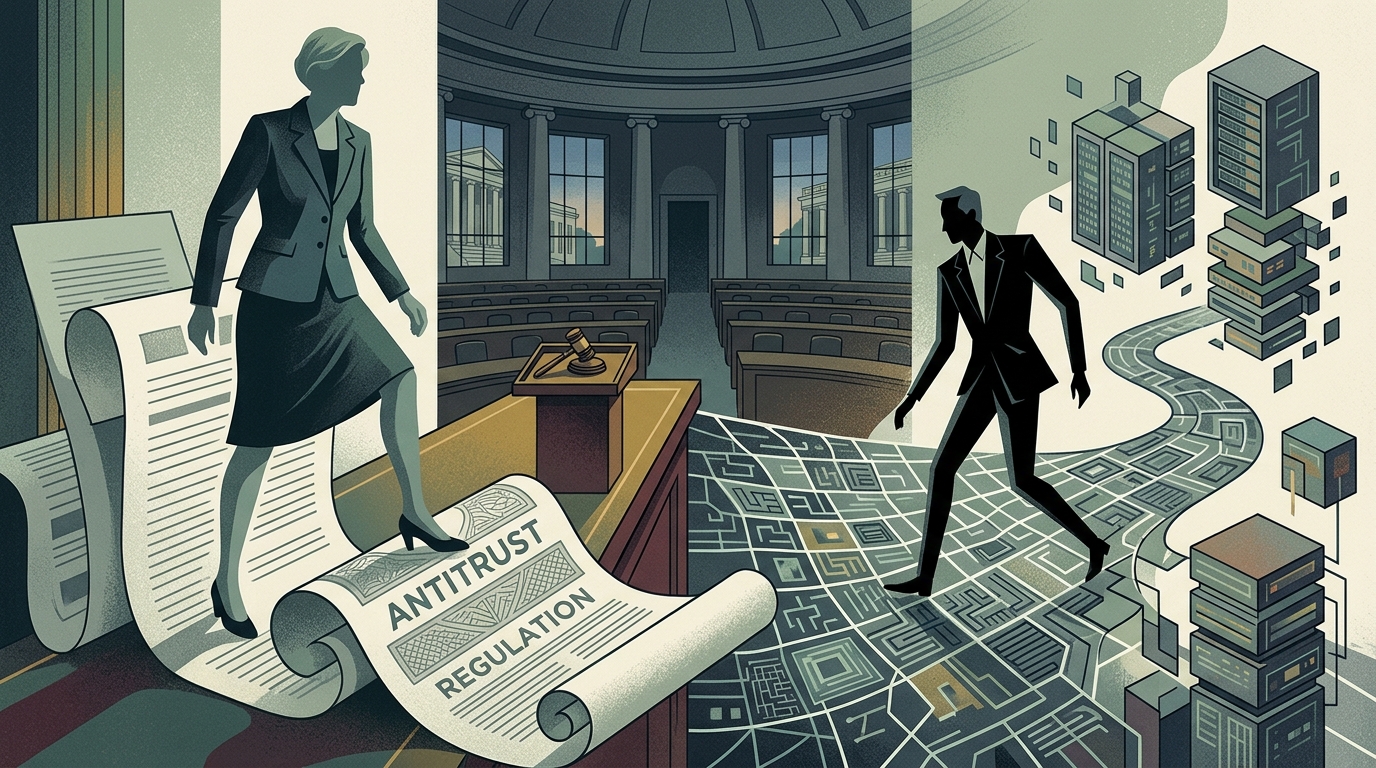
In the corridors of Washington D.C., the atmosphere surrounding Big Tech has shifted from mere skepticism to a period of calculated deconstruction. Senator Elizabeth Warren, renowned for her relentless stance against corporate monopolies, has recently set her sights on the man who holds the keys to the artificial intelligence revolution: NVIDIA’s Jensen Huang. This move is not just a political statement; it is a meticulously designed trap that could force Huang to choose between transparency and an antitrust onslaught.
The Architecture of a Monopoly in the AI Era
NVIDIA is no longer just a chipmaker; it is the sole provider of the infrastructure upon which the future is being built. With a market share hovering around 90% in AI accelerators, the company has constructed a 'moat' that consists not only of hardware but also the CUDA software, which effectively locks developers into its ecosystem. Warren argues that this dominance is no longer purely the result of innovation, but of tactics designed to stifle competition.
- Exclusive agreements with major cloud service providers.
- Preferential access to chips for partners who commit to its software stack.
- Strategic acquisitions of smaller startups that could potentially disrupt the status quo.
The Senator is leveraging the power of the Senate Banking Committee to demand explanations, posing questions that Huang cannot ignore without appearing to hold democratic institutions in contempt. The 'trap' lies in the fact that any answer Huang provides will likely serve as the foundation for further investigations by the Department of Justice (DOJ) and the Federal Trade Commission (FTC).
Jensen Huang’s Strategic Dilemma
For Huang, the situation is exceptionally complex. On one hand, NVIDIA is viewed as a US 'national champion' in the ongoing technological cold war with China. This geopolitical shield has protected him thus far. However, Warren argues that such extreme concentration of power in a single entity makes the American economy fragile. If Huang refuses to cooperate, he risks subpoenas and public castigation in hearings reminiscent of Mark Zuckerberg’s past appearances. If he complies and reveals internal pricing structures and chip allocation practices, he provides regulators with the very ammunition needed to force a structural breakup of the company.
"Artificial intelligence is too important to be left under the control of a single individual or a single corporation," Warren stated, emphasizing that NVIDIA now functions as a 'toll booth' for global innovation.
The Geopolitical Shield and Global Implications
While the battle rages in Washington, the ripples are felt globally. In Europe and beyond, nations attempting to integrate AI into public administration and their economies are directly dependent on the availability and cost of NVIDIA’s GPUs. A potential weakening of NVIDIA through regulatory intervention could lead to lower prices due to increased competition, but it could also result in significant delays in the rollout of next-generation technologies. Warren seems to be betting that public sentiment has finally turned against 'Tech Barons,' regardless of their contribution to economic growth.
Conclusion: The End of Immunity?
NVIDIA is no longer the investor darling operating under the radar. It is the titan that everyone—from competitors to regulators—wants to restrain. Warren’s strategy to 'trap' Huang through institutional inquiries signals that the era of unchecked AI hardware dominance is nearing its conclusion. Huang may possess the most sophisticated product in the world, but Warren possesses the law and the political momentum. This clash will determine whether the next decade of AI is the product of a monopoly or a truly open and competitive market.