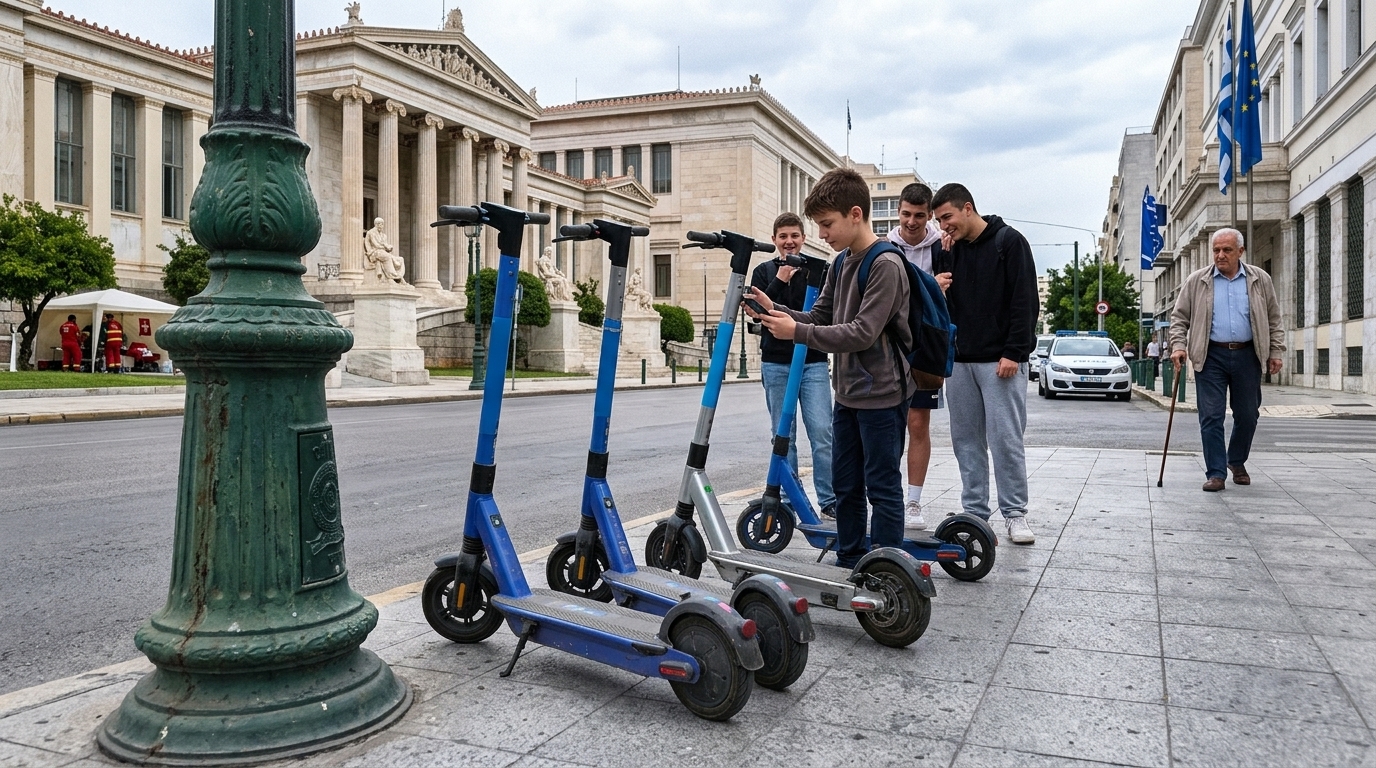
The sight of electric scooters weaving through pedestrians and cars has become an integral part of the European urban landscape. However, what began as a promise for green, flexible micromobility is turning into a road safety nightmare. The European Commission and the European Transport Safety Council (ETSC) are now sounding the alarm as statistics show a sharp rise in injuries and fatalities, with minor users at the center of this vulnerability.
The Statistics of Collision: Why the EU is Concerned Now
According to recent reports, the number of serious accidents involving Light Personal Electric Vehicles (LPEVs) has increased by an average of 40% across the EU over the last three years. The lack of a unified regulatory framework has created a "patchwork" of rules, where in one city a helmet is mandatory and in another optional, while age limits range from 12 to 18 years. The EU highlights that the lack of training and the underestimation of the speed of these vehicles constitute an explosive combination.
"Micromobility cannot grow at the expense of human life. We need immediate harmonization of safety rules before our streets become battlefields," says a senior official from the European Commission's Directorate-General for Mobility and Transport.
The issue of minors is particularly critical. Many rental companies lack adequate age verification mechanisms, allowing 12- and 13-year-olds to operate vehicles that reach speeds of up to 25 km/h on high-traffic roads. The EU proposal includes establishing a strict minimum age of 16 for use on public roads, as well as mandatory use of protective equipment.
The Greek Reality: Laws on Paper
In Greece, Law 4784/2021 attempted to bring order by categorizing scooters based on speed. However, its implementation remains problematic. In Greek cities, the lack of bike lanes forces users to choose either the sidewalk—terrorizing pedestrians—or the roadway, where they are exposed to the danger of cars. Traffic police record daily violations involving the use of headphones, carrying a second person, and driving under the influence of alcohol, phenomena that are particularly common in tourist areas.
- Excessive Speed: Many scooters are "modded" to exceed the 25 km/h limit.
- Double Riding: Use by two people shifts the center of gravity and makes the vehicle unstable.
- Lack of Lighting: Many accidents occur at night due to poor visibility.
Towards a New European Safety Framework
The European Union is moving towards imposing stricter technical specifications for scooters sold in the single market. This includes larger wheels for better stability, mandatory turn signals, and independent braking systems. Furthermore, there is discussion about imposing mandatory third-party liability insurance for all users to ensure victim compensation in case of an accident.
The challenge for governments is to find the middle ground: not to strangle a sustainable form of transport that reduces the carbon footprint, but also not to allow lawlessness. Road safety education in schools for LPEVs is now considered essential, as the new generation is "born" into this new mobility model. Without infrastructure and strict policing, the electric scooter will remain an "intruder" in the urban environment rather than an ally.