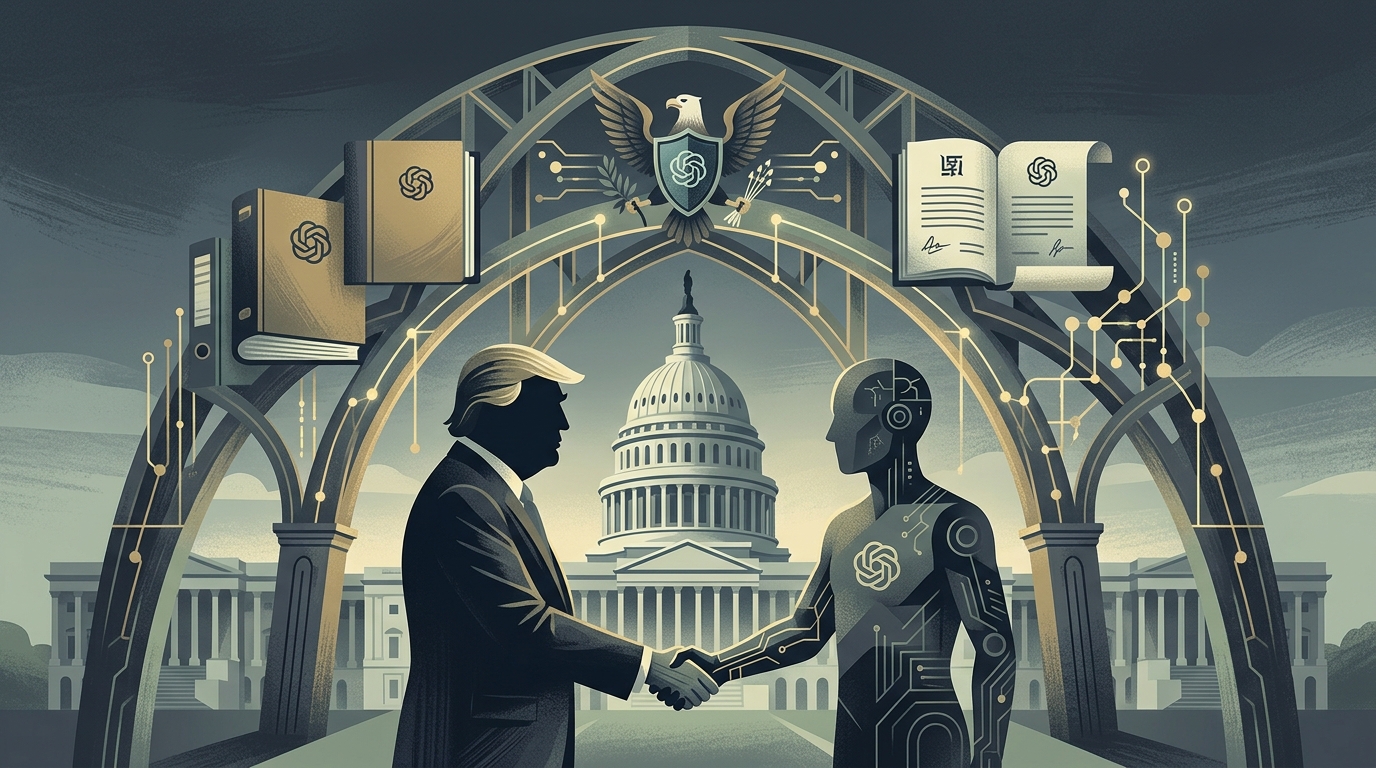
In a move signaling a historic pivot in American regulatory policy, the U.S. Department of Justice (DOJ) has publicly acknowledged that traditional antitrust frameworks may no longer suffice in the age of Artificial Intelligence. On April 20, 2026, senior officials from the Antitrust Division stated that the velocity at which Generative AI is transforming content creation and distribution necessitates a new approach, characterized as “cautious humility.”
The AI Challenge to Traditional Media Models
For decades, antitrust enforcers relied on static models to determine if a merger would harm consumers. They focused on market share, advertising rates, and distribution bottlenecks. However, by 2026, the landscape has shifted fundamentally. AI is no longer a peripheral experiment; it is the backbone of the media industry. From automated newsrooms to high-fidelity video generation via models like Sora-2, the line between tech giants and media conglomerates has blurred beyond recognition.
The “cautious humility” cited by the DOJ suggests a profound realization: regulators may not be able to predict who the dominant players will be even two years from now. As a Department spokesperson noted, “Blocking a merger between two traditional media groups today might leave them defenseless against the expansive power of AI platforms that don’t just distribute content, but control the very infrastructure of human thought.”
From Streaming to Algorithmic Sovereignty
Streaming was the first wave of disruption, but AI is the tsunami. Media companies are no longer just competing for eyeballs; they are competing for the data that feeds Large Language Models (LLMs). Mergers that were once viewed as anti-competitive are now being re-evaluated through the lens of industrial survival. If a domestic media entity lacks the scale to negotiate with the likes of OpenAI, Google, or Meta, it risks becoming a mere data farm for Silicon Valley with no financial autonomy.
“We cannot apply 20th-century statutes to an economy moving at the speed of generative algorithms,” the DOJ statement emphasized.
This shift in stance has sparked intense debate in Washington. Some analysts argue that this “humility” is effectively a surrender to corporate lobbying and the sheer power of Big Tech. Others, however, see it as a necessary pragmatic adjustment. In Europe, the reaction has been more skeptical. The European Commission continues to push for stricter frameworks via the AI Act, creating a potential regulatory schism between the U.S. and the EU regarding how much consolidation should be permitted in the information sector.
Implications for Consumers and Democracy
The central question remains: what does this mean for the average citizen? If the DOJ allows further media consolidation in the name of “AI-proofing” the industry, pluralism is at stake. The merger of giants could create “content fortresses” that control information with absolute authority. Conversely, the weakening of local and national media due to unbridled AI competition could lead to a news desert where algorithms serve only what generates engagement, regardless of factual accuracy.
- The Scale Necessity: Media firms require massive capital to build proprietary AI safeguards and tools.
- IP Protection: Larger entities have the legal muscle to sue AI firms for unauthorized scraping of their archives.
- The Monopoly Risk: Less stringent oversight could lead to a global oligopoly where 3-4 players dictate the public discourse.
In conclusion, the DOJ’s signal is an admission that technology is outpacing the law. “Cautious humility” may be the only honest intellectual position, but it carries the risk of letting the market self-regulate at a moment when social cohesion depends more than ever on the quality of information. 2026 marks the year antitrust policy stopped looking at the rearview mirror and started fearing the windshield.