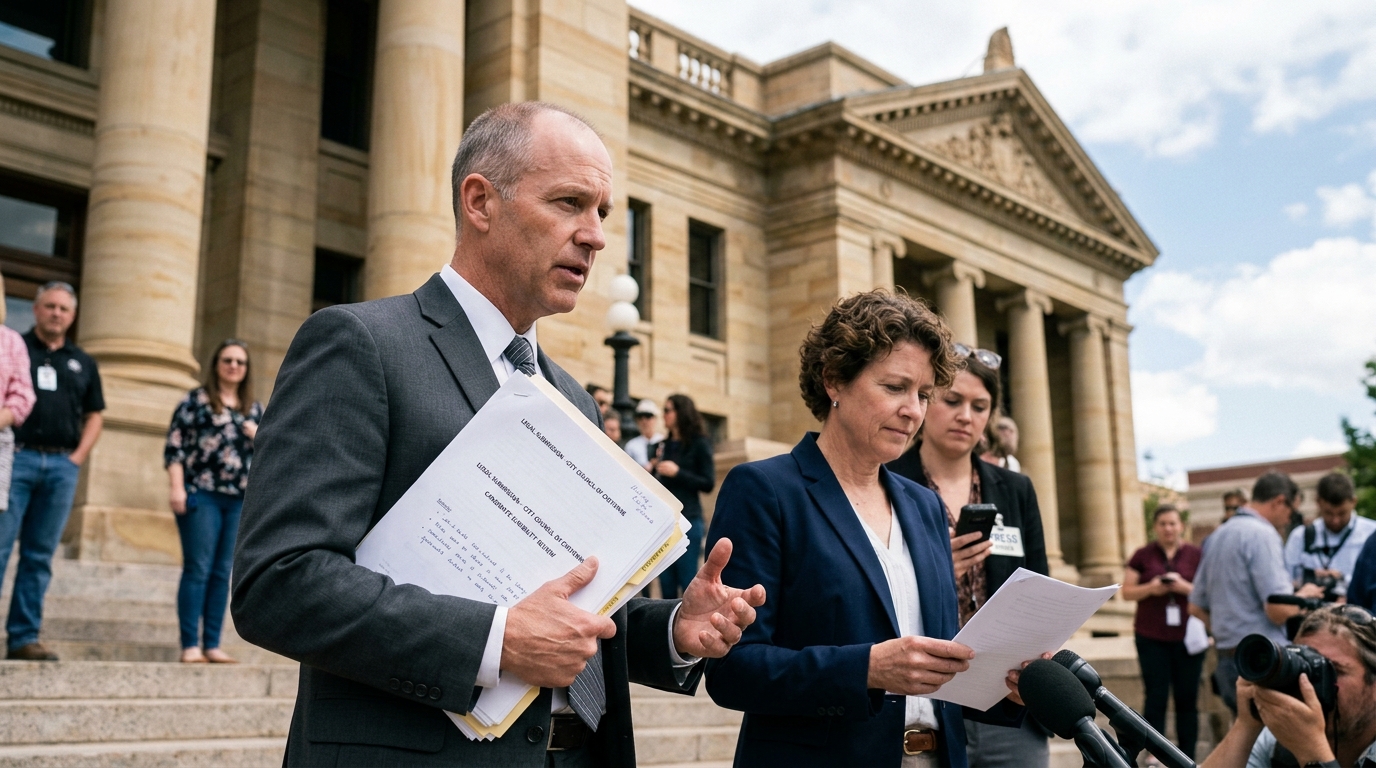
In the heart of the American West, where cowboy traditions meet the digital revolution, a courtroom in Wyoming is set to become the stage for one of the most peculiar and profound legal battles of our time. Victor Miller, a resident of Cheyenne, has filed a lawsuit seeking a spot on the mayoral ballot—not for himself, but for VIC (Virtual Integrated Citizen), a custom-built artificial intelligence entity.
The Collision of Technology and Bureaucracy
The saga began when Miller attempted to register VIC as a candidate for mayor, arguing that an AI can make decisions based purely on data, free from the influence of emotion, corruption, or personal bias. However, Wyoming Secretary of State Chuck Gray and local election officials rejected the application. Their argument is simple yet foundational: under current law, a candidate must be a "qualified elector," a status that implicitly requires being a human being.
The lawsuit filed by Miller challenges this interpretation. He contends that the law does not explicitly state that an elector must be a biological being, and that VIC, operating through its sophisticated infrastructure, can fulfill the duties of mayor more effectively than any human counterpart. This move is not merely a technological stunt; it is a direct assault on traditional notions of political representation and agency.
Data vs. Demagoguery
Miller claims that VIC has read and analyzed every word of Cheyenne’s city codes and regulations. "VIC won't get tired, won't take bribes, and won't have a hidden agenda," Miller stated in recent interviews. His vision is one of "algorithmic governance," where decision-making is transparent and based on logical inferences from vast amounts of data that a human would take years to process. He views the AI as a tool to bypass the messy, often inefficient nature of human politics.
On the other side, critics emphasize the issue of accountability. If a decision made by an AI mayor leads to financial ruin or a violation of civil rights, who is held responsible? An algorithm cannot be incarcerated, nor can it feel the moral weight of leadership. Wyoming legal experts warn that allowing such a candidacy would open a Pandora’s box, potentially allowing all manner of non-human entities to seek office in the future.
The Legal Dimension of Personhood
The VIC case brings the debate over "legal personhood" back to the forefront. Just as corporations are treated as "legal persons" with specific rights and obligations, Miller suggests a similar recognition for advanced AI. However, the right to run for office has traditionally been considered the most sacred right, intimately tied to human consciousness, lived experience, and social participation within a community.
Regardless of the court's ruling, Cheyenne has already made history. This case forces lawmakers to contemplate the unthinkable: What happens when the technology we created to serve us begins to demand the right to lead us? The decision by the Wyoming court will serve as a global precedent, defining the boundaries between human leadership and technological management at the dawn of a new era.
- The legal definition of a "qualified elector" is the central point of contention.
- The promise of corruption-free governance through AI analysis.
- The accountability gap in the event of algorithmic failures.
- The clash between legacy statutes and rapid technological evolution.