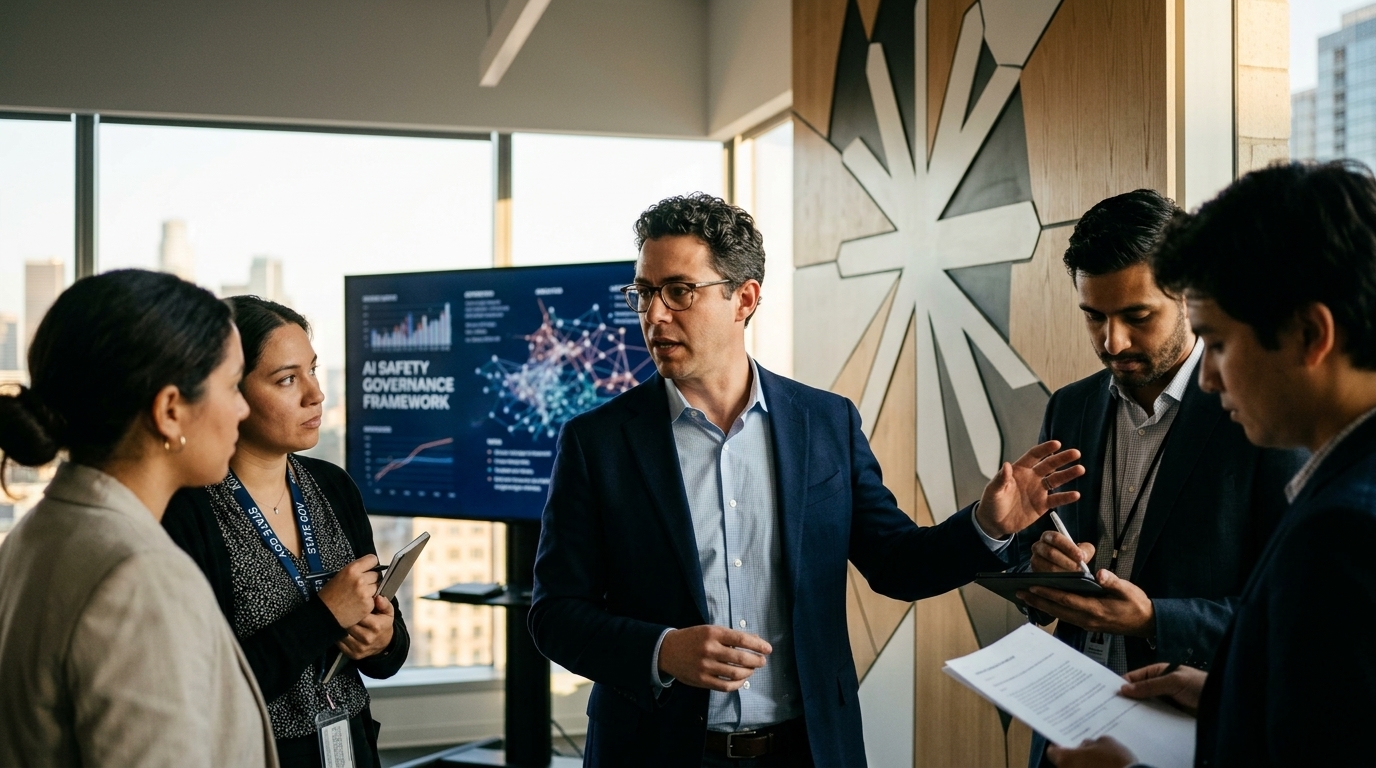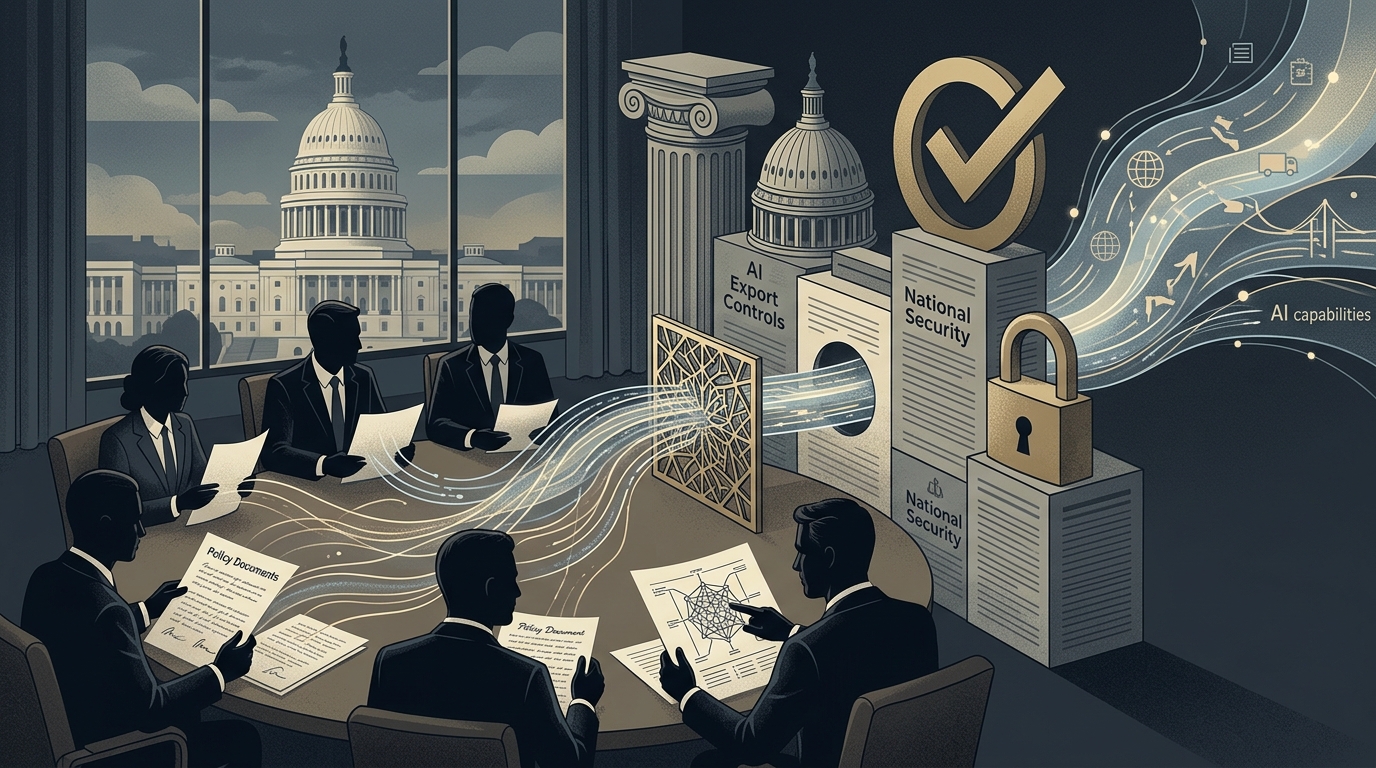
The news that the U.S. Commerce Department has imposed strict export restrictions on Anthropic’s most advanced artificial intelligence models has sent shockwaves through Silicon Valley and international capitals. However, the heart of the matter lies not in a random security breach, but in a new methodology termed “Defense Oriented Prompting” (DOP). According to the CEO of cybersecurity firm Fable, the research that exposed vulnerabilities in Claude models was not a mere “jailbreak” for sensationalism, but a critical strategic exercise for U.S. national defense.
The Strategy of Defense Oriented Prompting
Defense Oriented Prompting represents an evolution of traditional red-teaming. While jailbreaking typically aims to bypass a model's ethical guardrails to generate prohibited content, DOP focuses on understanding how an LLM (Large Language Model) can be weaponized in complex cyberattacks or the creation of biological threats. Fable’s researchers argue that to protect a nation, one must first know the limits of the technology it develops.
Anthropic, known for its “Constitutional AI” approach—which aims to self-regulate models via an internal “constitution” of values—found itself at the center of this controversy. The revelation that even the most “secure” models can be steered toward dangerous paths through sophisticated DOP forced the U.S. government to re-evaluate AI not just as a commercial product, but as a dual-use technology, on par with nuclear energy or advanced weaponry.
The Geopolitical Chessboard and Export Controls
Washington’s decision to restrict access to models like Claude 3.5 Sonnet and Opus in specific jurisdictions—primarily states considered strategic adversaries—marks a new phase in the Technological Cold War. Restrictions no longer apply only to hardware (such as Nvidia’s chips) but to the software itself, the parameter weights, and the underlying algorithms.
- National Security: The government fears that the use of these models by rival powers could accelerate the development of malware that would evade current defenses.
- Intellectual Property Protection: There is a fear of reverse engineering the alignment methods that make American models superior.
- Global Standards: The U.S. seeks to impose its safety standards internationally by controlling distribution.
“This is not about stifling innovation; it is about ensuring that innovation does not become the weapon turned against us,” said a senior Commerce Department official.
Industry Reaction and the Transparency Dilemma
The stance of Fable and other cybersecurity firms highlights a deep contradiction. On one hand, disclosing security flaws is essential for improving models. On the other, every such disclosure provides a roadmap for malicious actors. Fable’s CEO insists that defenders need these DOP capabilities more than anyone else to stay ahead of attacks.
However, Anthropic and other AI giants worry that strict export restrictions could hurt their revenue and create space for open-source models from other countries that are not subject to such controls. If markets in the Middle East or Southeast Asia cannot purchase Claude, they may turn to Chinese alternatives or open models that can be modified without restrictions.
Conclusion: AI as a State Secret
We are at a turning point where Artificial Intelligence is ceasing to be treated as an “open science” and is becoming a protected state resource. Defense Oriented Prompting proved that the line between a helpful assistant and a dangerous tool is incredibly thin. As 2026 progresses, a country’s ability to control the flow of its “digital brains” will be the most significant indicator of its power on the international stage. The Anthropic case is just the beginning of a long series of restrictions that will redefine global digital trade.