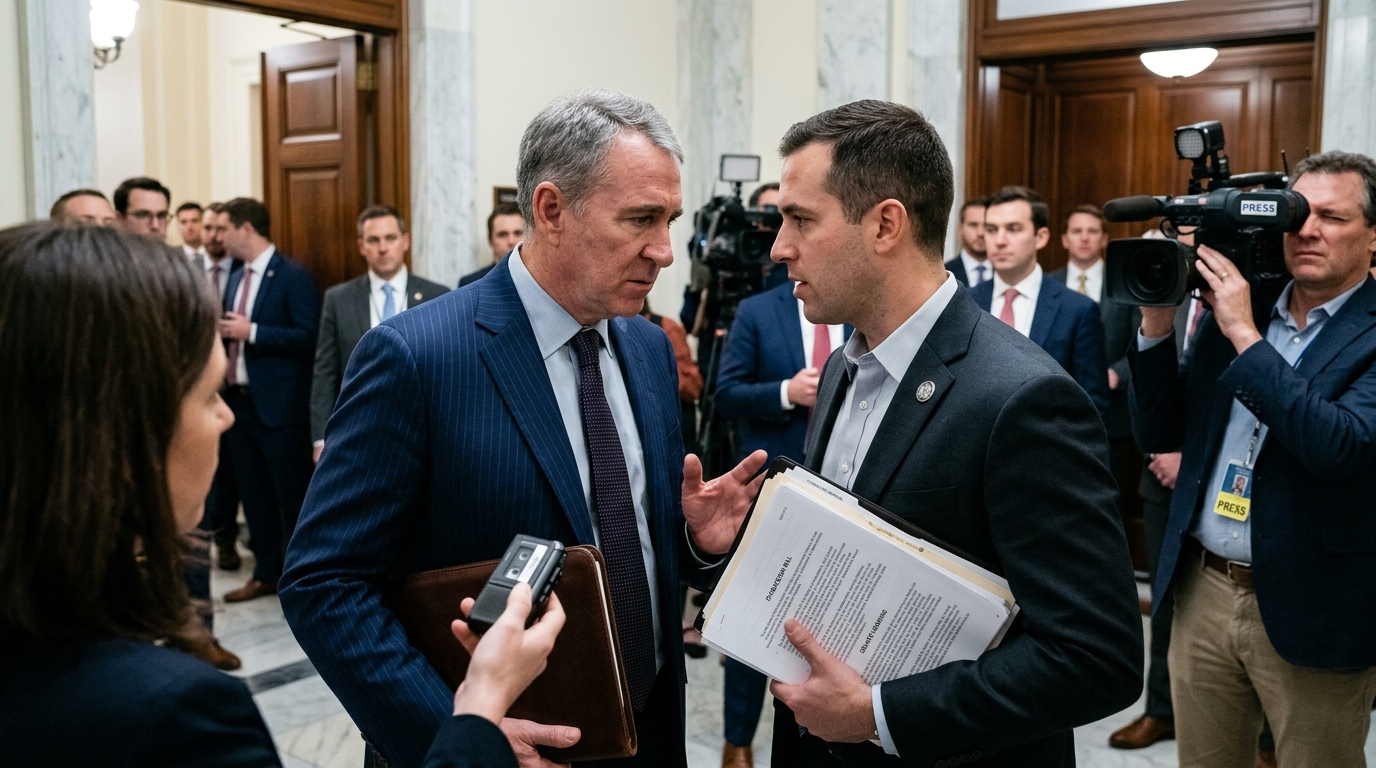
In the corridors of Capitol Hill, the atmosphere is reminiscent of the eve of the 2008 financial crisis, but with a modern, digital twist. As we stand in May 2026, the US Senate Banking Committee is at the heart of a historic confrontation. The stakes are not merely the regulation of a new technology, but the redefinition of the very concept of money in the digital age. The "Landmark Digital Asset Bill," expected to serve as the roadmap for stablecoins, has become the battlefield between traditional banking giants and the burgeoning cryptocurrency industry.
The Yield Thorn: Why Banks Are Afraid
The primary cause of the current friction lies in a seemingly technical detail: yield. Banking groups, represented by powerful lobbies, are proposing last-minute changes that would limit the ability of stablecoin issuers to offer interest or returns to their holders. The banks' argument is twofold. On one hand, they cite "systemic risk," arguing that if stablecoins function as informal savings accounts without the same capital requirements as banks, a mass withdrawal (bank run) could destabilize the entire economy.
On the other hand, there is the existential fear of disintermediation. If a citizen can hold their capital in a digital dollar that is instantly liquid, programmable, and offers a higher yield than a traditional checking account, why stay with JPMorgan or Bank of America? Banks see their deposits—their cheapest source of funding—threatened by a technological innovation that is not subject to the same stringent Federal Reserve rules.
The Crypto Counterattack: Innovation or Protectionism?
Proponents of digital assets are not sitting idly by. Companies like Circle and Tether, along with platforms like Coinbase, argue that banks are trying to "strangle" competition through legislation. From their perspective, banning yields on stablecoins would deprive consumers of the efficiency benefits offered by blockchain technology. "Banks aren't protecting the system; they're protecting their profit margins," an industry executive stated in a closed hearing.
The crypto industry's argument is that stablecoins backed 100% by government bonds and cash are actually safer than the fractional reserve banking system. If the bill passes with the banks' amendments, crypto backers fear the US will lose its leadership in the global digital economy, pushing innovation toward Europe (due to MiCA) or Asia. They argue that the yield is not a "bug" but a feature of the decentralized finance (DeFi) ecosystem that allows for more equitable wealth distribution.
The Political Chessboard and the Path Forward
The senators leading the initiative find themselves in an extremely difficult position. On one hand, there is a need for a clear regulatory framework to bring order to the "Wild West" of cryptocurrencies. On the other, no one wants to be accused of causing a new banking crisis or destroying American technological supremacy. Negotiations are now focusing on a compromise: the creation of a new category of "federally licensed stablecoin issuers" who would have access to Fed liquidity but be subject to strict oversight.
- Limiting yields only to institutional investors.
- Mandatory deposit insurance for retail issuers.
- Strict stratification of reserves into short-term government bonds.
The outcome of this battle will determine whether the stablecoin remains a niche tool for crypto traders or transforms into the backbone of the global payments system. As the bill moves toward the floor, one thing is certain: the line between Silicon Valley and Wall Street has never been blurrier. The decision made in the coming weeks will echo through the financial markets for decades, potentially establishing the US Dollar as the undisputed digital reserve currency or ceding that ground to more agile jurisdictions.