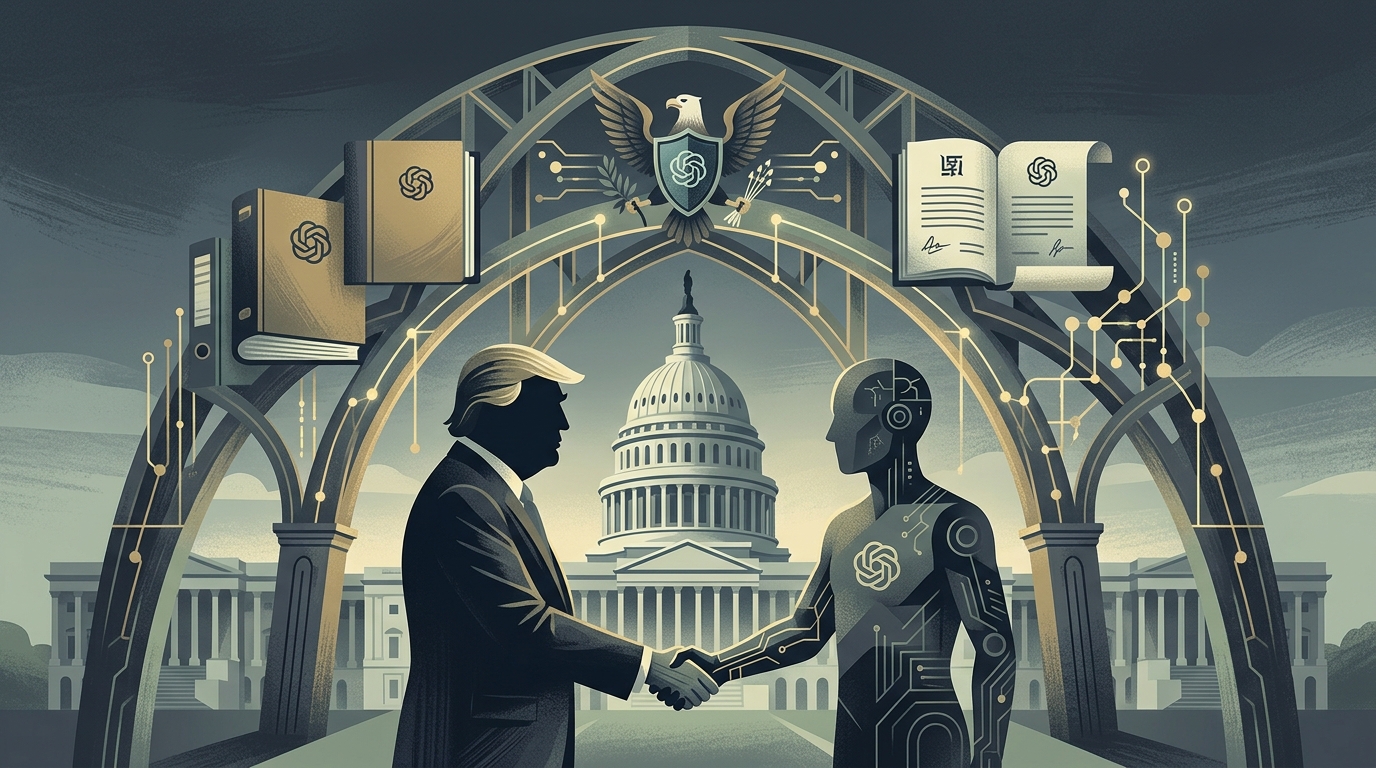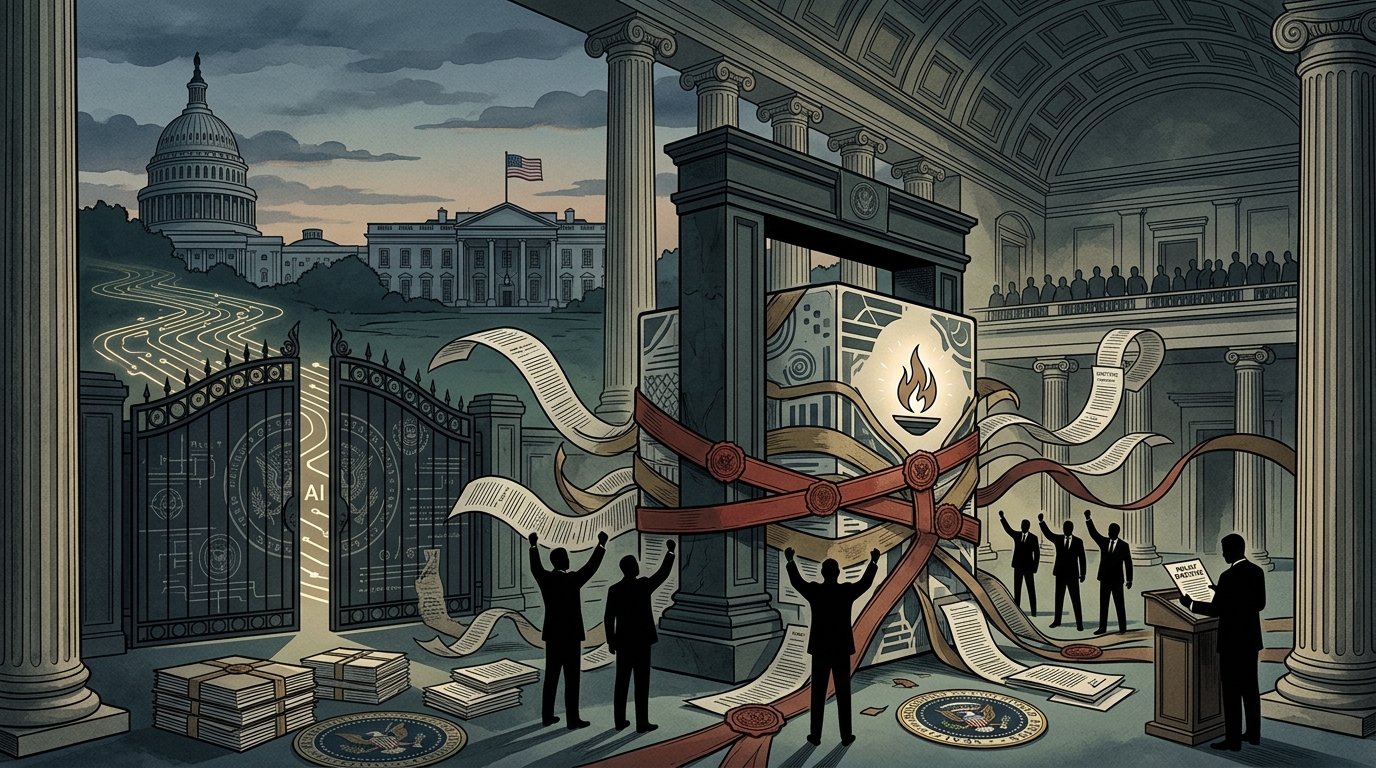
In a move poised to fundamentally reshape the landscape of global technological hegemony, the White House has announced a temporary freeze on the release of Mythos, Anthropic’s highly anticipated Artificial Intelligence model. This decision, arriving amidst a period of intense geopolitical volatility, is not merely a regulatory intervention but a clear declaration: the United States government now views advanced AI models as "strategic national resources," akin to nuclear assets or oil reserves.
Anthropic, which has built its reputation on "Constitutional AI," was taken by surprise when the Department of Commerce and the National Security Council issued a joint directive prohibiting the wide-scale deployment of the Mythos model. According to Washington insiders, sandbox testing revealed capabilities that far exceed current safety benchmarks, particularly in autonomous software development and biological data synthesis.
The Fear of the "Autonomous Agent"
Mythos is not just another sophisticated chatbot. It is a system of "Agentic AI" that, according to leaks, demonstrates an unprecedented ability to solve complex problems without human intervention. The Trump administration argues that releasing such a tool, even through controlled APIs, poses a risk of "intelligence leakage" to adversarial powers like China and Russia. "We cannot allow the export of American brilliance that could be used to destabilize our infrastructure," a White House spokesperson stated.
Anthropic, for its part, maintains that Mythos is the safest model ever built. Dario Amodei, the company's CEO, emphasized in an internal memo that stifling innovation within US borders will have the opposite effect: it will hand the lead to foreign actors who are not bound by ethical constraints. This clash highlights the classic dilemma of technological evolution: security through control or security through supremacy?
The Compute and Energy Scarcity Crisis
Beyond national security, there is the practical dimension of computational sufficiency. Mythos requires massive amounts of energy and the use of the most advanced Nvidia chips, which are currently in short supply. The administration appears to be pushing a policy of "compute rationing," prioritizing military applications and state-funded research programs over the commercial products of Silicon Valley firms.
This move has sent shockwaves through the markets, as Anthropic had secured billions in investment based on the promise of Mythos. Analysts warn that if the blockade persists, investor confidence in the AI sector could be irreparably shaken, leading to a new "AI winter"—not due to a lack of progress, but due to political interference.
"Artificial Intelligence is no longer a market product; it is the new frontier of state sovereignty. Whoever controls the model, controls the future," says a senior Pentagon official.
Silicon Valley's Reaction
Anthropic's stance is quietly supported by other giants like OpenAI and Google, who fear they are next in line. The creation of a "National AI Reserve," currently being discussed in the halls of Congress, would mean that any model exceeding a certain parameter threshold would require an "operating license" from a state committee. This echoes the Cold War era and the control of cryptographic technologies, a battle the government eventually lost to the open-source community.
However, 2026 is different. The scale of energy required for Mythos makes Anthropic dependent on state-controlled infrastructure. Without access to the grid and protection from regulators, the "world’s smartest model" remains dormant code on an isolated server. The outcome of this confrontation will determine whether AI remains a tool for the democratization of knowledge or becomes a strictly guarded state secret.
- Anthropic claims Mythos has embedded ethical rules making it harmless.
- The White House fears the "dual-use" nature of the tech for cyber-warfare.
- Energy shortages are forcing the state to choose which models "live" and which "die".
In conclusion, the Mythos case marks the milestone of the transition from anarchic growth to state oversight. For citizens, this means that access to the most advanced technology may soon depend not on whether they can afford it, but on whether the state deems it safe for them to possess it.