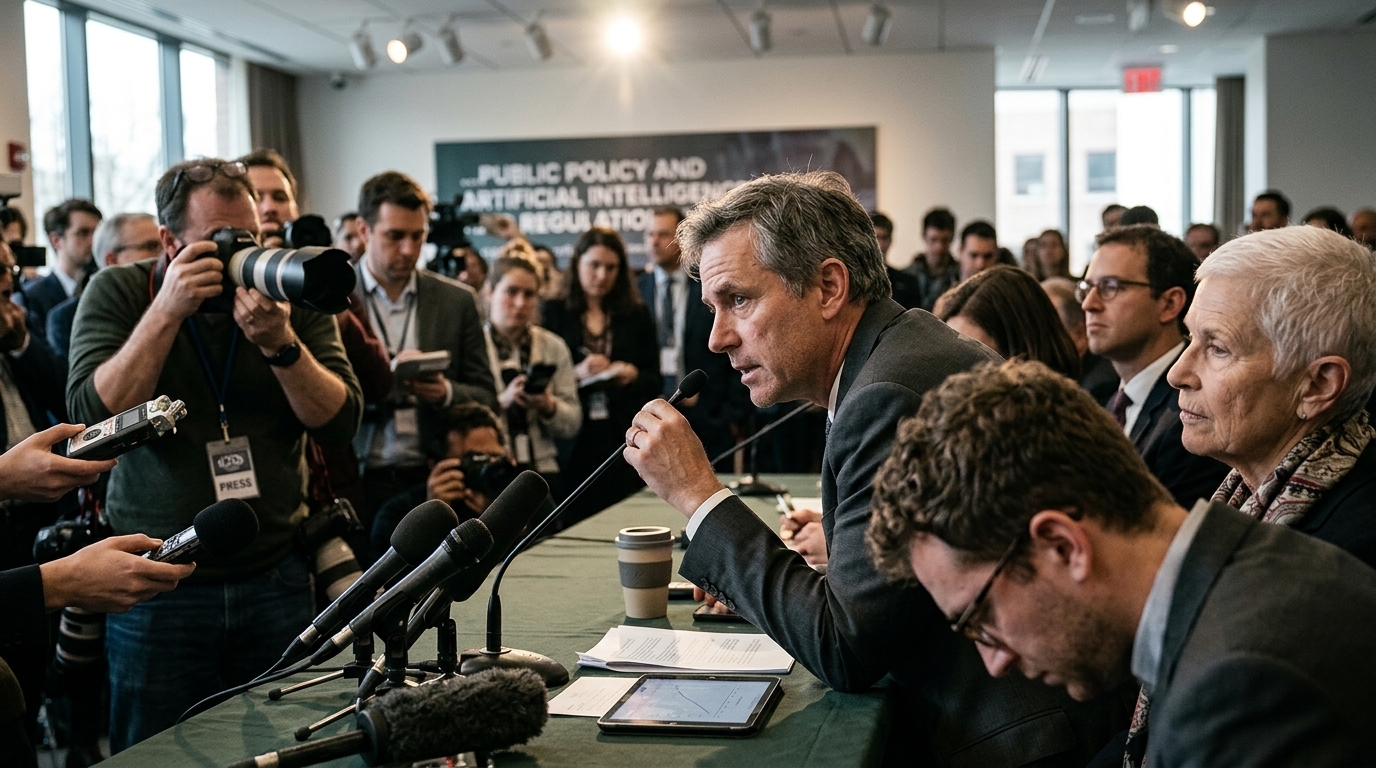
The recent news that Anthropic, one of the world's leading artificial intelligence companies and creator of the powerful Claude model, has decided to "freeze" or significantly restrict access for European users to its services, did not come as a complete surprise, but it certainly caused an earthquake in Brussels. This move, attributed to the stringent requirements of the European AI Act and ongoing concerns regarding GDPR compliance, highlights the growing chasm between Silicon Valley's technological vanguard and the Old Continent's regulatory framework.
The Strategy of Abstinence and the Fear of Fines
Anthropic, which positions itself as an "AI safety" company, appears to be following an extremely conservative tactic regarding the European market. The company is concerned that the sometimes ambiguous provisions of the AI Act concerning General Purpose AI (GPAI) models could expose it to crippling fines, reaching up to 7% of its global turnover. Unlike OpenAI or Google, which chose to enter the market and negotiate along the way, Anthropic is choosing the path of waiting and observation.
This stance has provoked sharp reactions from European officials. Many believe the company is using access to its technology as leverage to weaken the implementation of regulations. On the other hand, European businesses that relied on Claude to develop their own applications suddenly find themselves in a vacuum, facing the specter of a technological exclusion that could damage their global competitiveness.
The European Reaction: Between Protection and Isolation
Reactions within Europe are deeply divided. On one hand, the European Commission insists that rules are necessary to protect citizens' fundamental rights and prevent manipulation through AI. "We cannot sacrifice safety and privacy on the altar of speed," state sources close to the Commissioner for Digital Policy. However, criticism is intensifying from member states that prioritize economic growth, such as France and Germany.
In Paris and Berlin, government officials fear that Europe is turning into a "digital desert." The concern is that if the top players in AI refuse to operate in the EU, the European startup ecosystem will fall behind, unable to compete with the US and China. Already, there is a trend of European capital moving to American companies, as investors view the EU's regulatory environment as overly hostile.
The "Two-Speed" Phenomenon in Global AI
Anthropic's freeze highlights a new reality: a two-speed world. On one side, the US and Asian markets enjoy the full power of new AI models with minimal restrictions. On the other side, Europe is trying to impose an "ethical AI" model, which, however, risks depriving its citizens and businesses of the tools of the future. Anthropic argues that transparency requirements for training data are technically impossible to fully satisfy without revealing trade secrets.
- Limited access to advanced productivity tools for European professionals.
- Risk of a "brain drain," with top European scientists moving to the US.
- Increased compliance costs for domestic European AI companies.
- Political pressure to revise the executive provisions of the AI Act.
In conclusion, the Anthropic case serves as a critical test for European digital diplomacy. If the EU manages to convince such giants to comply without withdrawing, it will have established a global standard. However, if the "freeze" continues and extends to other companies, Europe risks finding itself on the sidelines of the fourth industrial revolution, watching developments from the position of a mere spectator.