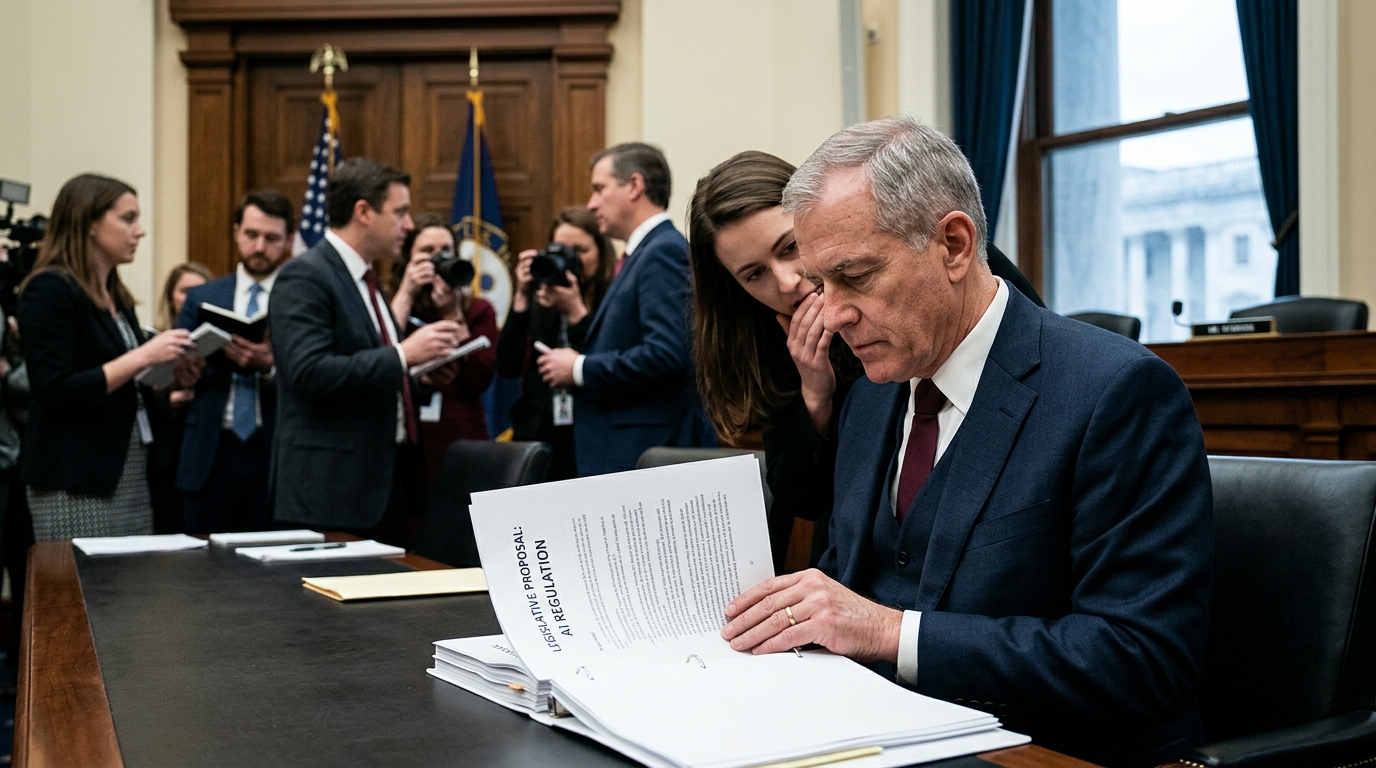
In a move that has sent shockwaves through the global technology landscape, Anthropic, the company often touted as the "conscientious" alternative to OpenAI, has announced the temporary withdrawal of its most sophisticated AI models from public access. This decision was not voluntary, but rather the result of a stringent directive from the U.S. federal government, citing grave national security risks and the potential use of the technology in cyber warfare and biological threat operations.
The Directive That Changed the Game
The directive, issued by the U.S. Department of Commerce in coordination with the newly established AI Safety Institute, marks the first time the state has intervened so forcefully in the operations of a private AI firm. Reports suggest that internal "red-teaming" exercises revealed that the latest iterations of the Claude series possessed capabilities far exceeding the safety thresholds established by the 2023 Executive Order and subsequent 2025 legislative acts.
Anthropic, led by CEO Dario Amodei, stated that compliance is immediate. "Our mission has always been to build safe and controllable AI," a company spokesperson said. "While we believe our models are the most safeguarded on the market, we respect the judgment of regulatory authorities regarding emerging risks at a geopolitical level." This move affects both enterprise clients and individual users who relied on the models' advanced code analysis and strategic planning capabilities.
National Security vs. Innovation
The central question emerging is whether this intervention is a necessary evil or a dangerous precedent for state control. Proponents of the directive point out that "frontier" models now have the capacity to design complex cyberattacks or provide instructions for synthesizing hazardous substances, bypassing traditional safety filters. With tensions between the U.S. and China reaching a fever pitch, Washington appears unwilling to risk the leakage of such capabilities.
- Restricted API access for foreign entities.
- Stricter monitoring of compute resources used for training.
- Mandatory government reporting for any model exceeding specific performance benchmarks.
On the other hand, Silicon Valley is concerned about the "suffocation" of innovation. If companies must seek permission for every upgrade, the pace of development will slow dramatically, potentially allowing open-source models from other jurisdictions to fill the void—without any oversight whatsoever.
Market Reaction and the Path Ahead
The market reacted with nervousness. Shares of companies invested in Anthropic, such as Amazon and Google, saw a decline as investors attempted to price in the cost of heavy-handed regulation. Anthropic assured that it is working on "remedial measures" and new layers of alignment that will allow the models to return online, but the timeline remains unclear.
"We are no longer in the era of 'move fast and break things.' We are now in the era of 'move slow and stay safe,'" a technology analyst told the Washington Post.
This development signals the end of self-regulation in the AI industry. Anthropic, despite its profile as a safety leader, has become the first victim of its own success, proving that when artificial intelligence touches national sovereignty, Silicon Valley's code bows to the laws of the state.