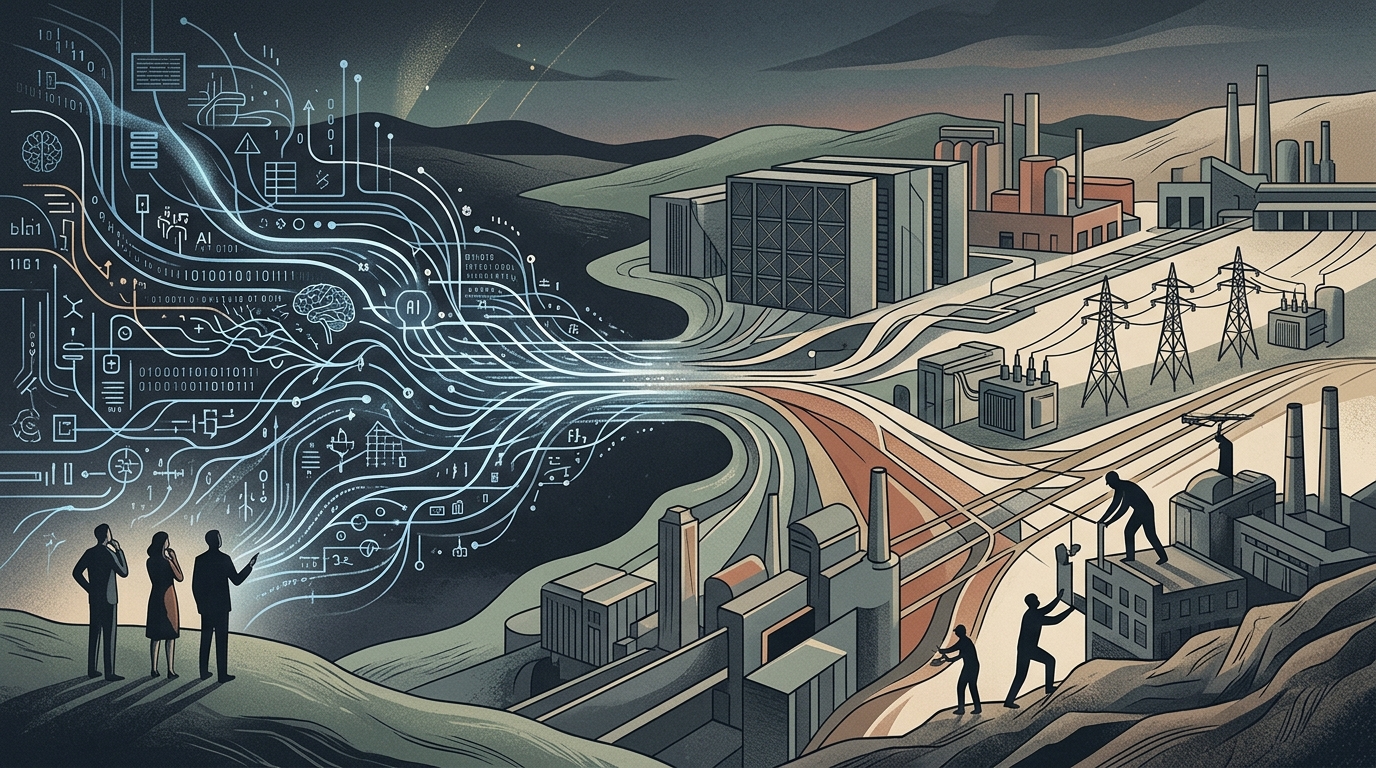
In a move that signals a historic turning point in the relationship between Silicon Valley and Washington, OpenAI CEO Sam Altman has admitted that his company made "many changes" to its latest artificial intelligence models following extensive discussions with the United States government. This statement, made within the context of the Trump administration's current "America First" policy, highlights the growing pressure on tech giants to align their innovations with national interests and security.
The Strategy of "National AI"
As we stand in mid-2026, artificial intelligence is no longer viewed merely as a commercial product, but as a critical tool of national power. Altman, speaking at a technology conference, explained that the release process for new models—widely speculated to involve the next generation of GPT—was not a unilateral decision by OpenAI. Instead, it was the result of a dialogue concerning national security, economic competitiveness, and ensuring that American leadership in the AI field remains undisputed against global competition, primarily from China.
The changes Altman referred to appear to focus on two axes: restricting access to sensitive information that could be used for cyberattacks or the production of biological weapons, and integrating "national safeguards" that prevent the use of models by hostile forces. This approach stands in stark contrast to Silicon Valley's older philosophy of "open science" and global access.
The Trump Administration and the New Regulatory Landscape
The Trump administration has adopted an aggressive stance regarding domestic technology production, offering incentives for the construction of data centers and the securing of energy resources in exchange for stricter oversight. Altman noted that cooperation with the government was "essential" to ensure OpenAI has the necessary infrastructure to continue leading. However, this "cooperation" raises questions about the independence of research institutions.
According to sources close to the negotiations, the changes also included modifying alignment algorithms to reflect American values and priorities. While Altman avoided giving specific details on whether the models' content has been politically influenced, his admission of "many changes" fuels the debate over whether AI is being transformed into a tool for state propaganda or control.
Implications for the Global Market
OpenAI's shift toward a more "state-centric" approach has caused concern in Europe and Asia. US allies fear that restrictions imposed by Washington could make American AI models less useful or accessible for international businesses. At the same time, this move strengthens the argument for the development of "Sovereign AI" by other countries, so as not to depend on the political whims of any given US administration.
"Artificial intelligence is now the new frontier of national defense. We cannot expect companies to operate in a vacuum, far from the responsibilities they have toward the nation," said a government official involved in the talks.
In conclusion, Altman's admission highlights the end of the era where AI companies operated as autonomous entities. In the new geopolitical environment of 2026, innovation and state power are now inextricably linked, with OpenAI serving as the spearhead—and the guinea pig—of this new symbiosis.