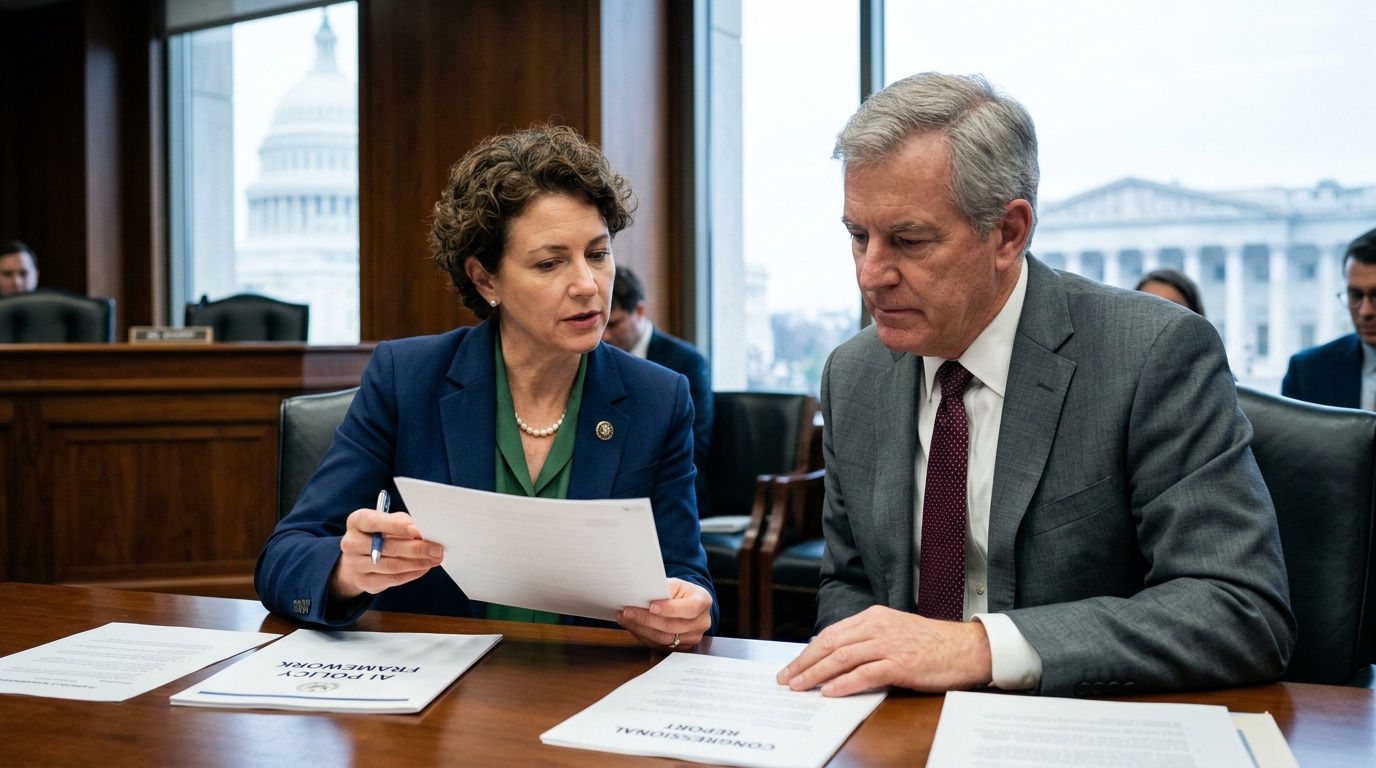
As we navigate the summer of 2026, Artificial Intelligence is no longer a matter of science fiction or a niche discussion in Silicon Valley. It has become a central pillar of political discourse in the United States, influencing everything from the economy to national security. A recent poll published by USA Today sheds light on the complex tapestry of perceptions held by voters of both major parties, revealing that while fear is a common denominator, the diagnosis and proposed remedies differ radically.
The Point of Convergence: The Threat of Deepfakes and Misinformation
If there is one thing that unites Democrats and Republicans in 2026, it is a deep-seated distrust of digital content. Following a series of election cycles where deepfakes were weaponized for political character assassination, 85% of respondents from both sides express intense concern over AI's ability to erode the truth. This level of consensus is rare in such a polarized nation. Voters are now demanding stricter labeling of AI-generated content and severe penalties for its malicious use.
However, the agreement ends there. While Democrats view misinformation primarily as a threat to democratic institutions, many Republicans perceive it through the lens of censorship. Conservative anxiety is not just about falsehoods, but about who defines 'truth,' fearing that Big Tech algorithms are programmed with a 'woke' agenda designed to silence their voices.
Regulation vs. Freedom: The Ideological Clash
The stance toward government intervention remains the traditional battlefield. Democrats, at a rate of over 70%, favor a strong federal regulatory body to oversee AI development, akin to the European Union's approach. They focus on protecting labor rights, eliminating algorithmic bias, and ensuring that AI does not further widen the gap of economic inequality.
On the other hand, Republicans appear divided. While the party's base worries about the power of Big Tech, leadership and free-market advocates warn that excessive regulation could hand the reins of technological supremacy to China. For many conservatives, AI is the ultimate tool for economic growth and national power, and any restriction is seen as undermining American competitiveness. The 'America First' rhetoric has now translated into 'AI First,' with the hope that domestic innovation will outpace any regulatory hurdles.
The Labor Anxiety: A Shared Class Reality
Despite political differences, there is an underlying anxiety that cuts across the class lines of both parties: job security. The poll shows that middle-class workers, regardless of party affiliation, feel vulnerable. Democrats tend to call for a strengthened social safety net and retraining programs funded by taxing AI profits. Republicans, conversely, focus on deregulation that would allow businesses to grow and create new forms of employment, though their confidence in this promise seems to be wavering.
"Artificial Intelligence is no longer a tool; it is a political mirror. It reflects our fears for the future and the deep divisions of our present," notes one of the survey's analysts.
In conclusion, the USA Today poll highlights that AI has become the new frontier of American politics. While the risks are widely acknowledged, the path forward remains blurred, caught between the need for security and the desire for dominance. 2026 finds the US at a crossroads, where technology could either serve as a bridge for a new national consensus or the tool that permanently deepens the divide.