

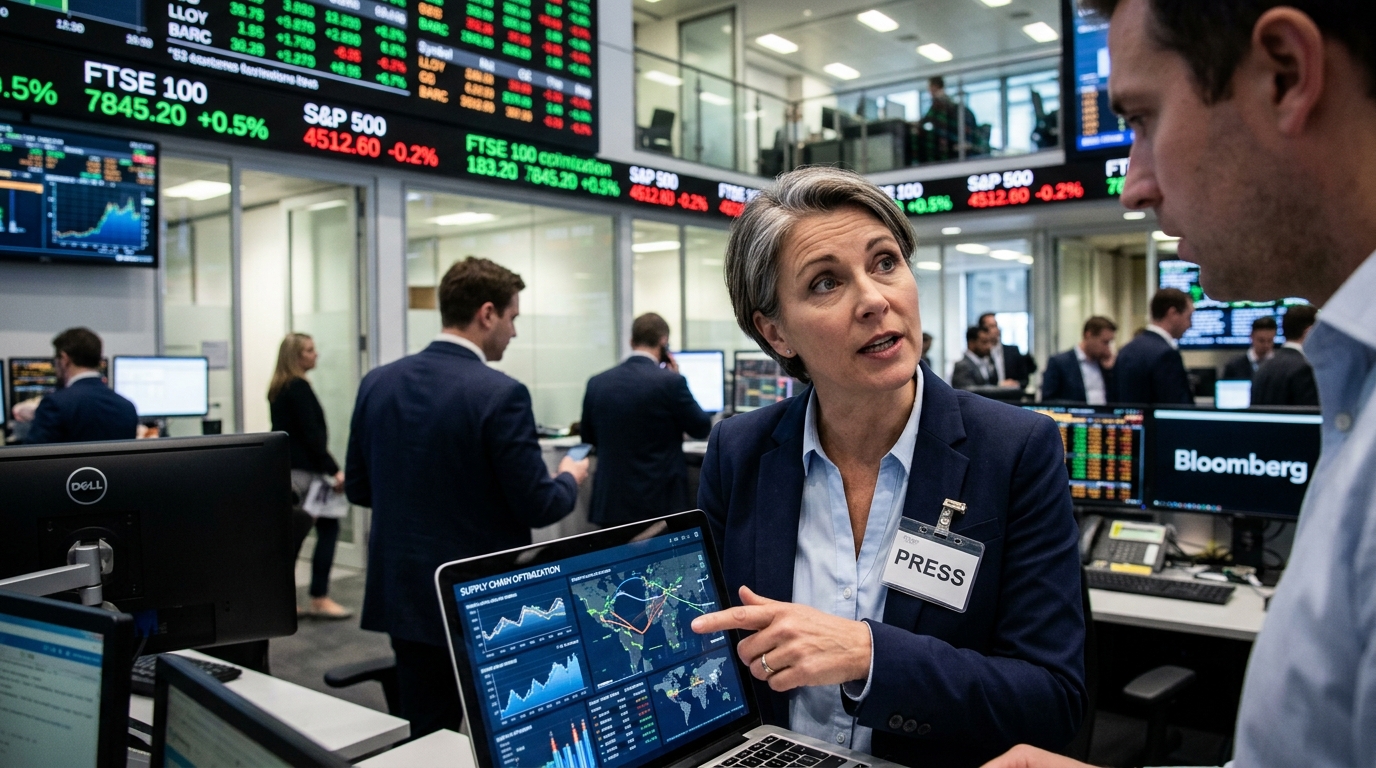
For decades, the world's largest corporations operated under a dangerous illusion of control. They knew their direct suppliers (Tier 1), but beyond that, the supply chain vanished into darkness. This "blind spot," extending to the suppliers of suppliers (Tier 2 and beyond), was estimated to cost the global economy over $184 billion annually in lost opportunities, delays, and production halts. Today, in 2026, Artificial Intelligence is not merely an automation tool but the "lighthouse" illuminating these murky corners of global trade.
The Anatomy of an Invisible Crisis
The problem of supply chain visibility is not new, but its complexity has grown exponentially. A typical electronics manufacturer might have 200 direct suppliers but over 15,000 indirect partners across four or five tiers of depth. Until recently, mapping this network required thousands of man-hours and static spreadsheets that were obsolete the moment they were created. The result? When a flood in Southeast Asia or a geopolitical crisis in Eastern Europe disrupted the flow of a critical raw material, businesses only found out after their production lines had already ground to a halt.
The $184 billion loss isn't just from catastrophes. It stems from the "safety stock" companies are forced to maintain because they don't trust lead times, from inefficient shipping routes, and from an inability to predict demand. AI is transforming this chaos into data, using machine learning algorithms that analyze billions of data points—from shipping manifests and customs declarations to satellite imagery and news feeds—to create a "Digital Twin" of the global market.
From Reaction to Prediction: The Role of Generative AI
The major breakthrough came with the integration of Generative AI into ERP (Enterprise Resource Planning) systems. Instead of simple alerts, today's systems can "converse" with procurement managers. "There is a 70% probability of a delay in microchips from Taiwan due to an approaching typhoon. I suggest rerouting through Supplier B in South Korea, at an additional cost of 4%, but ensuring delivery 12 days earlier."
This type of predictive analysis eliminates the "bullwhip effect," where small changes in consumer demand cause massive fluctuations in supplier production. AI smooths these ripples, allowing companies to operate with significantly lower inventory levels, freeing up working capital that was previously "buried" in warehouses. Furthermore, AI's ability to process unstructured data—such as contracts in different languages or local regulations—allows for the mapping of Tier 2 and Tier 3 suppliers in seconds, a process that used to take months.
Regulatory Pressure and the ESG Mandate
However, profit is not the only driver of this change. Legislation, particularly in the European Union with the Corporate Sustainability Due Diligence Directive (CSDDD), now requires large companies to guarantee that no child labor or environmental destruction exists at any level of their supply chain. Without AI, compliance with these rules would be practically impossible.
AI platforms now monitor the ethical behavior of sub-suppliers in real-time. If a third-tier supplier in a remote region is accused of human rights violations, the system alerts the parent company immediately, allowing it to take action before its reputation suffers irreparable damage. In this way, technology transforms ethical responsibility from a costly "burden" into a data-driven strategic advantage.
The Future: Autonomous Orchestration
As we move toward the end of the decade, the vision is the "autonomous supply chain." In this scenario, AI will not just suggest solutions but will autonomously execute orders, renegotiate contracts based on current market prices, and optimize logistics without human intervention. Erasing the $184 billion blind spot is only the beginning. The real revolution lies in creating a global trade network that is resilient, transparent, and, above all, intelligent. Businesses that cling to traditional methods will soon find themselves outpaced, victims of their own opacity.





