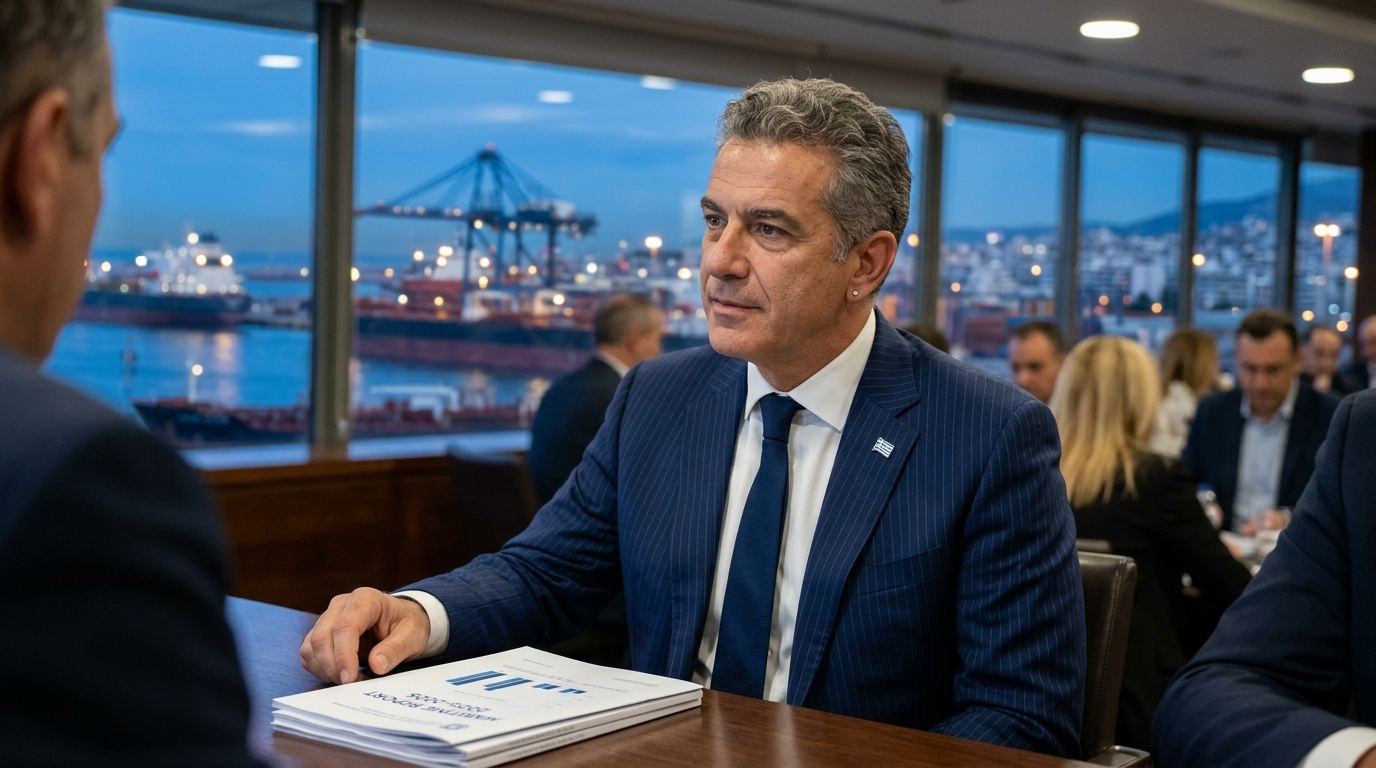
Greek shipping is not merely a sector of the economy; it is the backbone of global trade and the strategic arm of the European Union on the international high seas. According to the Annual Report of the Union of Greek Shipowners (UGS) for the 2025–2026 period, Greece consolidates its position as the leading maritime power on the planet, boasting a fleet that reaches 5,800 vessels. This report arrives at a critical juncture, where the demand for decarbonization and geopolitical upheavals are reshaping the map of global logistics.
The Numbers Behind the Dominance and European Dependence
The statistics presented in the report are revealing of the scale of Greek hegemony. The Greek-owned fleet now accounts for 21% of global deadweight tonnage (DWT) and an impressive 61% of the fleet controlled by the European Union. This means that six out of ten EU ships are under Greek management, making Greece the guarantor of the continent's energy and food security. Particular emphasis is placed on LNG and LPG carriers, where Greek shipowners have invested billions, ensuring the transport of alternative energy sources to Europe, moving away from traditional dependencies on pipelines.
The Green Transition as a Strategic Advantage
The 2025–2026 report highlights the industry's "green" shift not just as regulatory compliance, but as a competitive arena. Greek shipowners are leading the way in fleet renewal with new-technology ships using alternative fuels such as ammonia, methanol, and LNG. With the implementation of stricter International Maritime Organization (IMO) regulations and the EU Emissions Trading System (EU ETS), the Greek fleet appears more prepared than ever. The average age of Greek ships remains lower than the global average, indicating continuous investment in efficiency and the reduction of the environmental footprint.
- Investments in dual-fuel vessels.
- Integration of AI systems for route optimization and fuel savings.
- Participation in international fora to shape fair decarbonization rules.
Geopolitical Instability and Maritime Resilience
In a world torn by conflicts in the Red Sea and Ukraine, Greek shipping demonstrates unique adaptability. The report underscores that Greek shipowners manage crises with composure, rerouting schedules and ensuring that the global supply chain does not collapse. However, the UGS sounds the alarm regarding the need to protect navigation from piracy and terrorist acts, calling for a stronger diplomatic and military presence in critical maritime passages.
"Greek shipping is the connecting link of global trade. Without it, the concepts of globalization and energy security would be a dead letter," the UGS leadership notes in the report's introduction.
Contribution to the Greek Economy
Beyond international relations, shipping remains the pillar of the domestic economy. Its contribution to Greece's GDP exceeds 7%, while it offers hundreds of thousands of jobs, directly and indirectly, through the Piraeus maritime cluster. The report emphasizes the need to strengthen maritime education so that young Greeks turn toward the seafaring profession, maintaining the transfer of know-how from generation to generation. The digitalization of ports and the simplification of bureaucratic procedures under the "e-registry" umbrella are long-standing demands that seem to be coming to fruition, enhancing the attractiveness of the Greek flag.