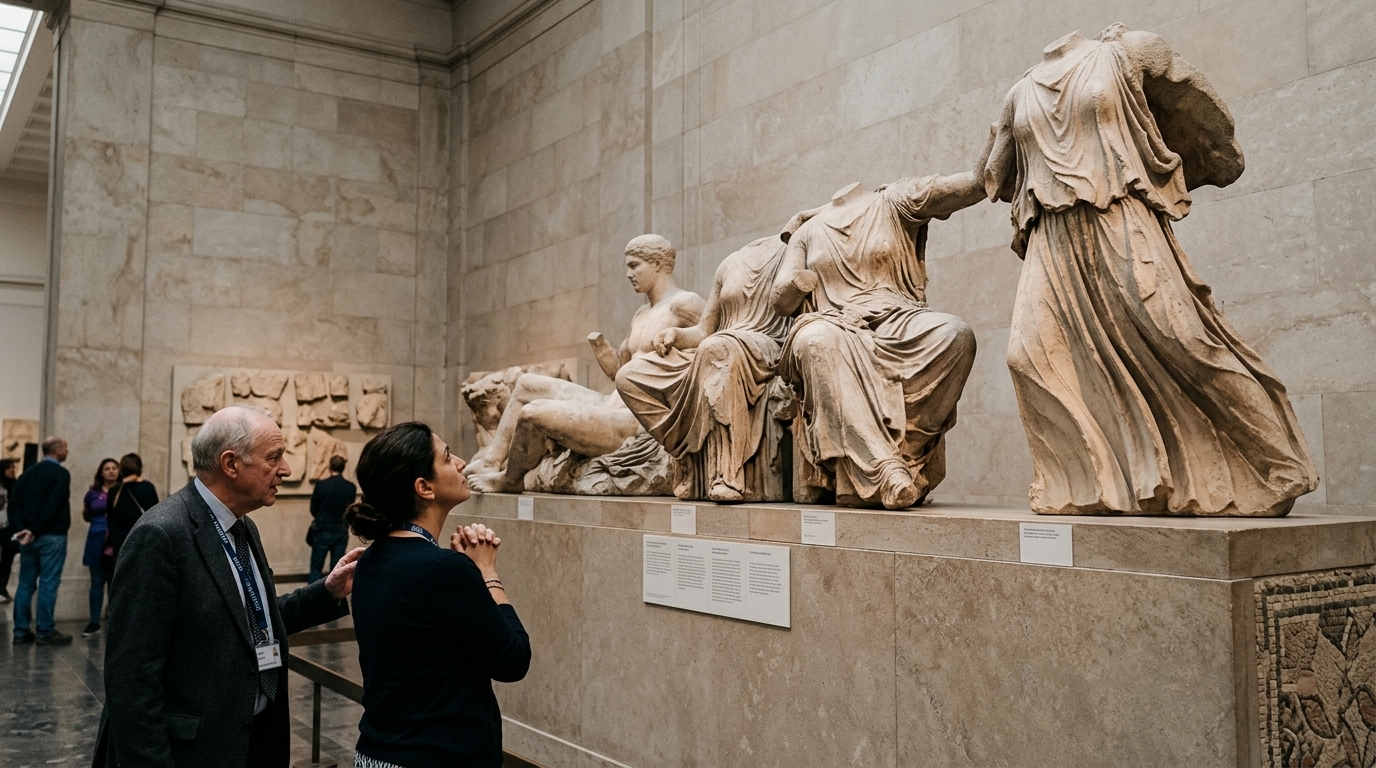
The 24th Session of the UNESCO Intergovernmental Committee for Promoting the Return of Cultural Property to its Countries of Origin (ICPRCP) in Paris was far from a mere bureaucratic exercise. It emerged as a resounding diplomatic triumph for Athens, which saw its decades-long quest for the reunification of the Parthenon Sculptures transform from a bilateral dispute with the United Kingdom into a global demand for justice and cultural integrity. Over 20 nations, including Italy, Egypt, Brazil, Turkey, China, and Japan, took the floor to unequivocally support the Greek position, creating an unprecedented climate of pressure on the British Museum and the UK government.
The Diplomatic Counter-offensive
Greek Minister of Culture, Lina Mendoni, presented a meticulously documented argument that focused not only on the historical injustice of Lord Elgin's removal but on the necessity of restoring the unity of a unique monument—a symbol of Western civilization. The Greek side made it clear that the Parthenon is not simply a collection of artworks, but a singular architectural and sculptural ensemble that was violently dismembered. Support from countries like Turkey was particularly significant; the Turkish representative confirmed that no Ottoman-era document (firman) exists that legitimizes the removal of the sculptures, effectively dismantling one of London's primary legal defenses.
From 'Technical' to 'Intergovernmental'
A major shift in UNESCO’s strategy began in 2021, when the Committee issued a landmark decision recognizing that the issue of the Sculptures is not 'technical' (a dispute between museums) but 'intergovernmental' (a dispute between states). This forces the British government to the negotiating table—a move London has avoided for decades by referring Athens to the Trustees of the British Museum. The international community now recognizes that the responsibility lies with the UK government, which must demonstrate the necessary political will to resolve an issue that concerns global heritage.
The British Museum’s Strategic Impasse
While the British Museum officially maintains its stance on 'legal acquisition' and its role as a 'universal museum,' internal pressure within the UK is mounting. British public opinion has shifted significantly in favor of the return, and initiatives like 'The Parthenon Project' are proposing creative solutions that could lead to a 'win-win' agreement. However, Athens remains firm: it will not discuss a 'loan,' as that would imply recognition of the British Museum's ownership. Instead, it demands permanent reunification. Discussions regarding the exchange of exhibitions and the potential establishment of a British Museum branch in Athens with rotating Greek antiquities are part of the diplomatic 'give-and-take,' but the red line of ownership remains the most significant hurdle.
The Moral Dimension and the Global Shift
The case of the Parthenon Sculptures serves as a bellwether for the international trend toward the decolonization of museums. From France returning treasures to Benin to Germany repatriating bronzes to Nigeria, the precedent for returning looted cultural property is gaining momentum. Greece, with its state-of-the-art Acropolis Museum, has long since debunked the argument that it lacks a suitable venue for the Sculptures. The empty space in the Parthenon frieze at the Acropolis Museum, bathed in Attic light, remains the most powerful visual indictment of British intransigence. The backing of 20 nations at UNESCO is proof that time is now on the side of historical truth.
The Path Ahead
As we move toward 2026, the momentum is undeniable. The UNESCO Committee has called for a new round of talks between the two countries, emphasizing that the status quo is no longer acceptable to the international community. For Greece, this is not just about the past; it is about the future of how we treat cultural heritage in a globalized world. The Parthenon Sculptures are the soul of a nation, but they are also a test for the ethics of modern diplomacy. The wall of refusal in London is showing cracks, and the global chorus of support is becoming too loud to ignore.
- Turkey's support was pivotal, challenging the legality of Elgin's actions from an archival perspective.
- UNESCO urges a new bilateral meeting before the end of 2025 to achieve a concrete solution.
- International pressure is making the British Museum's 'universalist' defense morally untenable.
- Athens is successfully leveraging multilateralism to bypass UK domestic legislative hurdles.