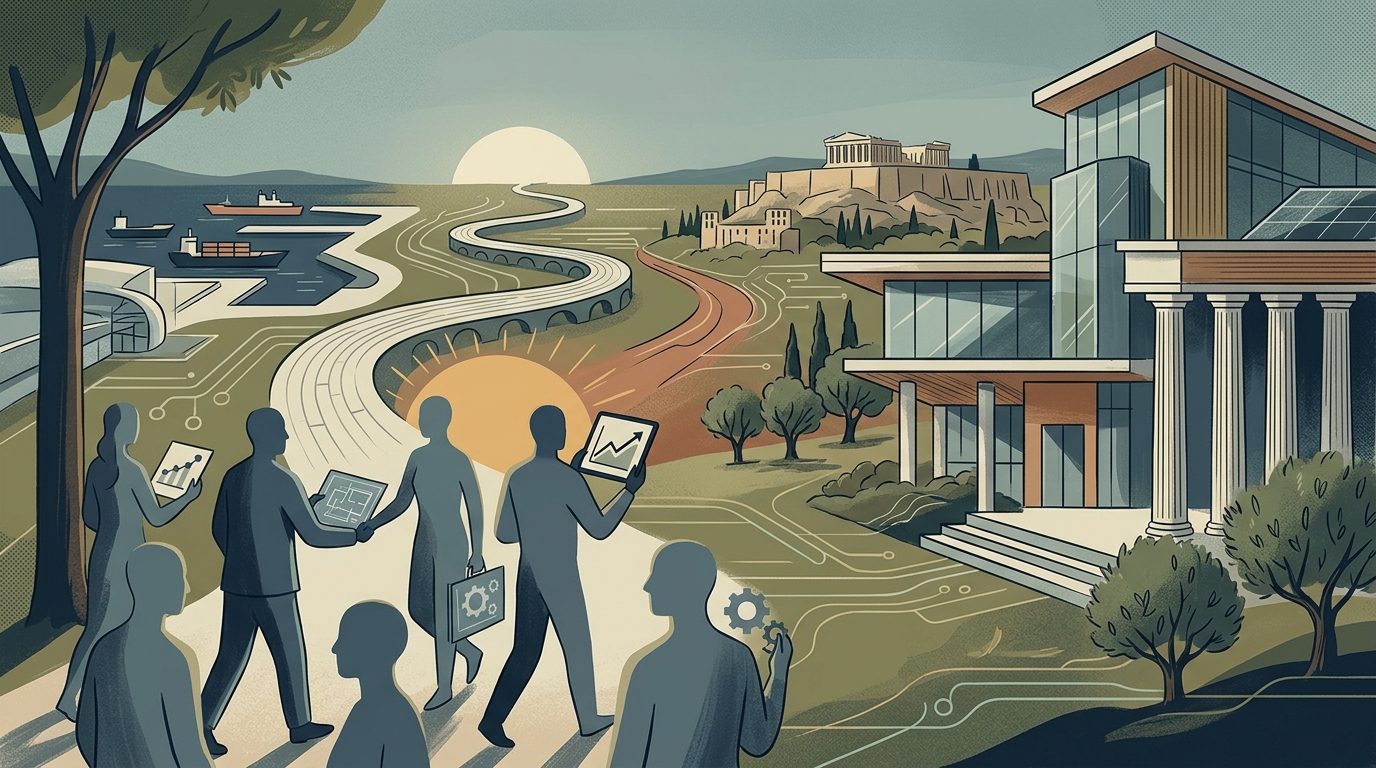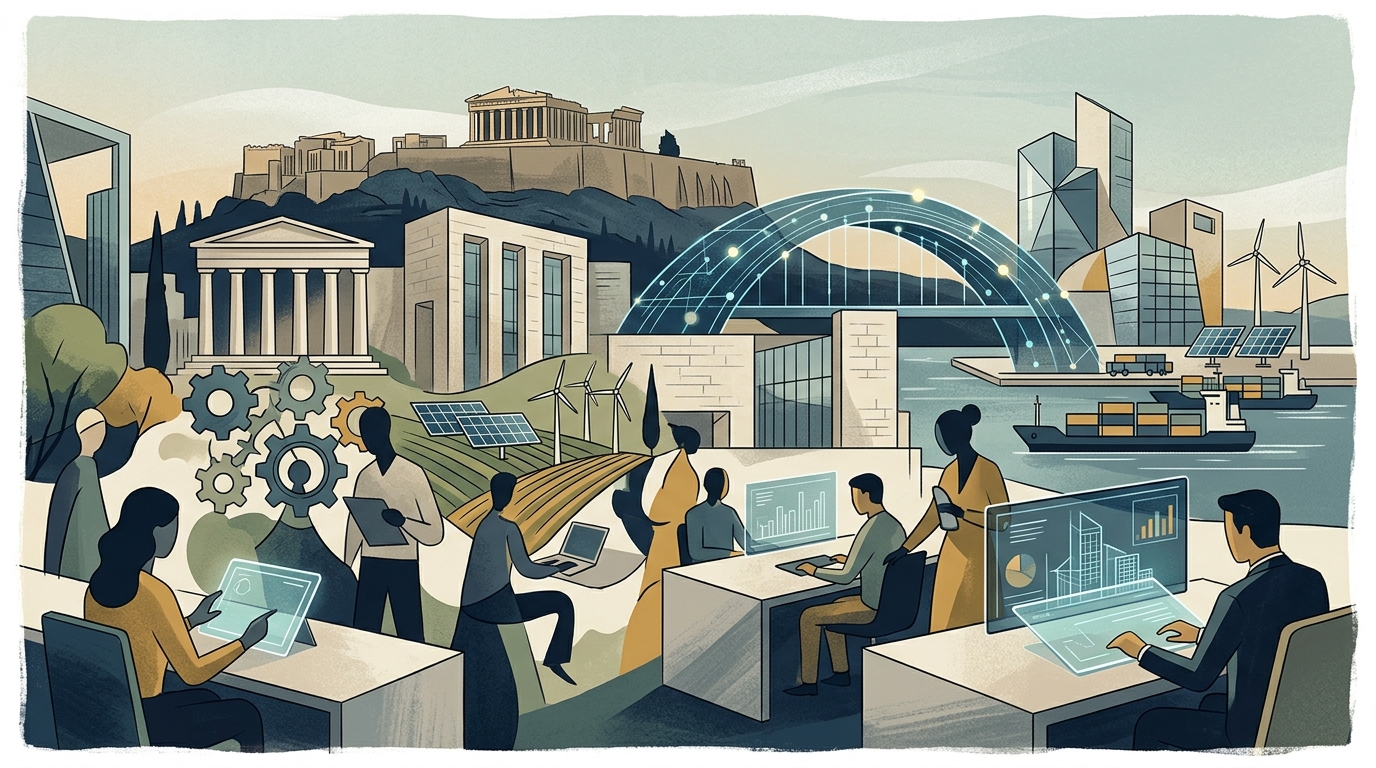
Sunday in Greece remains a ritual of information, where paper, despite the digital storm, still defines the agenda for the week ahead. The headlines of April 26, 2026, capture a country in a strange balance: on one hand, the traditional 'politics of benefits' for retirees, and on the other, the invasion of advanced technology into intra-party management, with rumors of algorithms deciding the fate of political careers.
The Digital 'Big Brother' of Politics
The report by the newspaper 'Demokratia' is causing a stir, speaking of a 'secret algorithm' used to evaluate and potentially 'eliminate' unwanted MPs of the ruling party. Although the use of data analytics in politics is not new—remember Cambridge Analytica—the idea that software can determine a politician's viability per district, based on measurable and perhaps 'invisible' criteria, introduces our democracy to a new, dark era.
In our analysis, what is called an 'algorithm' is often a combination of polling data, sentiment analysis on social networks, and digital tracking of MPs' activity. When political survival ceases to depend on ideological contribution and begins to be measured by hits, engagement, and automated loyalty scores, the role of the MP as a representative of the people is distorted. They turn into a 'content creator' who must satisfy the parameters of a central server.
The Ballot Box Economy: Pensions and Bonuses
At the same time, 'Apogevmatini' focuses on a more traditional but always effective theme: the bonus for retirees. In a period where inflation and high costs continue to pressure households, the government seems to be looking for fiscal space to appease one of its most loyal and numerous electoral groups. The announcement of a 'surprise' suggests that economic management remains the strongest card on the political chessboard.
However, the analysis of these benefits must be done with caution. In 2026, the Greek economy is called to balance between the European Central Bank's demands for fiscal discipline and the need for social cohesion. 'Surprise bonuses' often act as painkillers for structural economic problems, such as low productivity and the demographic crisis, which threatens the pension system itself in the long run.
The Press Crisis and the Need for Truth
Observing the headlines as a whole, it becomes clear that the Greek press is in a constant search for sensationalism to survive. Words like 'secret', 'elimination', and 'surprise' dominate, creating an atmosphere of tension that may not always correspond to reality. The challenge for the modern reader is to distinguish fact from interpretation and political expediency.
- The digitalization of political communication is changing how decisions are made in party headquarters.
- Economic policy remains tied to electoral cycles, with benefits being the primary tool of influence.
- The credibility of traditional media is tested by the need for clickbait titles, even in their printed form.
In conclusion, this Sunday's headlines are not just news; they are a mirror of Greek society in 2026. A society stepping into the past of subsidies while simultaneously sinking into the future of algorithms, trying to find its human voice amidst the noise of information.