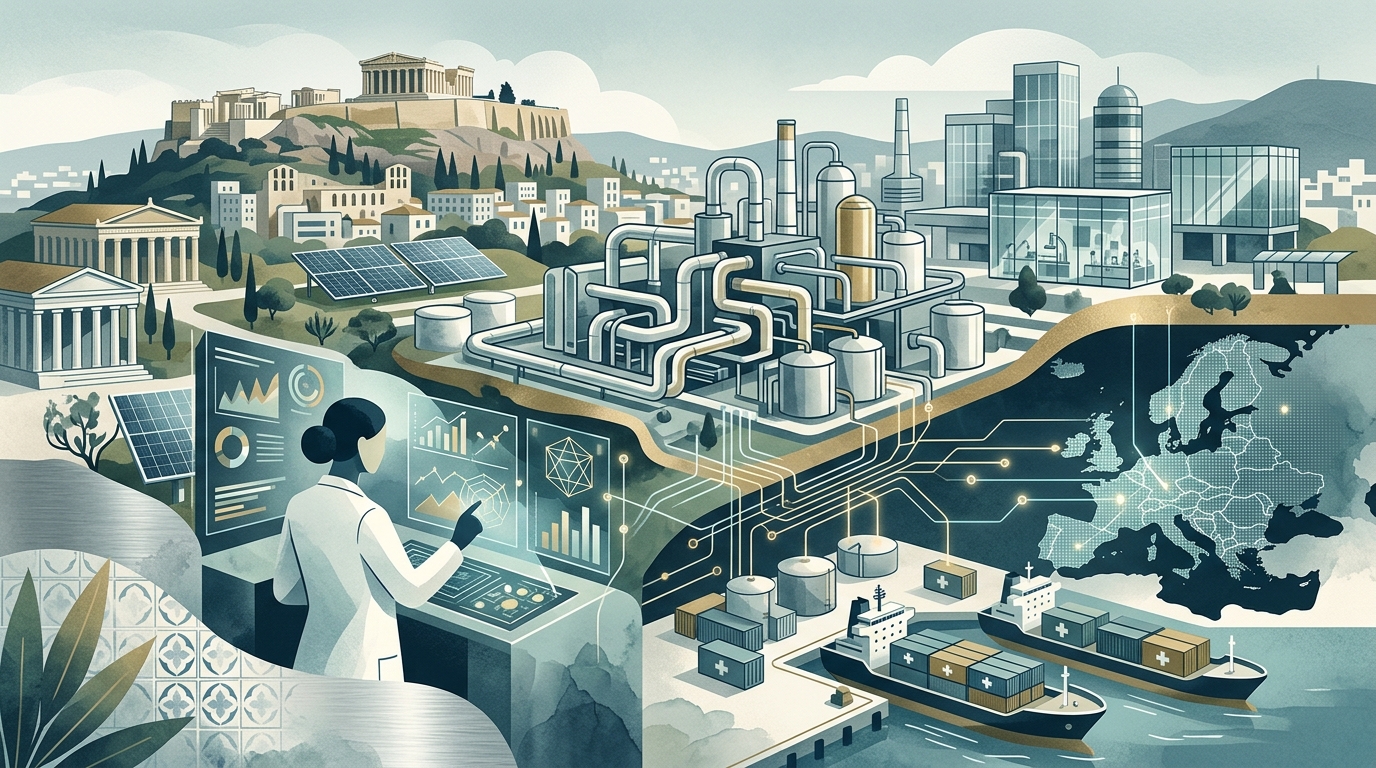
Recent statements by Stavros Kalafatis, Secretary General of the New Democracy Parliamentary Group, have brought to light a reality that often escapes public notice: Greece is no longer just a premier tourist destination, but a critical industrial hub for European healthcare. The figures presented—production of 50% of Europe's oncological drugs, 30% of cardio-metabolic treatments, and 25% of penicillin—underscore the transformation of the Greek pharmaceutical industry into an outward-looking giant that blends tradition with cutting-edge technology.
The Strategic Importance of Greek Production
In an era where the European Union is desperately seeking ways to reduce its dependence on third countries, such as China and India, for the supply of essential medicines, the Greek production base offers a lifeline. The concentration of oncological drug production in Greece is no coincidence; it is the result of systematic investments in infrastructure that meet the strictest international standards. The country's ability to cover half of European demand in such a critical category of drugs grants Athens a level of geopolitical influence that transcends narrow economic metrics.
The production of penicillin and cardio-metabolic drugs completes the puzzle of health security. Penicillin, though an older drug, remains the backbone of infection management, and ensuring its production within European soil is a matter of national security for the EU. The Greek pharmaceutical industry, having invested over 1.2 billion euros in recent years, proves that the country's "heavy industry" can indeed be knowledge and specialized manufacturing.
Artificial Intelligence and Digital Transformation
As Mr. Kalafatis pointed out, Artificial Intelligence (AI) and digital technologies are no longer the future, but the present of pharmaceutical production. In modern Greek factories, AI is used to optimize supply chains, predict machinery failures, and, most importantly, manage quality control. Big data analysis allows companies to identify production deviations in real-time, ensuring that every batch of medicine is perfectly safe for the consumer.
Furthermore, the collaboration between the academic community and industry is being bolstered by the use of machine learning algorithms for drug discovery. Greece possesses an exceptional workforce of scientists who, with the help of AI, can accelerate clinical trials and reduce the time it takes for a drug to travel from the lab to the patient. This innovation ecosystem is precisely what attracts foreign investment from global pharmaceutical giants, turning the country into a living biotechnology laboratory.
Challenges and the Future of the Ecosystem
Despite the impressive progress, challenges remain. The issue of clawbacks and rebates continues to strain the finances of Greek companies, potentially limiting the scope for further research and development. However, the government policy of offsetting investment costs against clawback liabilities has begun to bear fruit, creating a virtuous cycle of growth. The need for further strengthening the cooperation between the state and industry is imperative, especially in a global environment where competition is relentless.
"Strengthening the cooperation between the state, industry, and the academic and research community is the key for Greece to remain a protagonist on the global health stage," industry analysts note.
In conclusion, the Greek pharmaceutical industry serves as a shining example of how a country can leverage its comparative advantages to secure a leading position in a high-value-added sector. By integrating Artificial Intelligence and continuously investing in human capital, Greece is not just producing medicines; it is producing security, innovation, and economic prospects for the whole of Europe.