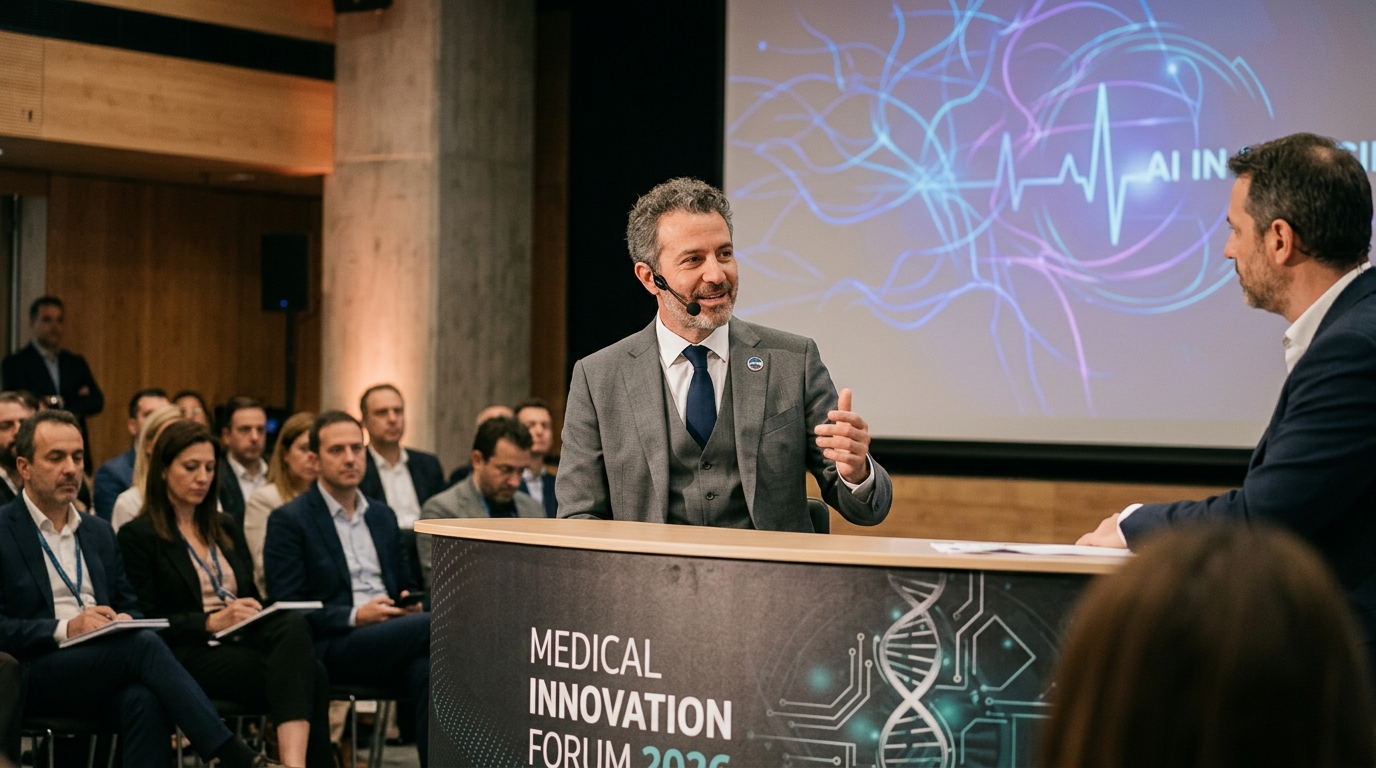
The Medical Innovation Forum 2026 opened its doors with a clear and powerful realization: Artificial Intelligence (AI) is no longer a future promise, but the backbone of modern medical practice. At the heart of the discussions was how machine learning algorithms are redefining the boundaries of diagnosis, treatment, and prevention, offering tools that until a few years ago belonged to the realm of science fiction.
The Diagnostic Revolution and Predictive Analytics
One of the central themes of the conference was the use of AI in medical imaging. Speakers presented data proving that AI systems can now identify pathologies in X-rays, MRIs, and biopsies with an accuracy that often surpasses that of the most experienced radiologists. However, the emphasis was not on replacing the human factor, but on enhancing it. AI acts as an "intelligent assistant" that filters through thousands of images, highlighting suspicious areas and allowing doctors to focus on the most critical cases, dramatically reducing diagnostic time.
Beyond diagnosis, predictive medicine stole the show. By analyzing Big Data from patient histories, algorithms can now predict the likelihood of developing chronic diseases, such as diabetes or cardiovascular conditions, years before the first symptoms appear. This shift from "reactive" to "proactive" medicine is the holy grail of modern healthcare, promising not only a better quality of life but also significant relief for healthcare systems.
Precision Medicine: The End of "One Size Fits All"
The Forum emphasized that the era where the same treatment was administered to all patients with the same condition is coming to an end. AI allows for the analysis of the genome in combination with a patient's lifestyle and environment, creating a unique profile for each individual. This "precision medicine" enables oncologists, for instance, to select the specific drug regimen that will be most effective for a particular tumor in a specific patient, minimizing side effects.
- Real-time biomarker analysis through wearable devices.
- Development of "digital twins" of patients to simulate surgical procedures.
- Automated discovery of new drugs via AI, reducing R&D costs and timeframes.
The Greek Landscape: Modernizing the National Health System (ESY)
A particularly interesting discussion centered on the integration of these technologies into the Greek National Health System (ESY). Despite the bureaucratic hurdles of the past, 2026 finds Greece at a critical turning point. The digitization of medical records and the interconnection of hospitals through a unified data system are the necessary foundations for AI implementation. Ministry of Health representatives stressed that investing in AI is not a luxury but a necessity for the system's sustainability, especially in a country with an aging population.
"AI in the National Health System is not just an algorithm; it is the means to bring quality care to every citizen, even in the most remote parts of Greece," one of the keynote speakers noted.
Ethics, Transparency, and the Human Element
Despite the enthusiasm, the Forum did not shy away from the darker sides. AI ethics, data protection, and the "black box" problem—the difficulty of understanding how an algorithm reaches a decision—were subjects of intense debate. The need for a robust legal framework, aligned with the EU's AI Act, is imperative to ensure that technology remains at the service of humanity and does not turn into an impersonal controller.
In conclusion, the takeaway from the Medical Innovation Forum 2026 is that medicine is entering a new "golden age." The challenge is no longer technological, but political and social: how will we ensure that these scientific miracles are accessible to everyone, regardless of their financial status, while maintaining the sacred bond of trust between doctor and patient?