In the midst of a war that has evolved into a grueling war of attrition, Ukraine faces not only Russian forces on the front lines but also an internal enemy that is proving equally resilient: corruption. Recent revelations regarding the so-called 'Corruption Drones' scandal have sent shockwaves through Kyiv, placing President Volodymyr Zelensky in an extremely difficult position as Western allies watch the management of defense funds with increasing concern.
Technological Revolution and the Shadow of Middlemen
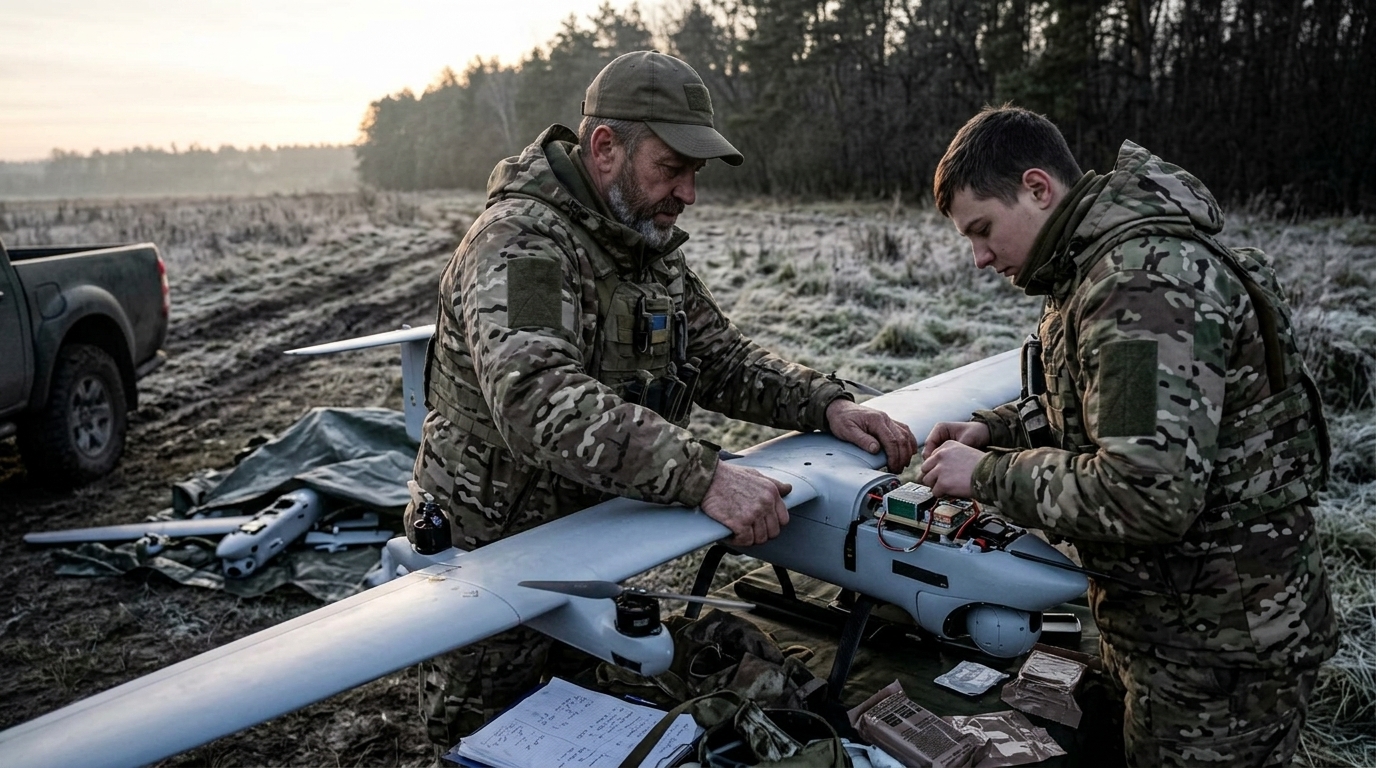
Ukraine has managed to emerge as a global leader in drone innovation. From small FPV drones destroying tanks to long-range drones striking Russian infrastructure, domestic production has become the backbone of Ukrainian defense. However, this rapid growth has been accompanied by a chaotic procurement process. According to reports, significant amounts from the state budget and international aid appear to have been funneled to shell companies and middlemen with close ties to the political leadership.
The problem is primarily located in the overpricing of components imported from abroad. While the government promotes the image of a transparent defense industry, oversight mechanisms seem to lag behind the pressure for immediate delivery of material to the front. This situation creates a toxic environment where the need for survival is used as a pretext for the enrichment of a new elite of 'war profiteers.'
Political Pressure on Zelensky
For Volodymyr Zelensky, who was elected on the promise of 'cleaning up' the system, these allegations are politically painful. Despite repeated purges in the Ministry of Defense and the removal of high-ranking officials, the sense that corruption remains structural is gaining ground. His critics argue that personnel changes are often cosmetic, aimed at reassuring foreign donors rather than truly dismantling the networks.
The stakes are enormous. Ukraine is entirely dependent on military and financial aid from the US and the European Union. At a time when 'Ukraine fatigue' is beginning to manifest in Western parliaments, every corruption scandal provides 'ammunition' to those who wish to halt funding. Zelensky is called upon to prove that he can guarantee transparency, while military needs demand speed and flexibility—two elements that often clash with strict bureaucratic control procedures.
Reaction from Society and Allies
Internally, public opinion is divided but outraged. Ukrainian citizens, who donate from their limited resources to buy drones for their relatives' units at the front, view news of kickbacks and the luxurious lifestyles of officials with revulsion. Social cohesion, which has been Ukraine's great weapon since the beginning of the invasion, is being severely tested.
On the other hand, the EU and NATO have set the fight against corruption as an inviolable condition for the country's accession path. Recent European Commission reports note progress but highlight that the defense procurement sector remains a 'black hole.' The creation of new anti-corruption agencies, such as NABU and SAP, is a step in the right direction, but their effectiveness depends on the political will to touch the 'upper echelons.'
Conclusions: A Battle on Two Fronts
Ukraine stands at a historical crossroads. Success on the battlefield through the use of drones is a technological victory, but failure in the ethical management of these resources could lead to a strategic defeat. President Zelensky must understand that transparency is not a peacetime luxury but a necessity for survival in war. If Kyiv fails to curb the 'Corruption Drones,' it risks losing the trust of the very people fighting for its freedom, as well as the allies who make that freedom possible.