The history of work in the 21st century is often written through clashes between tradition and necessity. While JPMorgan Chase, under the leadership of Jamie Dimon, has been one of the most vocal proponents of a full return to the office, the reality of a World Cup is emerging as an unexpected catalyst for change. This is not a sudden embrace of flexibility, but a cold admission: when a city is paralyzed by millions of fans, the attempt to get employees into the office becomes economically and operationally non-viable.
The Collision of Infrastructure and Corporate Culture
The 2026 World Cup, hosted across the US, Mexico, and Canada, is not just a sporting event; it is a stress test for urban infrastructure. In cities like New York and New Jersey, where JPMorgan maintains a massive footprint, the influx of visitors is expected to cause traffic congestion unlike anything seen before. The bank’s decision to allow remote work during key match days represents a strategic retreat. Analysts point out that the cost of lost man-hours in gridlock and the plummeting morale of employees fighting through chaos far outweigh the supposed benefits of "in-person collaboration."
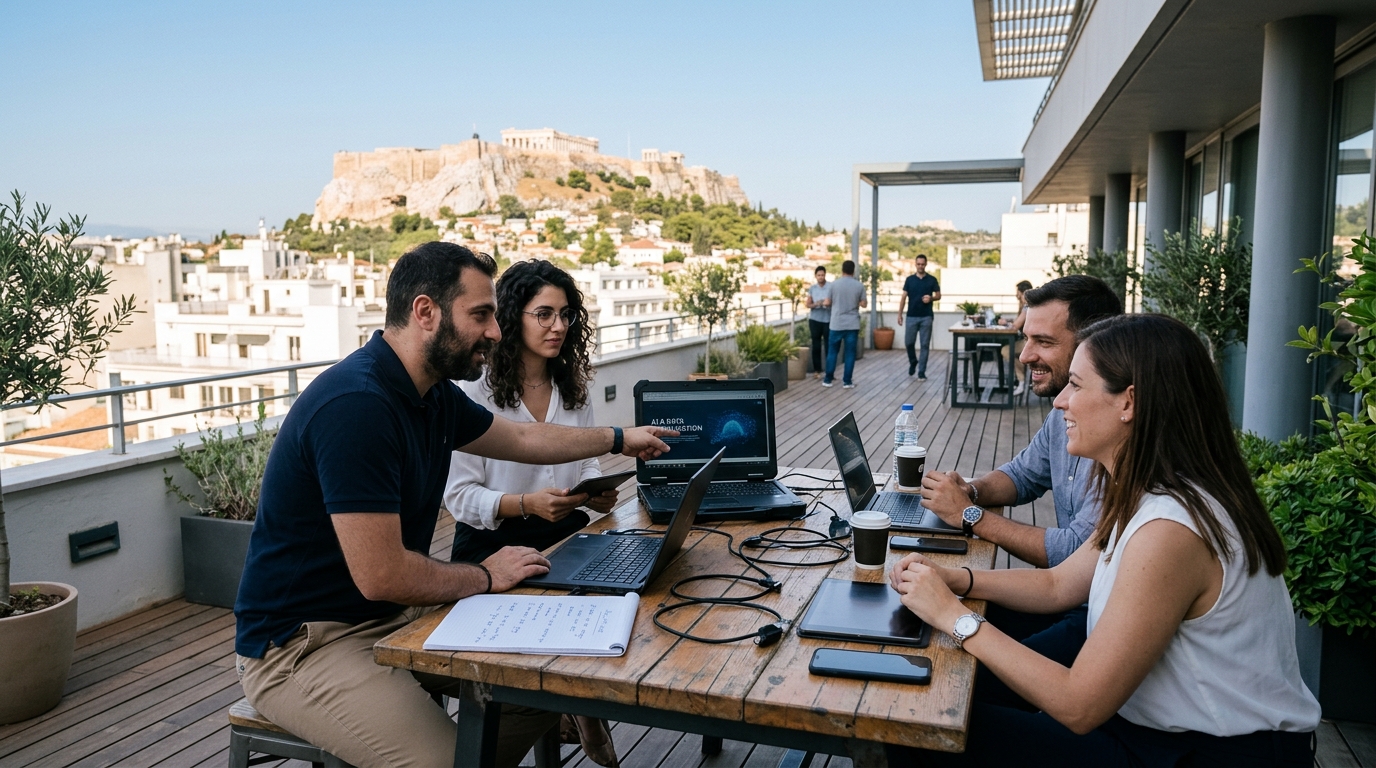
In Greece, we have experienced this phenomenon on a smaller scale during major protests or international summits, where downtown Athens is effectively "sealed off." The difference now is that remote work is no longer treated as an emergency makeshift solution, but as a core component of contingency planning. Major enterprises are realizing that flexibility is the only sustainable answer to an increasingly unpredictable world.
Employee Psychology and Employer Branding
Beyond logistics, there is the parameter of engagement. A World Cup creates a unique social atmosphere. Companies that try to enforce strict office hours during such events often face "passive resistance" from employees. JPMorgan, showing a rare realism, seems to understand that granting remote work acts as a pressure relief valve.
- Reduction in operational costs related to commuting and security.
- Increased satisfaction for employees who can support their national teams without commute-induced stress.
- A live test of digital infrastructure under high-pressure scenarios.
This move sets a significant precedent. If the world's largest banking institution can operate remotely to accommodate a sporting event, then the arguments against permanent remote work begin to lose their potency. Employees will rightly ask: "If we can do it for football, why can't we do it for our quality of life?"
Conclusions for the Post-Event Era
The case of JPMorgan and the World Cup highlights a new form of "corporate realism." Remote work is no longer an ideological battle between progressive and conservative managers, but a technocratic solution to urban density problems. As our cities become more crowded and mega-events more frequent, a company's ability to "decentralize" instantly will be a key indicator of its resilience. The challenge for the future is not whether we will return to the office, but how quickly we can leave it when circumstances demand it.
"Flexibility is no longer a perk; it is a survival strategy in a world that never stops moving," notes a prominent Wall Street executive.