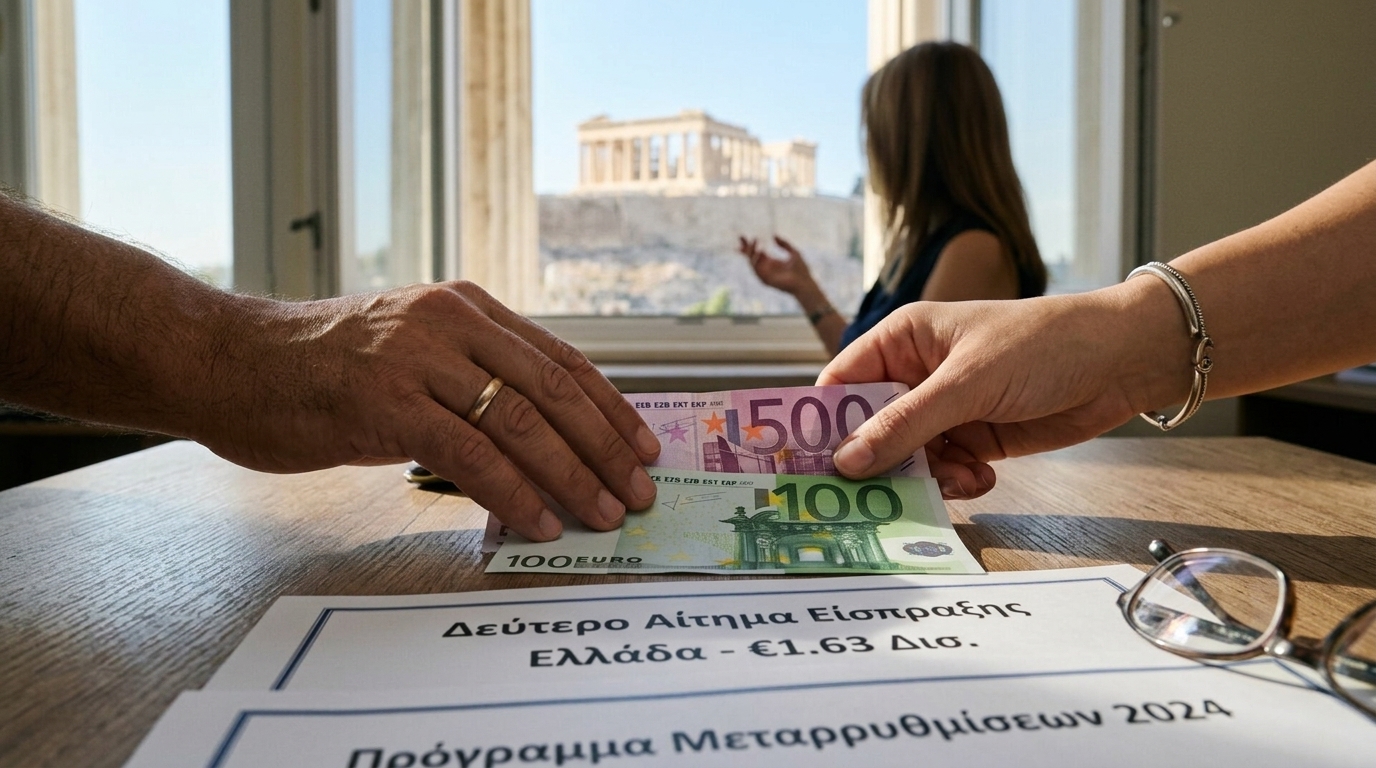
At a pivotal juncture for the Greek economy, the government has moved forward with a dual request to the European Commission for the disbursement of funds totaling 1.63 billion euros from the Recovery and Resilience Facility (RRF). This request, announced by Alternate National Economy and Finance Minister Nikos Papathanasis, is not merely a procedural step but a confirmation of the country’s effort to maintain its momentum in absorbing European funds amidst global economic uncertainty.
The €1.63 billion sum is divided into two main pillars: the sixth installment of grants and the corresponding installment of loans. This move serves as the culmination of completing a series of demanding milestones set under the national "Greece 2.0" plan. The successful completion of these targets suggests an institutional maturity that the country rarely exhibited in the past, although challenges in the real economy remain multifaceted.
Milestones and the "Greece 2.0" Strategy
To reach the point of submitting this request, Greece had to fulfill specific targets related to the green transition, digital transformation, and social cohesion. According to Ministry sources, these milestones include advancing reforms in the judicial system, accelerating procedures for renewable energy sources, and implementing vocational training programs for the workforce.
Particular emphasis was placed on the digitalization of the state. The Recovery Fund has acted as an accelerator for projects that had been pending for decades, such as the digitalization of land registry archives and the upgrading of public administration information systems. However, criticism often focuses on whether these projects translate into immediate improvements in the daily lives of citizens or whether they remain technocratic exercises on paper.
The Challenge of Absorption and the Real Economy
While Greece is considered a "champion" in the absorption of RRF funds, the big question remains the diffusion of this liquidity into the market. The low-interest loans from the Recovery Fund have largely been channeled through the banking system, raising concerns about the exclusion of small and medium-sized enterprises (SMEs). Strict eligibility rules and banking criteria often act as a filter favoring large corporate groups, leaving the backbone of the Greek economy on the sidelines.
Nikos Papathanasis has repeatedly emphasized that "Greece 2.0" is a dynamic plan that adapts to the needs of the times. Nevertheless, the pressure of time is relentless. The Recovery Fund has an expiration date in 2026, and any delay in project implementation could lead to a loss of resources. The dual request for the €1.63 billion shows that the government wants to "lock in" the funds as soon as possible to ensure the financial continuity of the projects.
Fiscal Discipline and Growth
The disbursement of these funds is also vital for maintaining fiscal stability. In a period where central bank interest rates remain relatively high, access to cheap money through the RRF provides a significant advantage for Greece. This helps reduce borrowing costs for investments that would otherwise be prohibitive.
Furthermore, the inflow of €1.63 billion is expected to provide a new boost to the country’s GDP. Analysts estimate that the full utilization of the Fund’s resources could add up to 7 percentage points to Greek GDP by the end of the decade. However, this growth must be qualitative and inclusive. It is not enough to increase the numbers; the creation of high-skilled jobs and the strengthening of the extroversion of Greek businesses are required.
Conclusion: The Road to 2026
The submission of the dual request is a positive signal to the markets and our partners in the European Union. It shows that Greece remains committed to its reform program. However, the true success of the endeavor will be judged not by how many billions flow into the state coffers, but by how deeply the changes take root in the structure of the Greek economy. The challenge is to transform temporary assistance into a permanent developmental asset.