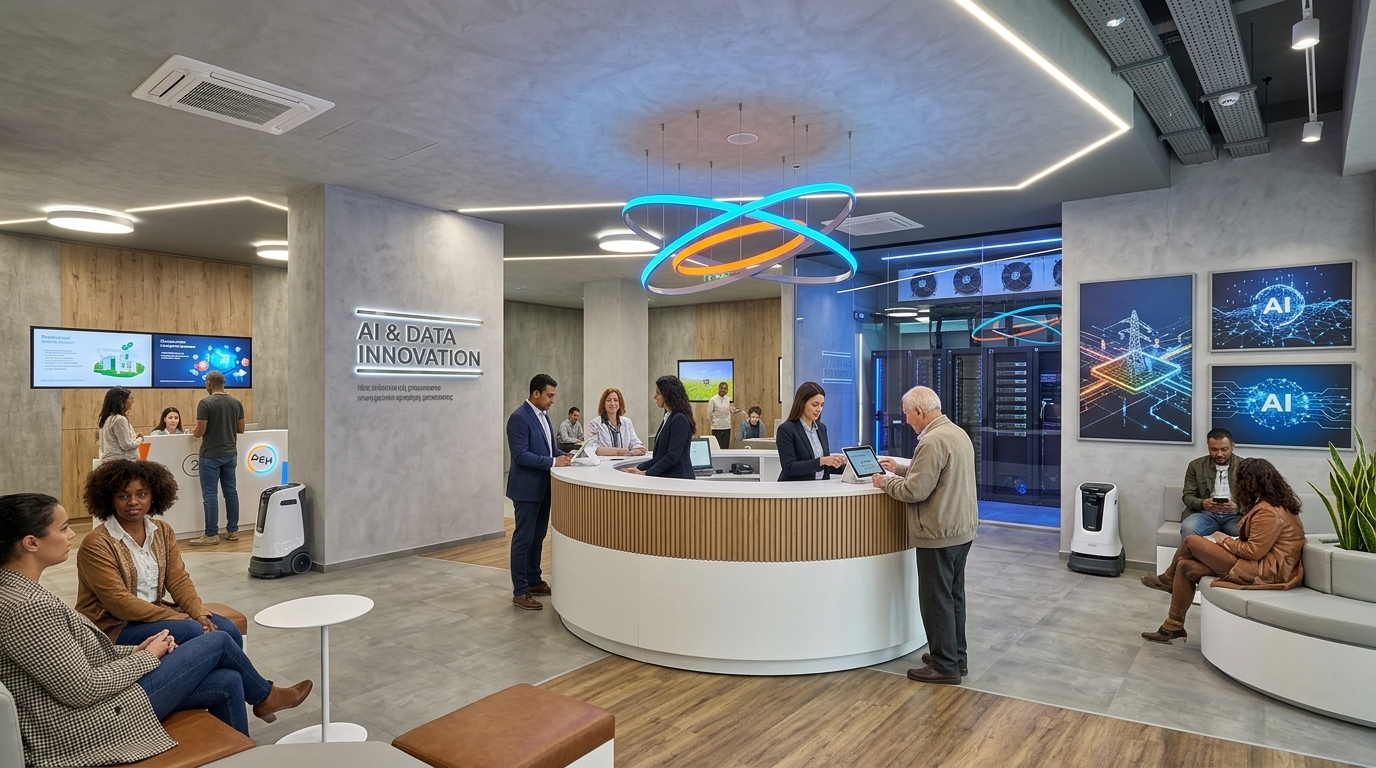
The story of the Public Power Corporation (PPC) in recent years could easily serve as a case study in leading business schools. From the brink of collapse in 2019, the utility has not only recovered but, under the leadership of George Stassis, is transforming into a regional powerhouse that blends green energy with cutting-edge digital infrastructure. The vision recently unveiled is no longer just about electricity; it is about data management and supporting the Artificial Intelligence (AI) revolution.
The Convergence of Energy and Data
In the 21st century, data is the new oil, but energy is the engine that drives it. PPC realized early on that the explosive growth of AI requires massive amounts of electricity and, crucially, infrastructure capable of hosting this processing power. The strategic decision to enter the data center market is not mere portfolio diversification; it is an organic evolution of the company's core mission.
As George Stassis explained, PPC possesses three critical advantages: proprietary grids, access to affordable green energy, and strategic geographical locations. The development of large-scale data centers in Greece, in partnership with international giants like Damac, places the country firmly on the digital map of the Mediterranean. These facilities will not be simple storage units but AI processing hubs powered by wind and solar farms, significantly reducing the carbon footprint of the digital economy.
FiberGrid: The Nervous System of a New Era
Alongside data centers, PPC is moving at a rapid pace to develop its fiber optic network through FiberGrid. By utilizing the existing aerial electricity distribution network, the company can install Fiber-to-the-Home (FTTH) more quickly and cost-effectively than traditional underground methods. The goal is to cover millions of households and businesses, creating a parallel revenue stream that is independent of energy price fluctuations.
"We are no longer a traditional utility company. We are a provider of critical infrastructure for the green and digital transition," Stassis noted.
This strategy is further bolstered by expansion into Southeast Europe, with the acquisition of Enel Romania marking the first major step. PPC is creating an energy and digital corridor stretching from Greece to Romania, offering synergies that few players in Europe can match. This cross-border integration allows for better balancing of the grid and optimized energy trading across the Balkans.
Artificial Intelligence and Operational Efficiency
Artificial Intelligence is not just a product PPC will support through its data centers; it is also a tool being integrated into its own operations. From predicting energy demand and optimizing production from Renewables (RES) to automated customer service, AI is at the core of the new operating model. Using algorithms for grid management allows for reduced losses and faster fault restoration, directly improving the quality of service for the end consumer.
However, challenges remain. International competition from tech giants, geopolitical uncertainties, and the need for a continuous flow of capital require careful handling. PPC must balance its social role in Greece with its ambitions as a multinational group. The success of this venture will largely determine whether Greece can transform from a mere consumer of technology into a regional provider of digital and energy solutions.
The Future: A Green Digital Empire?
George Stassis is making a high-stakes bet. If PPC manages to complete its investment plan, it will have created a unique ecosystem where energy production, data transmission, and computing power work in tandem. In a world digitizing at a breakneck pace, owning the "pipes" (grids) and the "fuel" (energy) provides an indisputable strategic advantage. The PPC of 2026 bears no resemblance to the company of 2018, and that in itself is an achievement that shifts the paradigms of the Greek economy. The transition from a lignite-heavy past to a silicon-and-sun future is well underway.