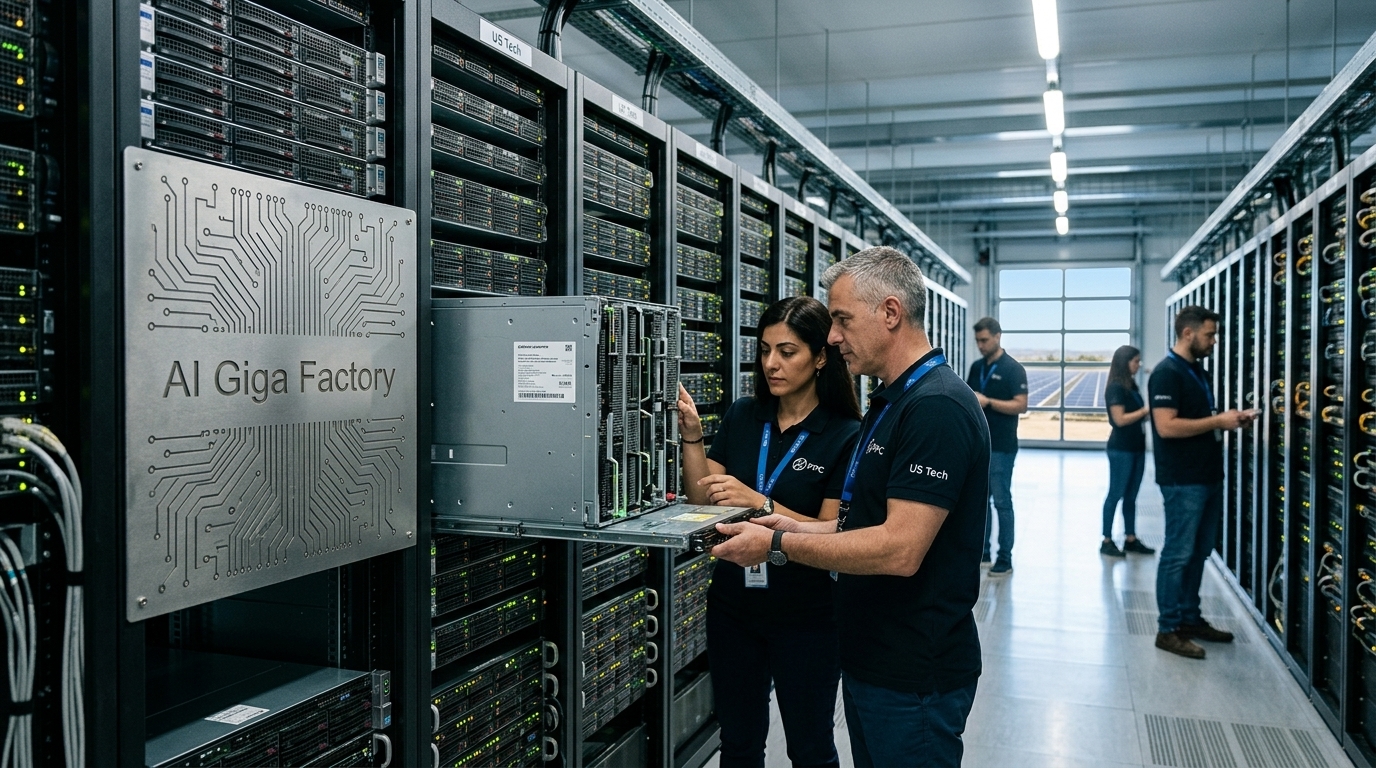
In an era where the power of nations is no longer measured solely by raw material reserves but by their computational capacity, Greece is attempting a leap that aims to place it firmly on the global Artificial Intelligence map. PPC (DEI), the country's historic energy pillar, is undergoing a rapid transformation, planning what analysts call an "AI Giga Factory" in Kozani. This is a landmark project that goes beyond mere data storage; it is about providing the essential infrastructure for training large-scale AI models, in collaboration with leading technology groups from the United States.
From Lignite to Silicon: The Great Transition
The choice of Kozani for the installation of the mega data center is not accidental. The region, which for decades served as Greece's energy heart through lignite mining, already possesses the necessary connection infrastructure to the national electricity transmission grid. Within the framework of the "Just Transition," PPC is utilizing the lands of old mines to create a high-tech ecosystem. This project symbolizes the shift from the carbon era to the data era, offering a new economic prospect to a region hit hard by the phase-out of lignite.
PPC's strategy aligns with global trends where energy companies are evolving into digital infrastructure providers. Artificial Intelligence is extremely energy-intensive; PPC's ability to provide direct access to "green" energy from neighboring solar parks makes the Kozani project unique in Europe. According to sources close to the management, the goal is to create a hub capable of hosting thousands of GPUs (Graphics Processing Units), which form the "heart" of modern AI.
The Alliance with US Giants
The involvement of American tech giants—with names like Microsoft, Google, and specialized AI infrastructure providers at the forefront of discussions—adds a geopolitical dimension to the project. The US views Greece as a stable partner in the Eastern Mediterranean, capable of serving as a bridge for data transfer between Europe, Asia, and Africa. This collaboration is not limited to building construction but extends to providing expertise for managing AI workloads, which require advanced cooling systems and uninterrupted power supply.
"Greece is no longer a mere consumer of digital services; it aspires to become a producer of computing power for the entire region," note government officials closely monitoring the investment's progress.
The "AI Giga Factory" is expected to attract hundreds of specialized scientists and engineers, stemming the brain drain and creating high-value-added jobs. Furthermore, the existence of such infrastructure on Greek soil strengthens the country's "digital sovereignty," as critical data and computational processes will remain within borders, under the European regulatory framework.
Challenges and the Future of Digital Energy
Despite the optimism, significant challenges remain. The first concerns the cost of the investment, estimated at hundreds of millions of euros, and the funding through the Recovery and Resilience Facility and equity. The second challenge is environmental sustainability. Although the use of Renewable Energy Sources is a given, the massive water consumption for server cooling requires careful planning, especially in a time of climate crisis.
PPC must balance its role as a public utility with the demands of an international tech player. If the Kozani venture succeeds, Greece will have managed to turn an industrial crisis into a digital opportunity, proving that tradition and innovation can coexist in the same geographical space. The "AI Giga Factory" is not just a building full of computers; it is the symbol of a Greece that dares to look the future in the eye.