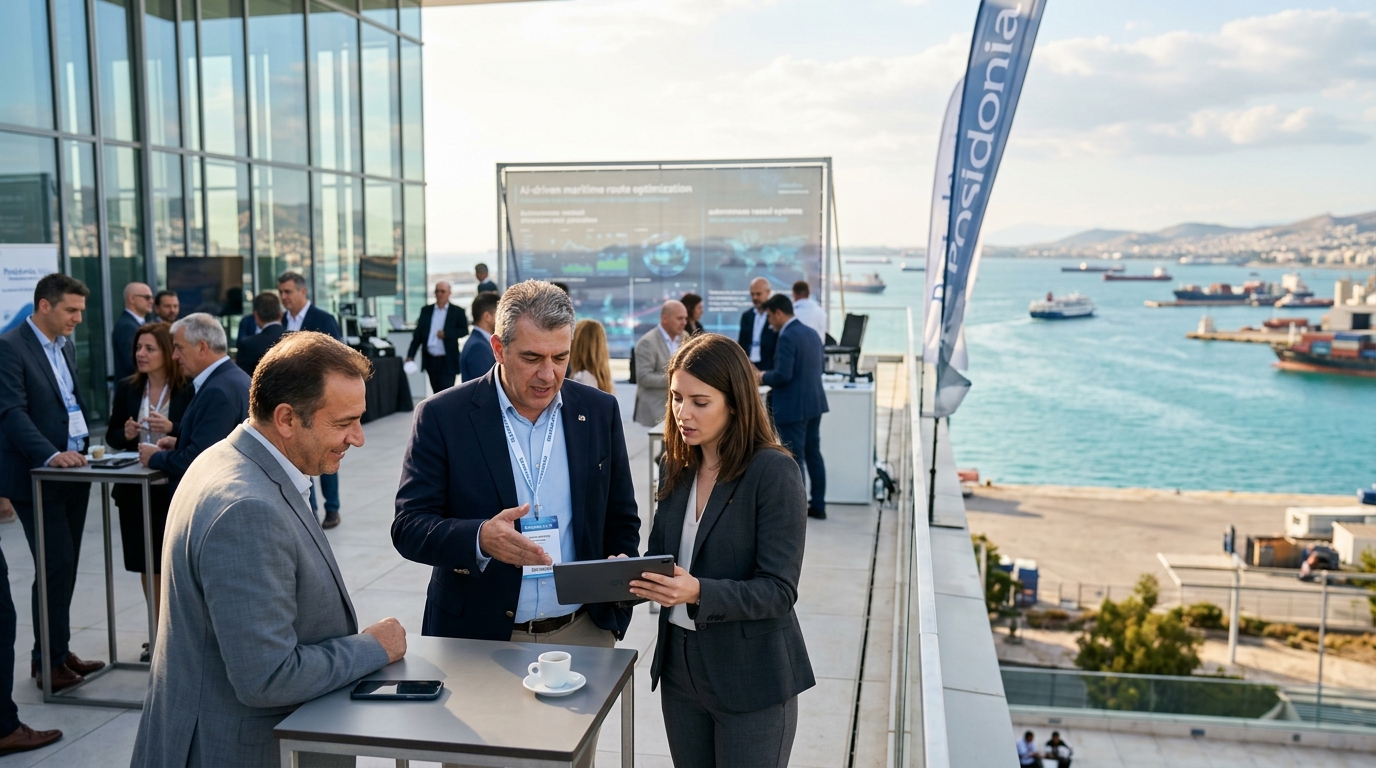
The heart of global shipping is beating once again in Athens. Posidonia 2026 is not merely an exhibition; it is the barometer of an industry standing at one of the most critical crossroads in its long history. With 24 national pavilions and the significant return of traditional powerhouses like Germany and Italy, this year's event is expected to shatter all previous attendance records, reaffirming Greece's status as the ultimate hub of maritime trade.
However, the news stealing the spotlight isn't just about the size of the vessels or the horsepower of the engines, but the intelligence guiding them. For the first time, more than 30 exhibitors will showcase exclusively Artificial Intelligence (AI) solutions, marking a definitive break from the past. Shipping, a sector historically viewed as conservative in its adoption of new technologies, now appears to be embracing the digital revolution as the sole tool for survival in a world fraught with geopolitical uncertainty and stringent environmental regulations.
The Return of the Europeans and Maritime Geopolitics
The reappearance of national pavilions from Germany and Italy is no coincidence. After a period of introspection, European shipbuilding and technological forces are realizing that collaboration with Greek shipping—the world's largest fleet—is essential to counter competition from Asia. Posidonia 2026 becomes the arena where European expertise meets Greek entrepreneurial spirit.
- 24 national pavilions from every corner of the globe.
- Increased presence from China and Korea, vying for the lion's share of newbuilding orders.
- Strategic alliances for the green transition and alternative fuels.
The presence of so many national delegations underscores that shipping remains the backbone of globalization. In an era where trade routes are threatened by conflicts in the Red Sea and Ukraine, the need for more efficient, safe, and "smart" ships is more pressing than ever.
The Algorithm at the Helm: The AI Onslaught
The participation of 30 specialized AI exhibitors at Posidonia 2026 represents a historic milestone. We are no longer talking about simple fleet management systems, but advanced neural networks taking full control of operational efficiency. AI in shipping is now being applied across three main pillars:
- Voyage Optimization: Systems that analyze real-time weather, sea currents, and port congestion to reduce fuel consumption by up to 15%.
- Predictive Maintenance: Sensors that predict engine failures before they occur, saving millions in delays and repairs.
- Autonomous Navigation: While fully autonomous ocean-going vessels are still on the horizon, Decision Support Systems are reducing human error, which accounts for 75% of maritime accidents.
"Artificial Intelligence is no longer a luxury for the few, but the new standard for anyone who wants to remain competitive on the global stage," industry insiders state.
Green Shipping and Digital Transformation
One of the central themes of Posidonia 2026 is the convergence of decarbonization and digitalization. The International Maritime Organization (IMO) targets for net-zero emissions by 2050 require massive investments. AI plays a pivotal role here, as it allows existing vessels to become "greener" through precise energy management, delaying the need for premature fleet retirement.
The Greek shipping community, despite its traditional focus on practical experience, is showing remarkable adaptability. Greek shipowners are investing heavily in startups developing maritime software (Maritime Tech), turning Greece into an emerging hub of technological innovation.
Conclusion: The Future is Here
Posidonia 2026 will be remembered as the event that bridged the gap between traditional seamanship and Silicon Valley. With record-breaking participation and a focus on AI, the exhibition proves that shipping is not an "old" industry, but a dynamic sector at the cutting edge of technological evolution. The return of Germany and Italy adds a new European flair, while Greece's dominance remains the steady point of reference in an ocean of change.