The era of patients walking into plastic surgery clinics clutching celebrity magazine cutouts is officially over. Today, a new trend is alarming the global medical community: the desire of individuals to resemble their own digital avatars, as generated by Artificial Intelligence (AI). What began as a harmless diversion with Instagram and TikTok filters has morphed into a profound psychological and social challenge, with experts identifying a new phenomenon known as 'AI Dysmorphia.'
According to recent reports from the American Academy of Facial Plastic and Reconstructive Surgery (AAFPRS), a growing number of patients are seeking procedures to attain features bestowed upon them by an algorithm: poreless skin, hyper-contoured cheekbones, and eye angles that often defy the laws of human anatomy. The issue, however, is not merely aesthetic; it is deeply existential.
From Filters to Algorithms: The Evolution of Distortion
The shift from 'Snapchat dysmorphia' to 'AI dysmorphia' represents a qualitative leap. While older filters simply warped existing features, generative AI creates a new image from scratch, synthesizing thousands of data points of 'ideal' beauty. The result is an image that looks like the patient but is actually a mathematical optimization of the human form.
Plastic surgeons point out that many of these changes are biologically impossible. "AI does not account for bone structure, muscle movement, or skin physiology," industry experts explain. "It can create a face that looks stunning in a static, two-dimensional image, but if we tried to replicate it in the operating room, the patient might not be able to close their eyes or smile naturally." This disconnect between digital fantasy and physical reality creates a dangerous satisfaction gap, where the patient is never content because their reference point is a digital ghost.
The Psychological Trap and Surgical Ethics
The pressure to achieve 'algorithmic perfection' hits younger generations particularly hard, as they spend the bulk of their social lives in digital environments. When your digital self is 'better' than your physical self, the daily encounter with the mirror becomes a source of anxiety and depression. This places plastic surgeons in a difficult ethical position. Should they satisfy the client's desire or act as gatekeepers of mental health?
- Refusing Cases: Many top surgeons now refuse to operate on patients who present AI-generated photos, instead referring them to mental health professionals.
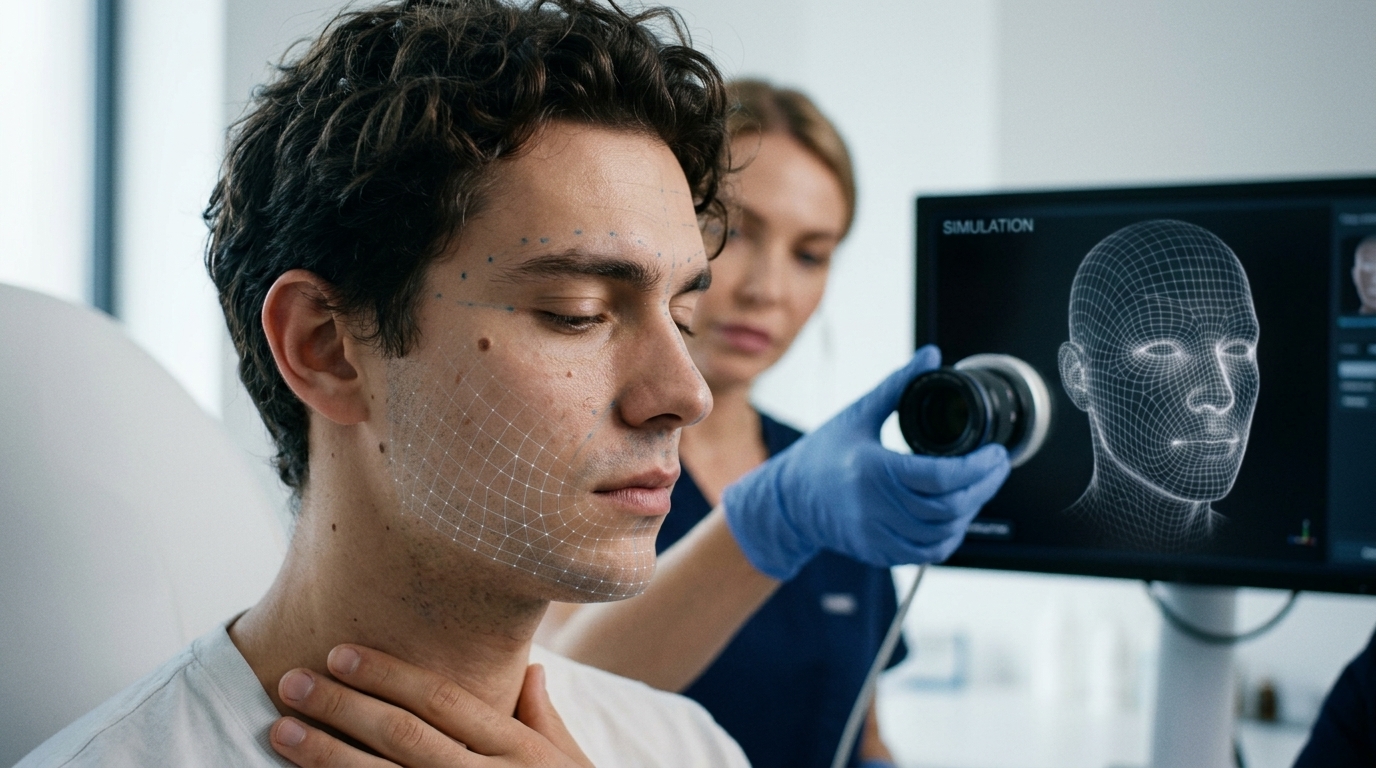
- Managing Expectations: The use of realistic 3D simulations in the office attempts to ground patients in reality, showing what is surgically achievable versus what is a digital hallucination.
- The Homogenization of Beauty: There is a risk that AI will lead to a global 'monoculture' of features, erasing ethnic and individual uniqueness in favor of a standardized algorithmic look.
The Future of Aesthetics in a Digital World
As technology advances, the distinction between reality and simulation will become increasingly blurred. The challenge for society and the medical community is to redefine beauty away from pixels. Authenticity, the imperfections that tell a story, and natural aging are now being treated as 'bugs' to be fixed by an algorithm. However, plastic surgery at its best should be about enhancing self-confidence, not chasing a non-existent digital chimera.
In Greece, while the trend is still in its infancy compared to the US, experts are already observing the first signs. The need for stricter regulatory frameworks regarding the use of AI in aesthetic advertising and the strengthening of digital media literacy is more urgent than ever. Ultimately, the question remains: if we succeed in looking like machines, what will be left of our humanity?