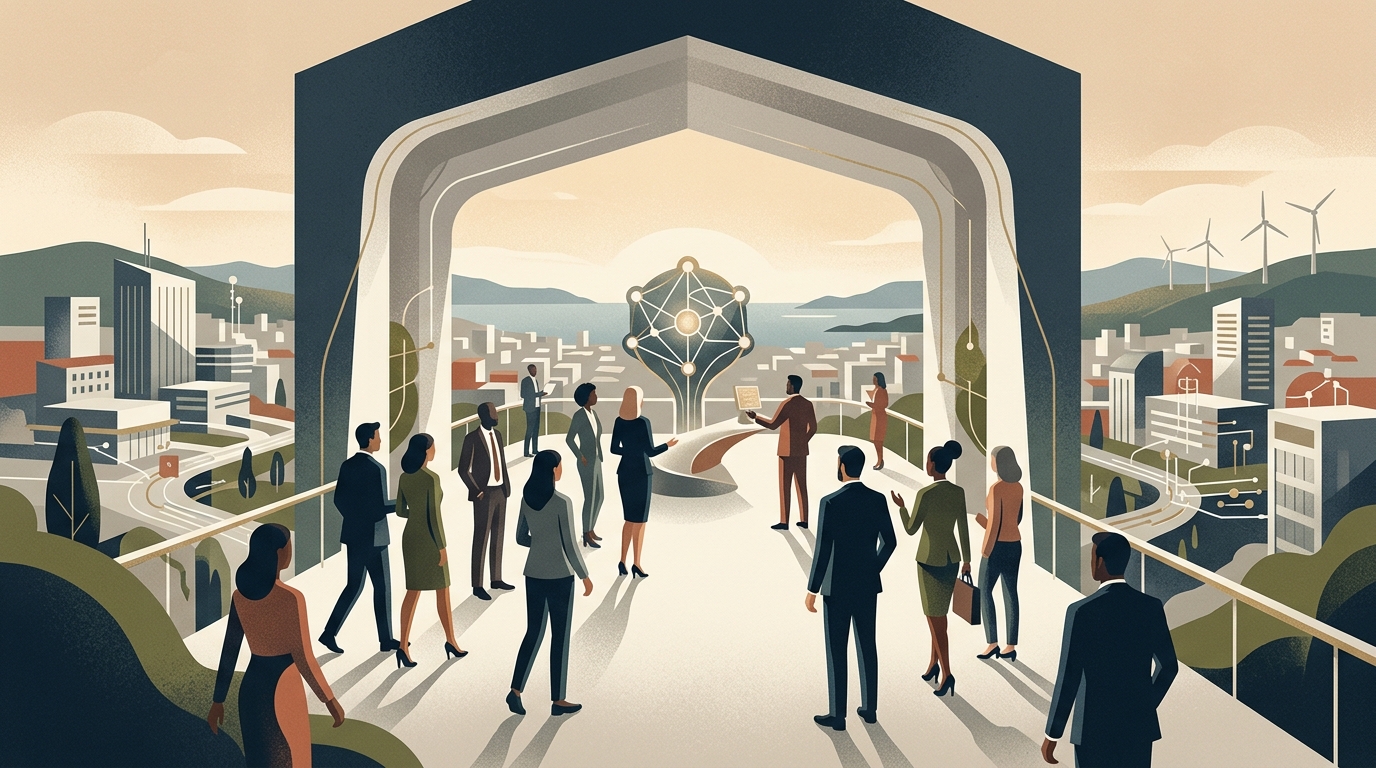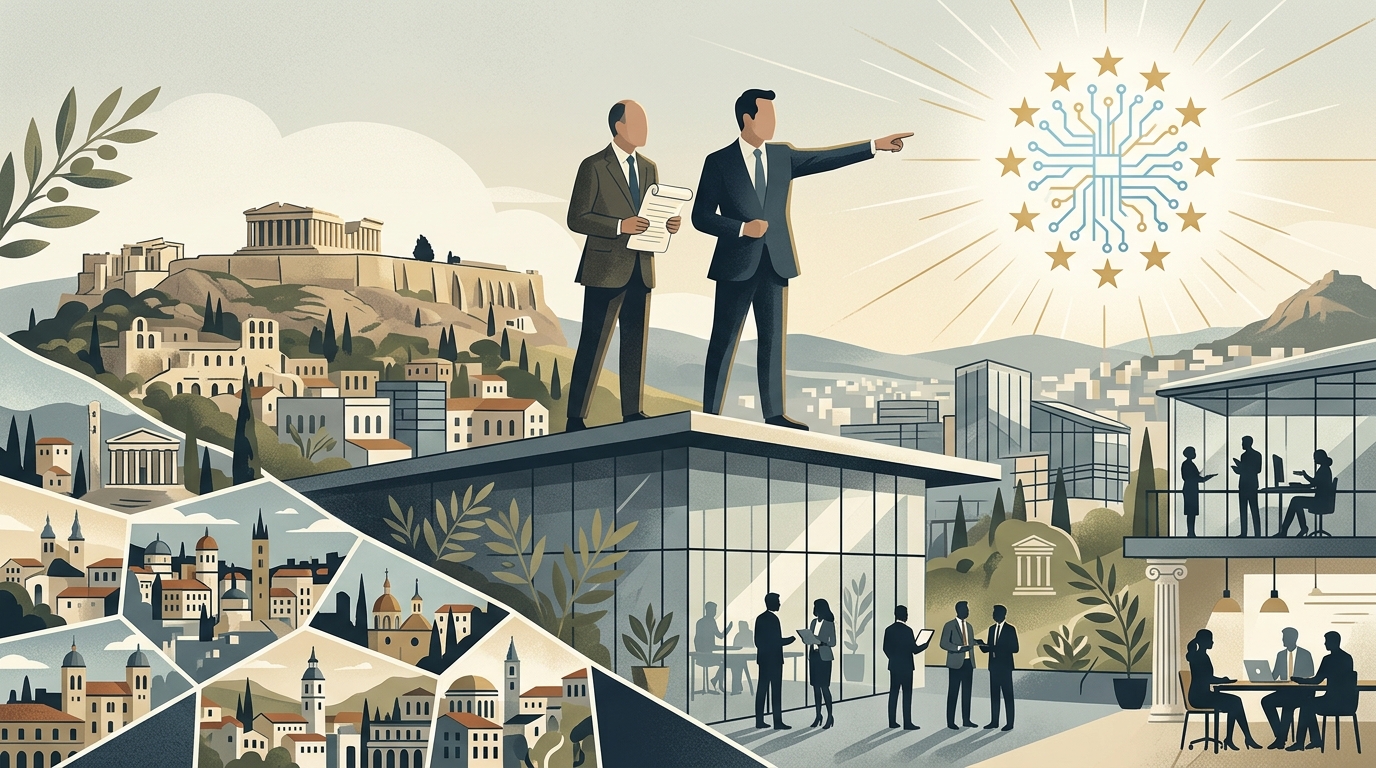
In an era where the global geopolitical chessboard is being violently rearranged, the discussion between Kyriakos Pierrakakis and former Italian Prime Minister Enrico Letta at IE University in Madrid was not just a typical exchange of views. It was a cry for action and, simultaneously, a strategic blueprint for the future of the Old Continent. The central message was clear: Europe will either truly integrate, achieving the scale required by the times, or it will slide into relative insignificance, trapped between the geopolitical titans of the US and China.
The Fragmentation Trap
Kyriakos Pierrakakis, in his capacity as President of the Eurogroup and Minister of National Economy, put his finger on the pulse of the issue. Europe possesses a massive internal market, yet it remains fragmented into 27 national silos. This fragmentation acts as a brake on innovation and competitiveness. As noted during the discussion, the lack of "European champions"—companies capable of competing in size with American tech giants—is largely due to regulatory and bureaucratic barriers that hinder cross-border mergers.
Particular emphasis was placed on the banking sector. While in the US, three or four banks control the lion's share of the market, providing immense liquidity to the economy, Europe has hundreds of smaller banks confined within national borders. Pierrakakis strongly argued that banking mergers are not merely a business choice but a geopolitical necessity. Without a completed Banking Union and a Capital Markets Union (CMU), Europe will continue to export its savings to the US to finance innovation there, only to later import that same technology at a high cost.
The Letta Report and the Fifth Freedom
Enrico Letta, who recently presented his landmark report on the future of the Single Market, complemented the analysis by introducing the concept of the "Fifth Freedom." Beyond the free movement of goods, services, capital, and people, Europe needs the free movement of knowledge, research, and data. In the 21st century, power stems not just from capital but from the ability to process and utilize information at scale.
Letta emphasized that the Single Market model designed in the 1980s is now obsolete. Back then, the goal was the abolition of tariffs. Today, the goal must be the creation of a common ecosystem for Artificial Intelligence, Green Energy, and Defense. The discussion highlighted a paradox: Europe is a global leader in regulation (e.g., GDPR, AI Act) but lags dramatically in production. The challenge is to transform regulatory power into economic dynamism.
Political Courage and National Resistance
The big question hanging over the Madrid discussion was "how." How can national governments be persuaded to cede further sovereignty? Pierrakakis noted that the crises of the last decade acted as accelerators, but complacency remains the greatest enemy. Mergers of large enterprises often collide with national egos and the fear of losing control over "strategic" sectors.
However, reality is relentless. The investments required for the digital and green transitions amount to hundreds of billions of euros annually. No national budget, not even Germany's, can bear this burden alone. Mobilizing private capital through a unified European market is the only path forward. Greece, having emerged from a long period of crisis, now appears as one of the most ardent supporters of this integration, realizing that its security and prosperity are inextricably linked to a strong and federal Europe.
Conclusion: The Hour of Decision
The Pierrakakis-Letta dialogue was not an academic exercise but a political statement of intent. Europe needs "scale" to survive. This means large banks capable of financing major projects, large energy companies that can guarantee energy autonomy, and a common defense doctrine. The road to integration is arduous and filled with political minefields, but as both speakers emphasized, the "cost of non-Europe" is now far higher than the cost of adjustment. The time for incremental steps is over; the time for structural leaps has arrived.