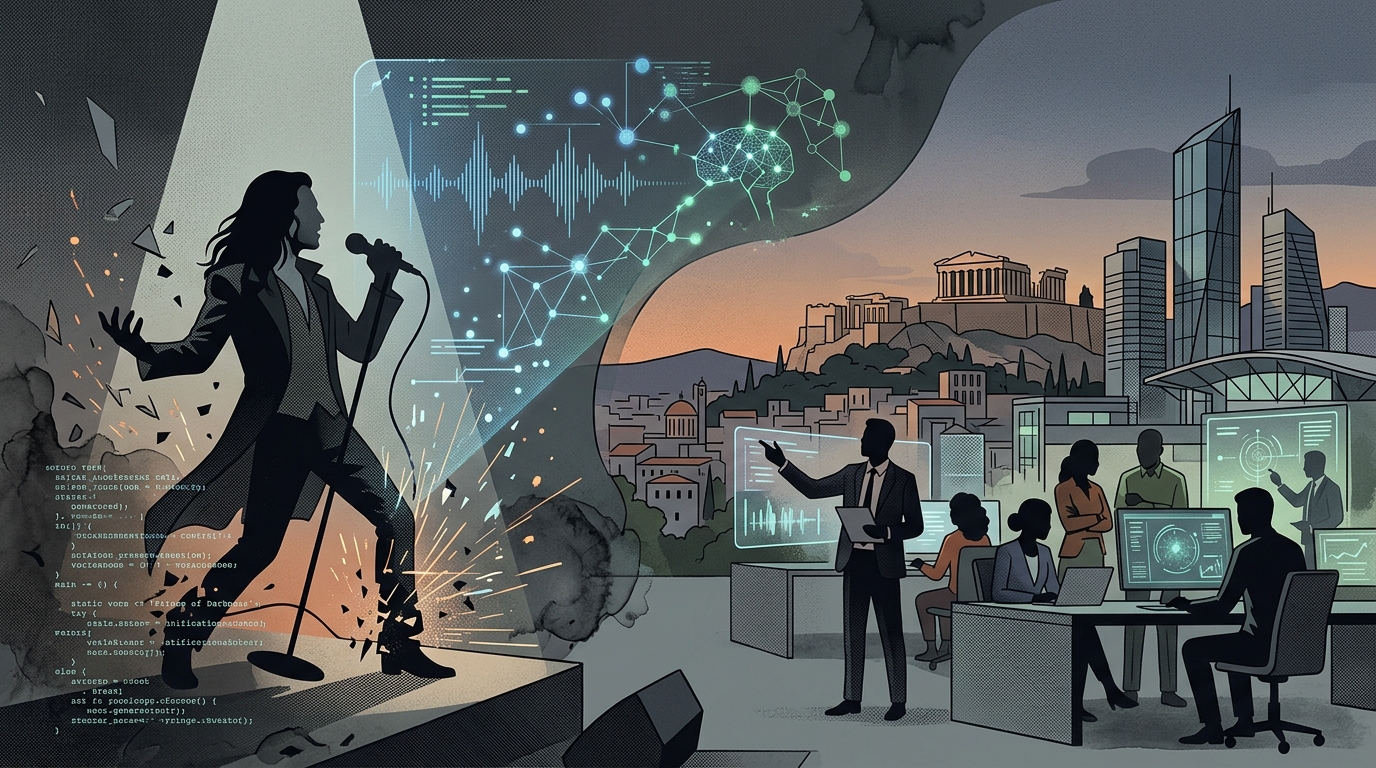
The news that Ozzy Osbourne, the legendary "Prince of Darkness," is set to return to the stage via a hyper-realistic AI avatar is not just a technical announcement; it is the next chapter in a broader cultural shift. As the 75-year-old rock star's physical health has faltered in recent years due to Parkinson's disease and multiple surgeries, technology steps in to offer what biology denies: the immortality of performance.
The Technology Behind the Digital Icon
According to reports, Ozzy’s avatar will not be a simple holographic projection like those we've seen in the past with Ronnie James Dio or Whitney Houston. This is a high-fidelity creation where Artificial Intelligence is used to replicate every detail of his physiognomy. The promise that fans will be able to see "every pore on his face" suggests the use of advanced rendering and motion capture techniques, similar to those employed in the successful "ABBA Voyage" project in London.
The process involves analyzing thousands of hours of archival footage from Ozzy's concerts in the '70s and '80s, allowing the AI to "learn" his movements, facial expressions, and unique stage presence. The result is expected to be a digital Ozzy in his prime, capable of performing the demanding repertoire of Black Sabbath and his solo career without the constraints of age or illness.
Sharon’s Strategy and the Osbourne Legacy
Behind this ambitious venture stands, as always, Sharon Osbourne. The formidable manager and wife of Ozzy has repeatedly proven she knows how to keep the "Osbourne" brand relevant. The decision to create the avatar is not only artistic but deeply commercial. With Ozzy officially retired from touring, his digital version allows for continued revenue generation and maintains a connection with younger generations of fans.
The shows are scheduled to take place in specially designed venues in the United Kingdom and the United States. The choice of these two markets is deliberate, as they represent the strongholds of his fan base. Furthermore, the technological infrastructure required for such spectacles—like the Sphere in Las Vegas—makes these regions ideal for the premiere.
Ethical Dilemmas and the Post-Human Aesthetic
However, Ozzy’s digital resurrection raises serious questions. Is rock music, an art form based on rawness, sweat, and spontaneous error, compatible with the sterile perfection of an algorithm? Many critics argue that turning artists into digital products that never age strips the humanity from the art. On the other hand, tech proponents see an opportunity for fans to experience performances that would otherwise be impossible due to the passage of time.
- The ability to witness an artist at the peak of their vocal performance.
- The creation of audiovisual spectacles that transcend the laws of physics.
- The preservation of cultural heritage in an interactive manner.
Ozzy himself has expressed in past statements his desire to be on stage until the very end. The AI avatar is the fulfillment of that wish, albeit in a way that resembles a science fiction script. In the era of post-truth and deepfakes, the "digital Ozzy" is perhaps the most honest admission that entertainment has moved into a new dimension, where the original and the copy become one.
The Future of the Live Experience
The debut of Ozzy Osbourne's avatar will serve as a litmus test for the music industry. If successful, it will pave the way for dozens of other rock legends to "return" to the stage. If it fails to convey the emotion and energy that made Ozzy a global icon, it might slow the momentum of digital immortality. Regardless, the Prince of Darkness once again finds himself at the center of innovation, proving that even as data on a server, he remains the ultimate showman.