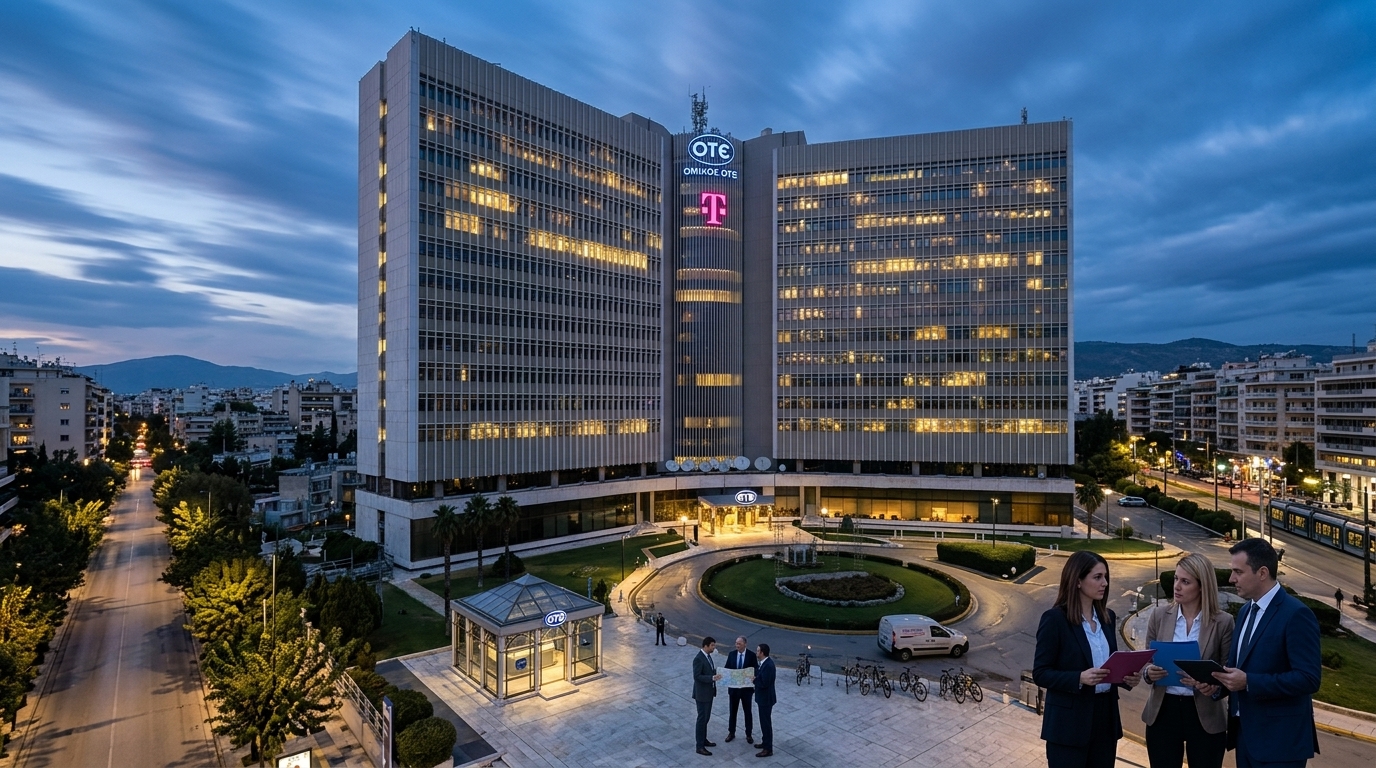
The dawn of 2026 finds OTE Group in a position of strength, reaffirming its role as the undisputed leader in Greece's telecommunications landscape. According to official data for the first quarter of the year, the organization recorded a revenue increase of 4.9%, reaching levels that surpassed analyst expectations. This rise is not accidental but the result of a coordinated strategy focusing on infrastructure upgrades and enhancing the customer experience under the leadership of Kostas Nebis.
Mobile Services as a Growth Engine
The most striking element of the results is the 5.5% increase in revenue from mobile services. In a market that many considered saturated, OTE managed to unlock new value. This is primarily attributed to the successful transition of subscribers to 5G plans with higher Average Revenue Per User (ARPU), as well as increased data consumption. The investments of previous years in the COSMOTE 5G network are now bearing fruit, offering speeds that make mobile broadband a real alternative to fixed connections in many cases.
Furthermore, the cross-selling strategy—offering bundled packages of mobile, fixed, and TV—has fortified the group's customer base, reducing the churn rate to historically low levels. Cosmote TV, despite intense competition from international streaming platforms, continues to be a major draw, especially following recent agreements for sports content, which remains the "king" of the Greek market.
The Fiber War and Adjusted EBITDA
While revenue is galloping, adjusted EBITDA (Earnings Before Interest, Taxes, Depreciation, and Amortization) saw a 2.8% rise. The gap between revenue growth and profitability reflects the pressures the industry faces from increased energy costs and inflationary pressures on wages. However, OTE manages to maintain healthy profit margins through operational efficiency programs and the digitalization of its internal processes.
- FTTH (Fiber to the Home): The expansion of the fiber optic network remains the top priority. OTE aims to cover most of the country by the end of 2027, facing rising competition from PPC (DEI), which is dynamically entering the wholesale fiber market.
- ICT Projects: The Information and Communication Technology sector for the public and private sectors contributes significantly to revenue, as Greece continues its digital transition through Recovery and Resilience Facility (RRF) funds.
- Fixed-Line Resilience: Despite the decline in traditional voice revenues, the demand for high speeds (VDSL/FTTH) balances the losses.
"The first-quarter results confirm that our strategy of investing in next-generation networks and focusing on excellent customer service is yielding results," a group executive stated during the earnings presentation.
Challenges and Outlook for the Remainder of 2026
Despite the positive start, the road is not without obstacles. Competition in the Greek market is intensifying, with Nova and Vodafone reorganizing and PPC acting as an unpredictable player in infrastructure. Regulatory pressure to reduce wholesale and retail prices remains an open issue, while the market eagerly awaits the moves of Deutsche Telekom, OTE's main shareholder, regarding its strategy in Southeast Europe.
In conclusion, the OTE of 2026 is an organization that has evolved from a traditional telecom provider into a comprehensive digital services provider. Its ability to generate free cash flow allows for the continuation of a generous shareholder reward program through dividends and share buybacks, making it one of the most attractive stocks on the Athens Stock Exchange. The challenge for the rest of the year will be maintaining this momentum amidst a shifting macroeconomic environment.