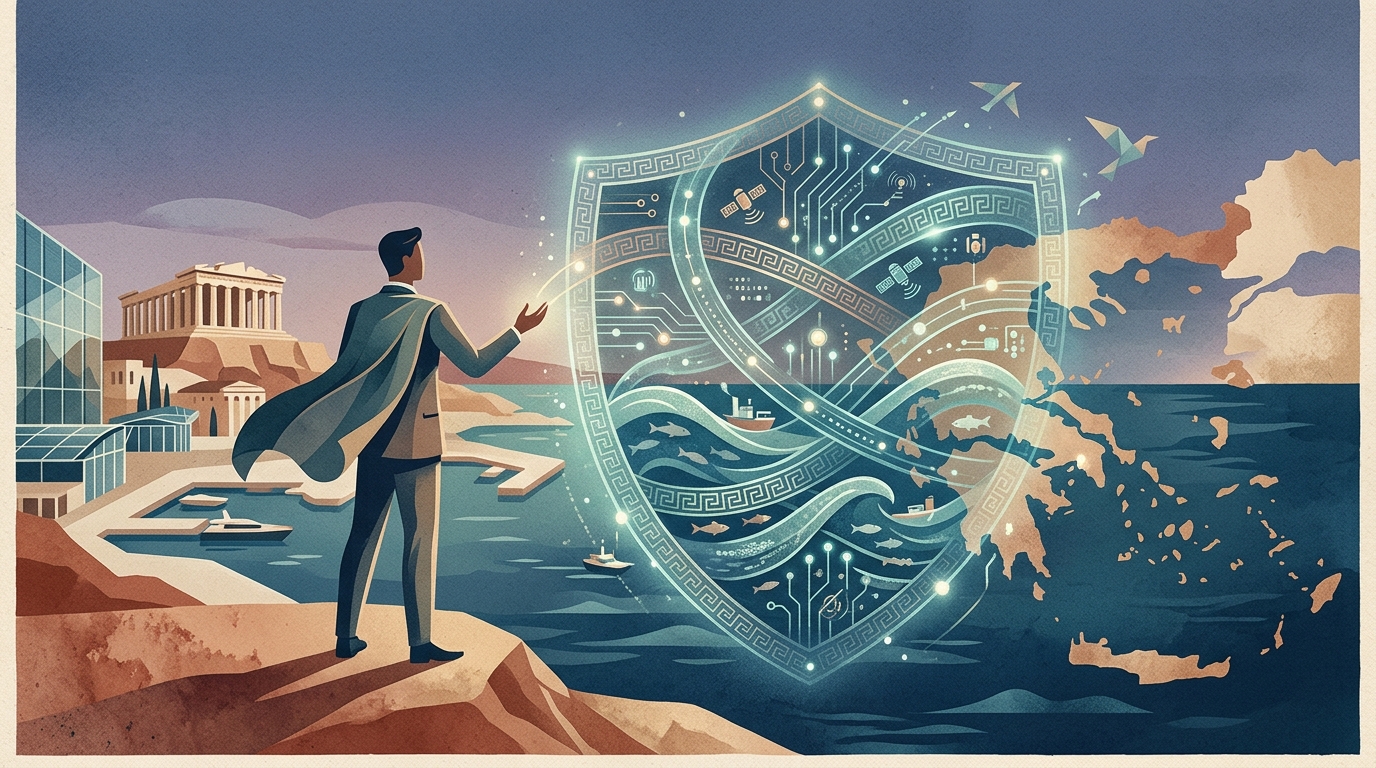
The Mediterranean, the cradle of Western civilization, finds itself today at the epicenter of a dual crisis: climate change and the urgent need for a sustainable blue economy. At this critical juncture, Greece, through Stavros Papastavrou’s active support for the European Union’s OceanEye initiative, seeks to transform its traditional maritime prowess into digital leadership. OceanEye is not merely a technical tool; it is Europe’s answer to the demand for transparency, prediction, and protection of our water resources.
The Vision of OceanEye: A Holistic Approach
OceanEye aspires to function as a "central nervous system" for the planet’s seas. Its essence lies in the integration of existing but fragmented services. By consolidating the Copernicus Marine Service, EMODnet, WISE Marine, and WISE Freshwater, the EU is creating a unified platform where data from satellites, seabed sensors, and autonomous underwater vehicles (AUVs) will converge. Stavros Papastavrou, highlighting the importance of Greek participation, pointed out that our country possesses the longest coastline in the region, making it an ideal testing ground for such systems.
The use of Artificial Intelligence (AI) is the catalyst in this endeavor. OceanEye will not just collect data; it will "understand" it. Through advanced machine learning algorithms, the system will be able to predict sea-level rise, detect illegal fishing activities in real-time, and map the spread of invasive species that threaten the biodiversity of the Aegean and Ionian seas.
Strategic Significance for Greece
For Greece, supporting OceanEye is a move of high geopolitical and economic value. Greek shipping, which controls a vast percentage of the global fleet, requires precise data for route optimization and emissions reduction. At the same time, tourism—the "lung" of the Greek economy—is directly dependent on the cleanliness and health of our seas. This initiative aligns with the commitments Greece made at the "Our Ocean Conference," reinforcing its role as an environmental leader in the Mediterranean.
- Disaster Prevention: Early warning systems for marine heatwaves and extreme weather events.
- Sustainable Fisheries: Protecting fish stocks through accurate mapping of breeding grounds.
- Digital Twin of the Ocean: Creating a virtual model of our seas to test environmental policy scenarios.
Mr. Papastavrou emphasized that Greece is not a mere spectator but an active co-shaper. Collaboration with the Hellenic Centre for Marine Research (HCMR) and the utilization of Greek scientific talent ensure that OceanEye will have a strong Hellenic footprint.
Challenges and the Future of Blue Tech
Despite the enthusiasm, challenges remain. Data interoperability between different member states and the funding of long-term infrastructure are issues that require sustained political will. Furthermore, the cybersecurity of marine data is becoming critical, as this information also holds strategic importance. OceanEye must ensure that Europe’s digital sovereignty over its waters remains intact.
"The sea is not just a natural resource; it is our common future. With OceanEye, we give our eyes the ability to see beneath the surface and our minds the power to protect what we love," sources close to the initiative state.
In conclusion, Greek support for OceanEye signals a shift towards a more rational and technologically advanced management of the marine environment. In a rapidly changing world, knowledge is the only reliable compass. By embracing innovation, Greece ensures it will remain a protagonist in the seas of the 21st century.