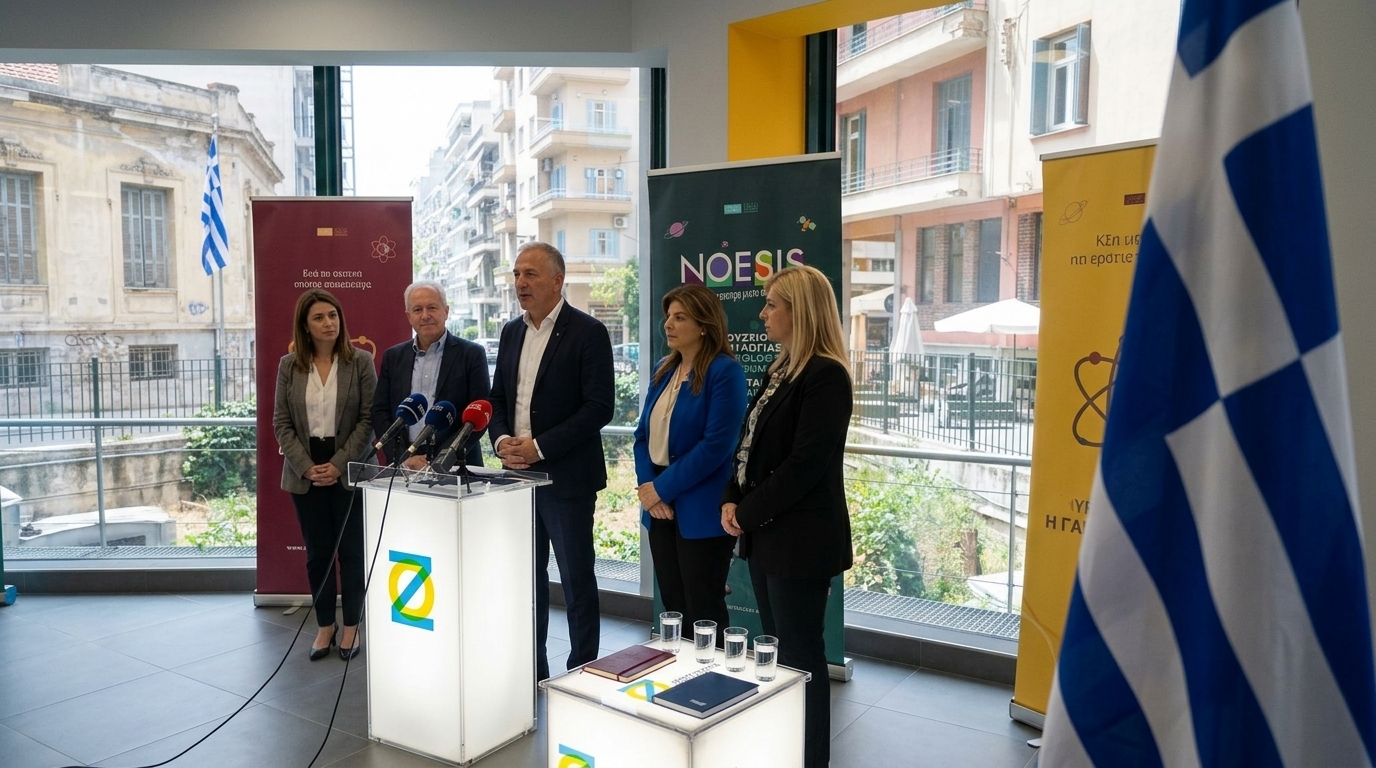
The NOESIS Science Center and Technology Museum is not merely a landmark of Thessaloniki; it is a critical pillar for STEM education in Southeastern Europe. The organization's new management, led by President Stelios Angeloudis, recently unveiled its strategic directions for the next three years, placing the modernization of infrastructure and the enhancement of interactivity at the top of the priority list.
The Digital Transition of the Cosmotheatre and Planetarium
At the heart of the new strategic plan lies the upgrade of the Center's two flagship venues: the Cosmotheatre and the Planetarium. After years of operation, the technological equipment requires a radical overhaul to meet the demands of the modern digital era. The search for funds amounting to 1 million euros aims to replace projection systems with 4K and 8K laser technologies, which offer unparalleled clarity and a lower carbon footprint.
This upgrade is not just a matter of aesthetics but of substance. New technologies allow for the screening of content that blends scientific accuracy with entertainment (edutainment), making complex concepts of astrophysics and biology accessible to students and the general public. Furthermore, the management aims to produce its own digital content, which could be exported to other planetariums abroad, boosting both revenue and the organization's prestige.
Outreach Strategy and Educational Reform
The new triennium marks the transition from a "static" museum to a "living" learning organization. NOESIS intends to strengthen its collaborations with academic institutions and research centers in Greece and abroad. The goal is to create Innovation Hubs where young people can experiment with artificial intelligence, robotics, and renewable energy sources.
- Creation of new temporary exhibitions focusing on the climate crisis and sustainability.
- Expansion of educational programs to remote areas via Mobile Science Units.
- Digitization of the historic technology collection, which includes rare artifacts of Greek industrial heritage.
"Science is not a privilege for the few, but a right for the many. NOESIS must become the bridge that connects knowledge with society," management sources state.
Financial Sustainability and Green Growth
One of the biggest challenges for the new administration is ensuring the center's financial autonomy. The search for the 1-million-euro funding is not limited to the state budget but extends to European programs (NSRF, Horizon Europe) and strategic sponsorships from the private sector. Simultaneously, the energy upgrade of the facility in Thermi is underway, with the installation of photovoltaic systems, drastically reducing operating costs and transforming NOESIS into a model "green" public building.
The next three years will determine whether NOESIS can evolve into a global player in the field of science communication. With proper management and the vision of the new leadership, Thessaloniki can look forward to a center that doesn't just recall the past of technology but actively shapes the future of innovation.