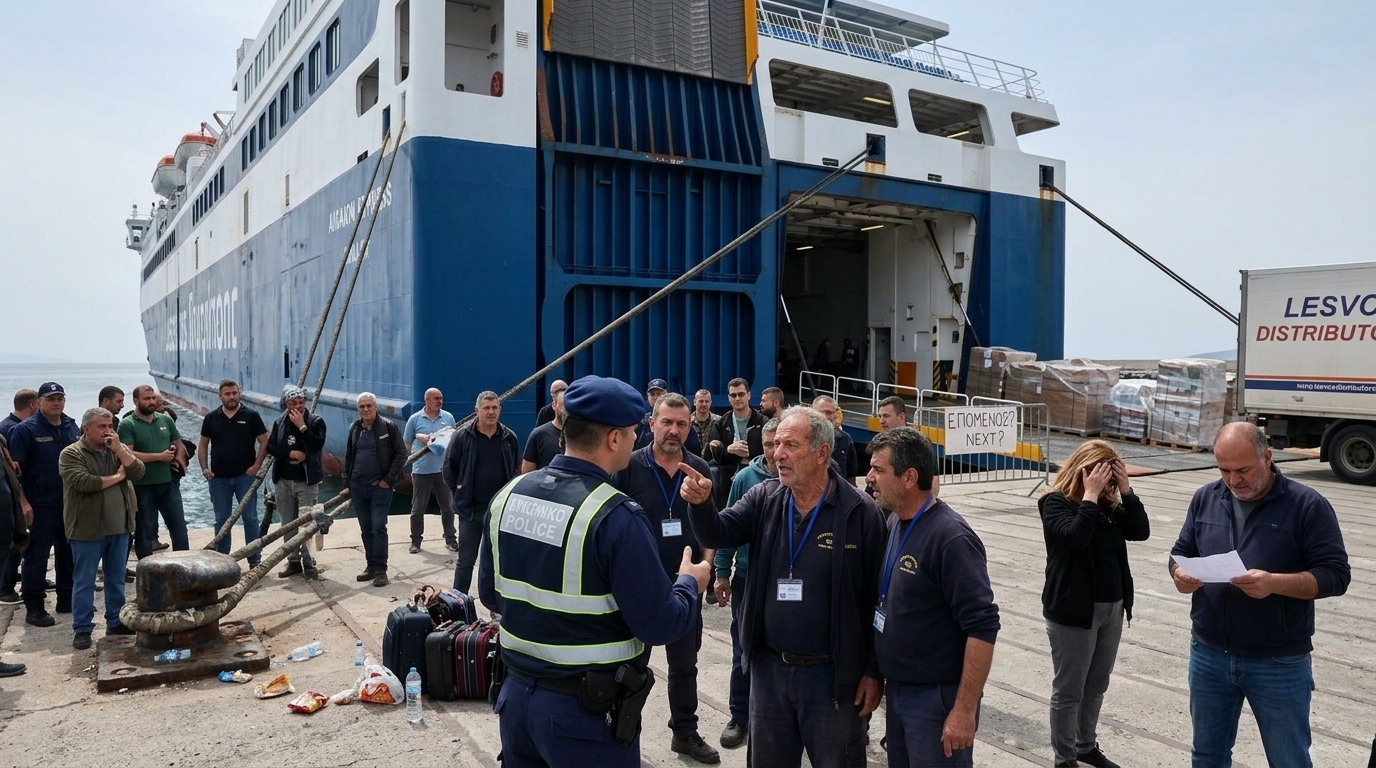
The sixth consecutive day of the port blockade in Mytilene by Lesvos livestock farmers is more than just a local news item; it is a symptom of a deeper, structural crisis plaguing the Greek countryside and especially its border regions. The images of tractors lined up and trucks stranded at the island's central port capture the despair of a sector that feels neglected, while the local market begins to signal distress over shortages of essential goods.
The Anatomy of a Foretold Explosion
The mobilizations did not start in a vacuum. The livestock farmers of Lesvos, an island with a massive tradition in dairy and meat production, are facing a "perfect storm" of negative circumstances. The recent sanitary crisis involving Peste des Petits Ruminants (PPR) and Sheep Pox led to the culling of thousands of animals, stripping many families of their sole income. The compensation announced by the Ministry of Rural Development is deemed insufficient by producers to cover the cost of restocking their herds, let alone the loss of income for the coming months.
Simultaneously, production costs have skyrocketed. The prices of animal feed, energy, and fuel have rendered livestock farming an unsustainable activity for small and medium-sized producers. At the same time, the prices producers receive for milk and meat remain stagnant, in stark contrast to the prices consumers see on supermarket shelves in urban centers. This gap fuels anger and a sense of injustice.
The Blockade Strategy and Market Repercussions
The choice of the port as a pressure point is not accidental. For an island like Lesvos, the port is the main artery of life. The blockade of trucks carrying goods to and from mainland Greece has begun to cause serious side effects. Shortages in specific food items are already being observed, while catering businesses and traders express intense concern about the future.
- Supply Chain: Delays in the arrival of fresh products and raw materials.
- Exports: Local products intended for Athens or abroad remain trapped, risking spoilage.
- Medicines: Although provisions exist for essentials, the general dysfunction causes delays in pharmaceutical deliveries.
"We don't close the port because we want to, but because we have no other choice. If we are not heard now, tomorrow we will not exist as a sector," says a representative of the farmers, signaling the determination prevailing at the blockades.
The Political Dimension and the Search for a Solution
The government finds itself in a difficult position. On one hand, it must ensure the smooth functioning of the market and the rule of law, and on the other, it must address the legitimate demands of a social group that forms the backbone of the local economy. Promises of additional support measures seem to fail in convincing the protesters, who demand immediate and tangible commitments.
The situation in Lesvos is a microcosm of broader agricultural unrest across Europe. The need for a new national strategy for the primary sector is more urgent than ever. Lesvos, an island already bearing the weight of the migration crisis, cannot withstand a prolonged social conflict. The solution requires transcendence, sincere dialogue, and, above all, the understanding that the survival of the livestock farmer in Mytilene is inextricably linked to national food security and the social cohesion of the periphery.