Prime Minister Kyriakos Mitsotakis’ visit to Abu Dhabi today, en route to Amman, Jordan, is far more than a routine diplomatic stopover. In an era of profound geopolitical shifts across the Middle East and the Eastern Mediterranean, his meeting with the President of the United Arab Emirates (UAE), Sheikh Mohamed bin Zayed Al Nahyan, signals the deepening of a strategic partnership that now transcends traditional defense cooperation.
The Digital Nexus and Artificial Intelligence
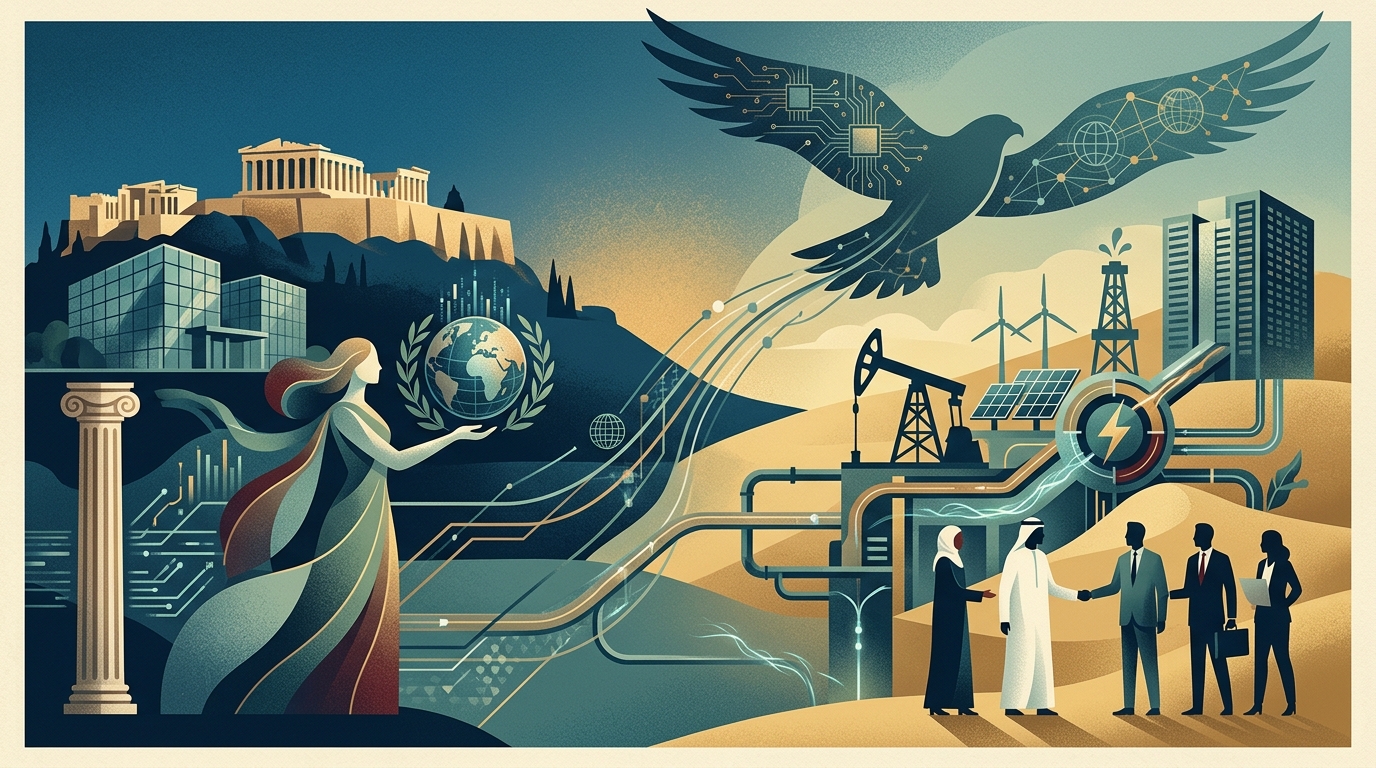
At the heart of the discussions lies technological collaboration, with a particular focus on Artificial Intelligence (AI). The UAE has emerged as a global powerhouse in the AI sector, channeling billions through sovereign investment vehicles like MGX and G42. For Athens, partnering with the Emirates offers a unique opportunity to attract capital into critical data infrastructure—a sector where Greece aspires to become a regional leader.
The UAE’s 'Sovereign AI' strategy aligns perfectly with Greece’s ambition for a comprehensive digital transformation of its state and economy. This partnership is not merely about capital infusion; it is about the transfer of expertise for developing Large Language Models (LLMs) that could be tailored to the needs of Southern Europe and the Mediterranean.
"Greece is no longer a passive observer of developments but a strategic partner bridging the Gulf with the European Union,"diplomatic sources noted, highlighting the significance of the technological bridge being constructed.
Energy and the Green Transition
Beyond technology, energy remains a central pillar of the bilateral relationship. The UAE has expressed keen interest in Greek renewable energy projects, specifically offshore wind farms and green hydrogen production. Masdar, the UAE’s renewable energy giant, has already initiated investments in Greece, and today’s meeting is expected to provide further momentum to these ventures.
Furthermore, the Great Sea Interconnector (the electricity link between Greece, Cyprus, and Israel) is a project of direct interest to the UAE, as they seek to participate in infrastructure that secures Europe’s energy future. Greece’s geopolitical value as an energy gateway is Prime Minister Mitsotakis’ strongest card at the Abu Dhabi negotiating table.
Geopolitical Stability and Regional Challenges
The visit takes place at an exceptionally sensitive time for the Middle East. Greece, maintaining traditionally good relations with the Arab world while holding a robust strategic alliance with Israel, seeks to act as a communicative bridge. Discussions on the situation in Gaza and the necessity for regional de-escalation will be high on the agenda, as the Prime Minister continues his journey to Jordan—another vital partner for regional stability.
- Strengthening the Strategic Partnership Agreement signed in 2020.
- Attracting investments in AI infrastructure and Data Centers.
- Cooperation in defense and cybersecurity.
- Accelerating investments in Renewables and Green Hydrogen.
In conclusion, the Greek Prime Minister’s presence in the UAE confirms that Athens’ foreign policy is now operating on multiple levels, blending traditional diplomacy with the demands of the digital age. The success of this visit will be measured by the speed at which high-level agreements translate into tangible investment projects that will shield the Greek economy against future challenges.