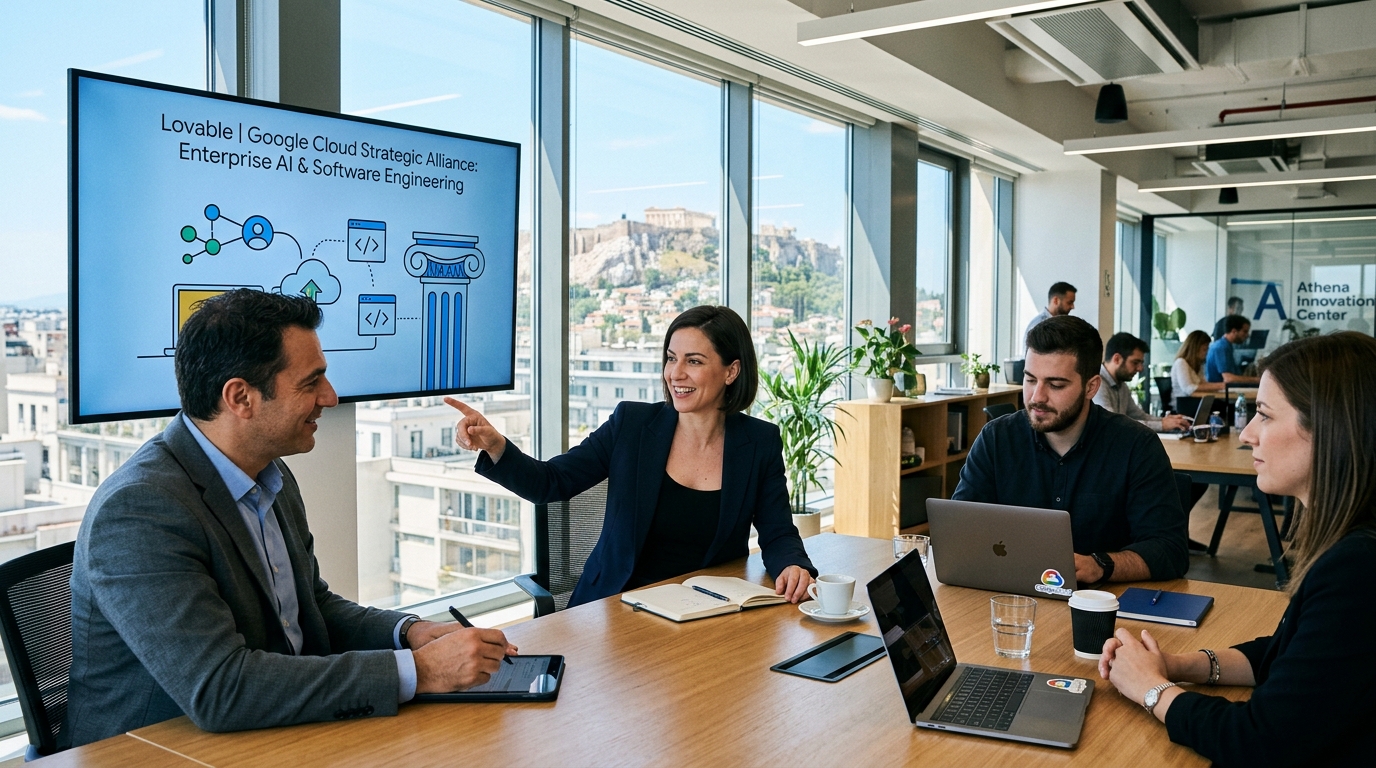
In an era where global enterprises are desperately seeking ways to integrate Artificial Intelligence (AI) into the core of their operations, the news of a strategic partnership between Lovable and Google Cloud has sent shockwaves through the tech industry. This is not merely another commercial agreement; it represents a fundamental shift in how businesses perceive software development and digital infrastructure. Lovable, an emerging powerhouse in autonomous software engineering, is joining forces with Google Cloud to deliver solutions that promise to bridge the gap between conceptualizing an idea and the final execution of code.
The Nature of the Partnership and Lovable's Vision
Lovable has captured the attention of Silicon Valley and the European tech scene with its promise of "fully autonomous software development." Unlike traditional code completion tools (copilots), Lovable’s platform aims to function as an independent software engineer capable of understanding complex business requirements, designing architecture, and executing the development of entire applications. By integrating Google's advanced Gemini models and Vertex AI infrastructure, Lovable gains the computational power and intelligence required to scale these capabilities at an enterprise level.
For enterprises worldwide—including those in emerging markets like Greece—this evolution is pivotal. The ability to utilize AI that "thinks" and "creates" high-level code can accelerate digital transformation, allowing companies to develop proprietary solutions without the prohibitive costs associated with traditional large-scale development teams. It democratizes high-end engineering, turning every business leader into a potential software architect.
The Role of Google Cloud and the Investment Surge
Google Cloud provides more than just servers. Through this partnership, it offers the ecosystem that allows AI to be trained on real-world data with security and speed. The use of Gemini 1.5 Pro models, which feature the largest context window in the market, enables Lovable to analyze entire codebases of millions of lines simultaneously. This means the AI isn't just writing snippets of code; it understands the holistic structure of an enterprise system, including its legacy components and future scalability needs.
This technological convergence has ignited a new wave of investment. Institutional investors see Lovable as the vanguard of "SaaS 2.0," where software is no longer a static product but a living entity that evolves autonomously. This deal is viewed as a precursor to massive capital allocations into companies that combine Generative AI with operational efficiency. We are witnessing the transition of AI from a speculative bubble into the foundational infrastructure of the global economy, where the value lies in the speed of execution and the reduction of technical debt.
Challenges, Ethics, and the Future of Work
However, the rise of autonomous software engineering is not without its challenges. The question looming over every such deal is the future of human developers. Lovable maintains that the goal is not to replace humans but to liberate them from repetitive and technical tasks, allowing them to focus on strategy, user experience, and creative problem-solving. Nonetheless, the need for upskilling has never been more urgent. The role of the developer is shifting from "writer" to "editor" and "architect."
Furthermore, significant issues regarding cybersecurity and intellectual property arise. Who owns the code generated autonomously by an AI running on Google’s infrastructure? How can we ensure that the AI does not introduce vulnerabilities into critical infrastructure? While the Lovable–Google Cloud partnership includes rigorous security protocols, the responsibility of enterprises to oversee these systems remains paramount. The transition to AI-driven development requires a new ethical framework where transparency and human oversight remain the final arbiters of quality and safety.
Conclusion
The strategic alliance between Lovable and Google Cloud stands as a milestone for 2026. It marks the maturation of Artificial Intelligence in the corporate sector, transforming it from an experimental tool into a reliable engine for value creation. For the global business community, it is a reminder that competition is now shifting toward a company's ability to integrate automation into its very fabric. The challenge for business leaders is to realize that investing in AI is not an IT expense, but a strategic move for survival in the new digital landscape.