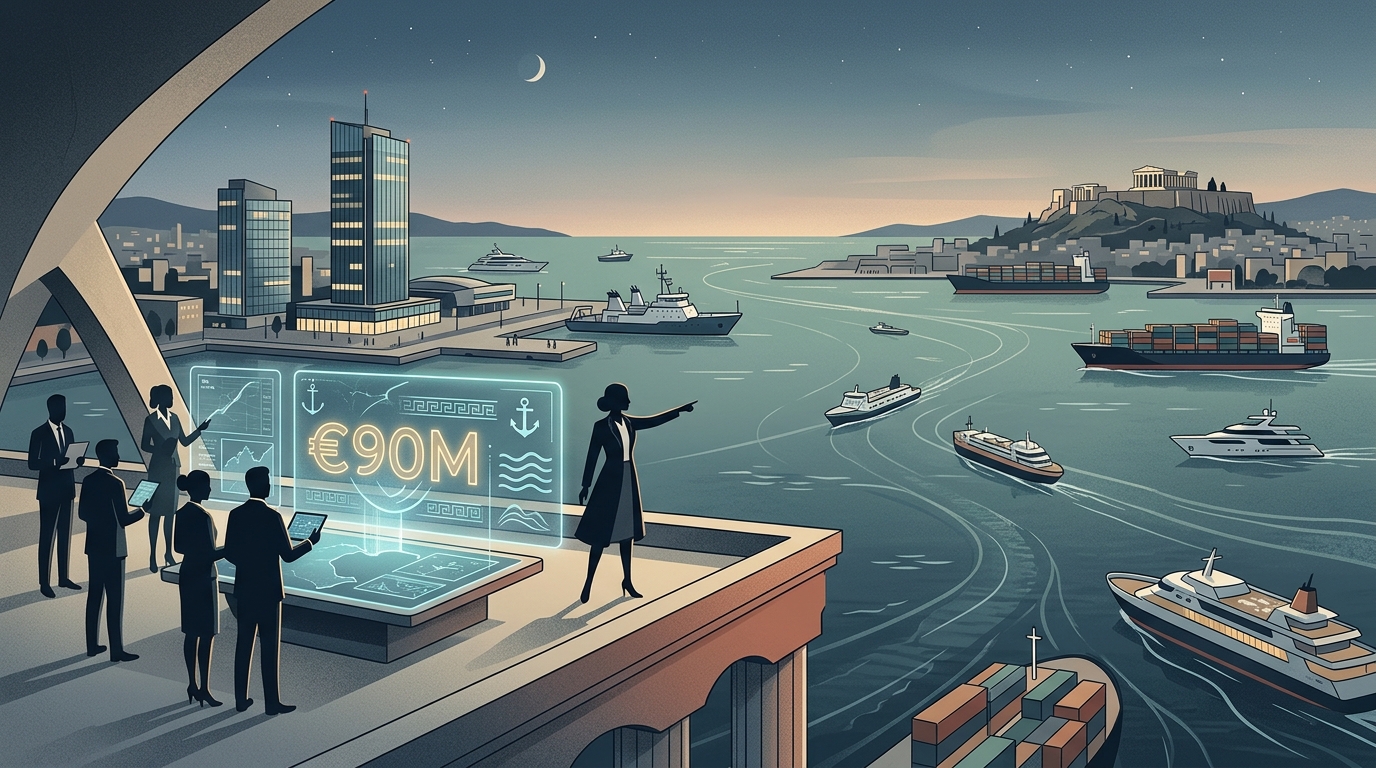
Greek shipping has long been the strongest pillar of the national economy and one of the few fields where Greece maintains global leadership. However, this dominance is not guaranteed, as the industry faces a critical challenge: a shortage of skilled human capital and the need for a radical modernization of educational structures. The recent announcement of an additional €90 million investment in maritime education, aiming for a 25% budget increase over the next seven years, signals a strategic shift toward strengthening "blue" professional careers.
Modernizing Merchant Marine Academies (AEN)
The bulk of the new funding is expected to be directed toward upgrading the infrastructure of the Merchant Marine Academies (AEN). Many existing facilities date back decades and do not meet the requirements of modern, digitalized shipping. The investment includes the purchase of state-of-the-art simulators, the renovation of buildings, and the creation of modern laboratories. Digitalizing curricula is also a central goal, as the officers of the future will need to manage vessels that increasingly operate with the help of artificial intelligence and automated systems.
Furthermore, the government aims to improve students' living conditions. Providing incentives for attending AENs, such as upgrading dormitories and ensuring quality catering, is considered essential to making the profession more attractive to young men and women across the country. Shipping is no longer just an outlet for coastal regions but a high-paying global career that must be properly promoted to all Greek youth.
Bridging the Generational and Technological Gap
The new generation, Gen Z, has different priorities and work expectations. The traditional image of a sailor away from home for months, cut off from the world, is no longer appealing. The investment in maritime education also includes integrating skills related to mental health, crisis management, and the use of satellite communications that allow seafarers to stay connected with their families.
- Modernization of equipment with VR/AR bridge and engine room simulators.
- Revision of the legal framework for private maritime education to complement public institutions.
- Linking AENs with shipping offices for immediate graduate placement.
- Enhancing the extroversion of Greek shipping through international collaborations and student exchanges.
"Our shipping is our strength. By investing in our people, we are investing in the future of our homeland," government sources state, highlighting the importance of the initiative.
Shipping as an Engine of Economic Growth
The significance of this investment goes beyond the Ministry of Maritime Affairs. It is a move with a deep economic footprint. Greek seafarers are the country's best ambassadors abroad, and their expertise is what keeps the Greek-owned fleet at the top. As shipping enters the era of decarbonization and green fuels, the need for retraining existing personnel and providing high-level training for the youth is imperative.
The €90 million, while a significant amount, is only the beginning. The challenge lies in the effective absorption of funds and the speed of project implementation. Bureaucracy and delays in equipment procurement are perennial thorns that the government must overcome. If the bet is won, Greece will not only possess the most ships but also the most highly trained officers globally, ensuring the continuity of a centuries-old tradition in a rapidly changing environment.